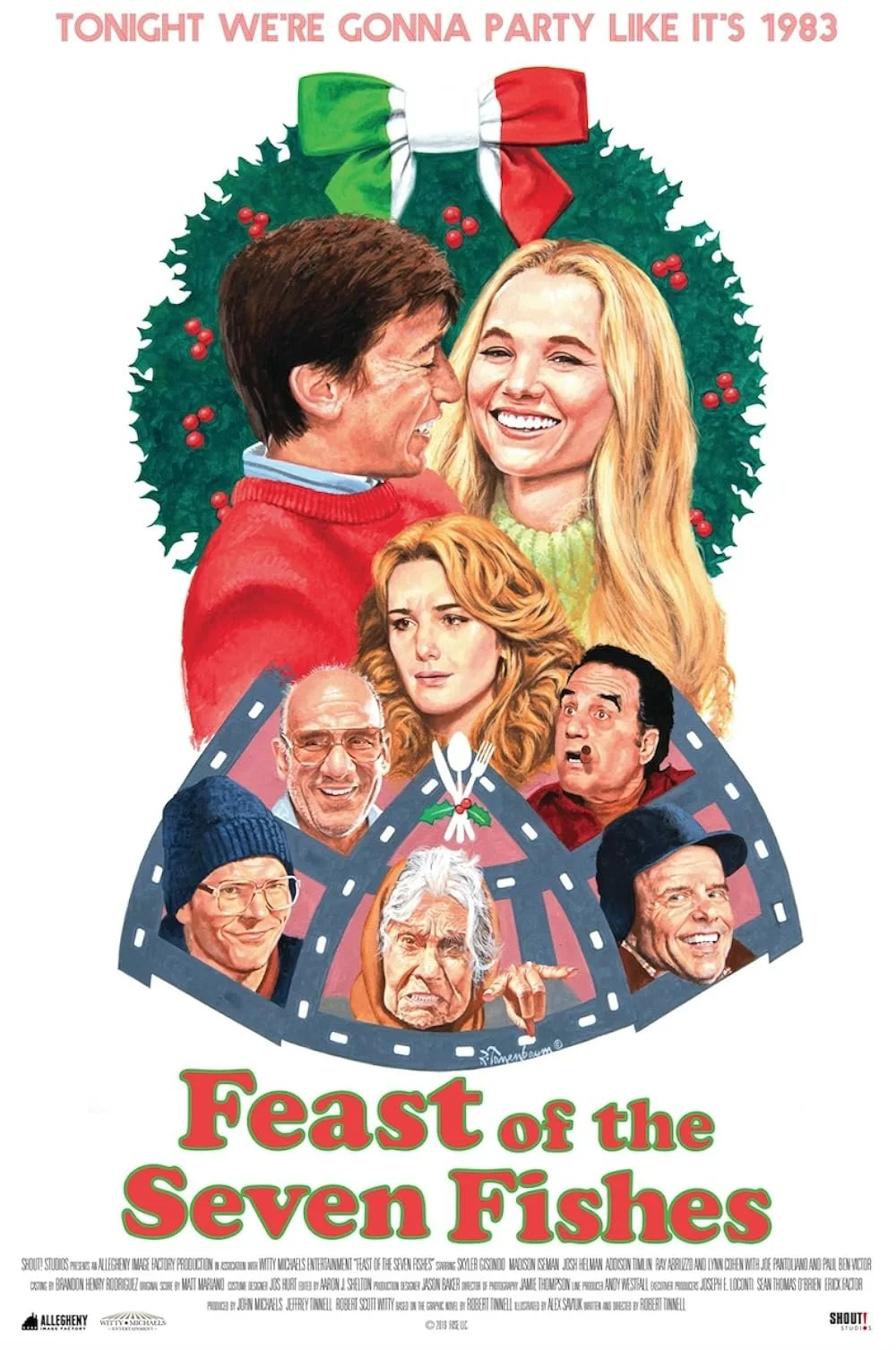
Well, readers, it’s that time of year again. I know that I said in the past that Halloween was the last fun holiday of the year and that I’m a huge Grinch. But with just about a week to go until Christmas and the bulk of the last six months of Christmas music behind us, in a year when I promised myself I wasn’t going to do any holiday coverage, like last year’s excellent unknown gem 8-Bit Christmas, I’ve found another Christmas movie worth bringing to you.
You already know that I love a good slice of life film. It’s wonderful to be dropped in a moment of time and experience it with the characters without having to sit down and watch hours of origin story and background lore and world building. You hit play and for the next two hours or so, there’s a different world that you get to be a part of. So I was curious about Feast of the Seven Fishes, a 2019 Christmas romantic comedy that snuck under everyone’s radar, despite the 88% RT score and 88% audience score. At least the small number of people who watched it overwhelmingly liked it, so, for you, dear readers, I donned my Grinch hat once again and jumped in (I assume, canonically, that Santa stole the Grinch’s hat, I’ve still never seen that movie).
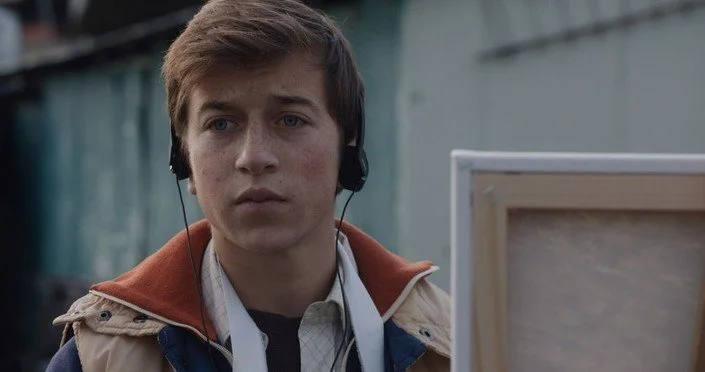
Feast of the Seven Fishes stars Skyler Gisondo (Superman, Psych) as Tony Oliverio Jr., the college aged son of an Italian-American family somewhere outside of Pittsburgh (filmed in West Virginia), who is gearing up for the big holiday. He works for his family’s store and is set to take it over eventually, despite the fact that he’s a talented artist who has been accepted to art school; an acceptance that he’s kept a secret. Enter Beth, private school girl turned Ivy Leaguer home for the holidays and in a fight with her my-dad-owns-a-dealership, country club boyfriend Prentice (I mean, the guy looks like he’s about to sing Constance Fry at any moment; I can picture the hush money payouts now). This guy isn’t the CEO of Red Flag, Inc; he’s his entitled son. You see, Prentice decided that Christmas with his girlfriend’s family is a much less enticing way to spend winter break than skiing with his friends. So they’re in a fight and Beth’s mom is on his side because it’s 1983 and she values her daughter’s ability to get a rich husband more than anything else she brings to the table as, you know, a person with interests and likes and qualities of her own. Suffice it to say the 80s were not the enlightened time we live in now [please note the sarcasm] and authentically, it shows through in the film. While I understand why writer-director Robert Tinnell presented the movie this way, it can be grating to hear objectification, slut-shaming, and homophobic slurs, even in the context of that being wrong. It is, no doubt, a fair reflection of the attitudes of the time, and it is called out in the film, but I felt the need to address it. Because while I personally don’t feel that this detracted from the movie, you may feel differently and decide to skip Feast because of this and I would understand.
Beth is played by Madison Iseman (Jumanji, Annabelle Comes Home) and she brings great charm to her character who could otherwise come across as a bit snobby, which is a worry for Tony’s cousin Angelo, who sets him up with Beth through her friend Sarah. Sarah and Angelo have a thing going on, so instead of making Beth an uncomfortable third wheel, Tony tags along to be the uncomfortable, albeit less wobbly, fourth wheel. The evening has its ups and downs, but for the most part they hit it off and Beth manages to get an invite to the Feast of the Seven Fishes.

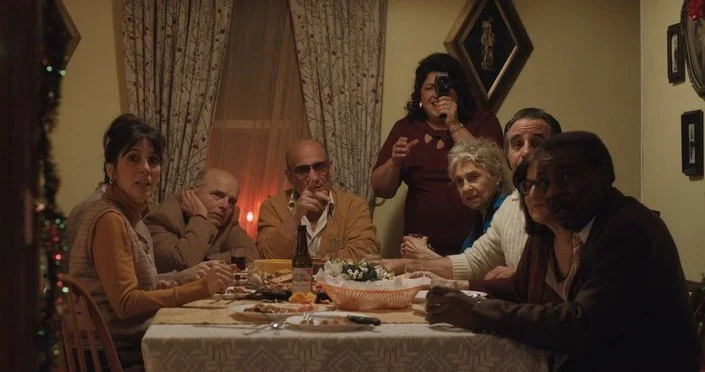
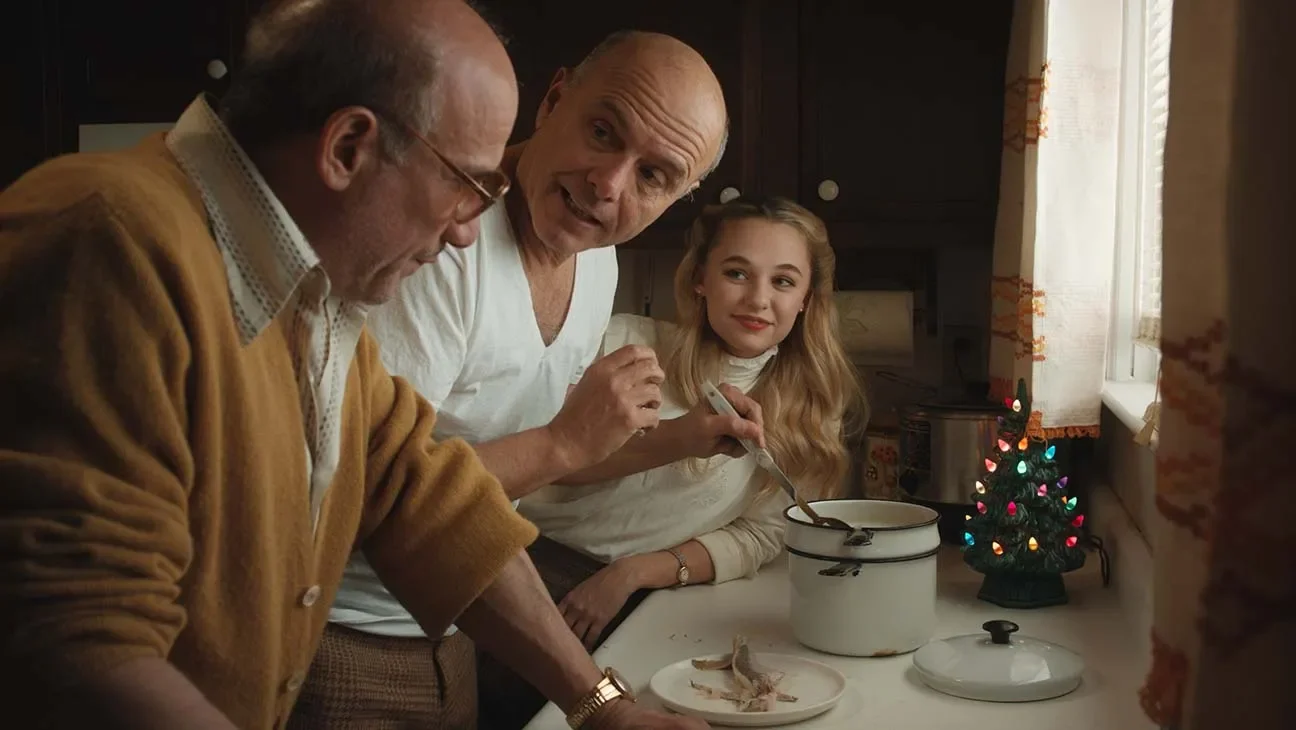
Now, if like me, your introduction to the Feast was that one episode of The Bear, the Feast is an Italian Christmas Eve tradition in which seven kinds of seafood, not all strictly fish, are had in a big family dinner (fun fact, actress Addison Timlin was married to Jeremy Allen White during this film, which pre-dates that episode). I grew up in a pretty heavily Italian area, so how this escaped my knowledge, I’ll never understand; but the food they lovingly put together is very familiar to me (especially the calamari, I love that stuff). The movie explains the Feast very quickly, which is both useful and economized, which I always appreciate. Beth, unlike Tony and his cousin, is not an Italian-American Catholic, so that’s a nice narrative way for us to learn about the Feast without an infographic or conveniently timed news report. At the Oliverio house, the Feast is not just an all day affair, but days of painstaking preparation ahead of time. The baccalà needs to be soaked for days, changing the water often. Some fishes get boiled, some get fried, some get turned into soup, some get eaten raw. People come and go, they eat, they help, they drink, they fight, they snip, they snap. They argue with each other, they criticize each other; it’s all well-meaning back and forth where if you’re family, that’s fair game. But if anyone else said it, they’d have trouble on their hands. Kids sneak wine when the adults aren’t looking. They eat too much, they drink too much, they reminisce maybe a little too much. Back on their date, Tony and Beth talk about the meaning of Christmas and how it’s changed, they talk about music (thankfully not just Christmas music), they talk about all sorts of little, silly things you talk about in your early 20s. It’s all so real and convincing. These characters are so lived-in, just like Blue Jay.
I’ve never been to a Feast myself, but I’ve been a part of similar traditions and it’s just an incredible experience. I grew up in a small family with two sets of competing traditions and a younger generation that didn’t really appreciate either. So this kind of large gathering was fairly rare for me; but based on the ones I have experienced, everything about the Feast in Feast rings true. And this cast really sells it, full of people I’d never seen as well as hey-I-think-I’ve-seen-that-guy-befores like Joe Pantoliano and Paul Ben-Victor. If I didn’t know any better, I’d have thought they were family. It’s funny, because on the surface of it, this big family gathering in a smallish house with people competing to be heard over each other should be overwhelming in the way Silver Linings Playbook could be overwhelming. But it’s not. Somehow the warmth of it all, the genuineness of this family dynamic and their feelings for each other tamp down the experience and make you feel like you’re there in the living room with them. But not in the kitchen. I’m a pretty good cook myself, but I wouldn’t last five minutes in that kitchen when they really get going.
There’s something really special about this movie when it can evoke nostalgia from me. I watched this and felt nostalgic for a time before I was alive (barely, but still), a place I’ve never been, with traditions I know nothing about, and a holiday that I actively dislike. If that isn’t a bit of movie magic, I don’t know what is. Yes, it helps that Skyler Gisondo’s Tony is incredibly likable as the sort of emotionally open tough guy who doesn’t mind if he gets beat up as long as he was getting beat up for the right reason. He genuinely cares about people and it gives him this quality that makes him an excellent protagonist. As you get to know him, you want everything to work out for him, you want him to go to art school and to form a meaningful relationship with someone. Perhaps Gisondo is very specific shortcut for me because I watched the kid grow up playing Young Shawn in Psych, so he started with a leg up, and he was Jimmy Olsen in Superman. But Beth is equally charming and she has some of the meatier dramatic parts and themes of the film. The characters are two sides of a coin; despite the different upbringings—culturally and economically—they’re both trapped by family expectations. Their families couldn’t be more different. Tony’s is large, warm, boisterous, and Italian. Now, I might remind you that in the 1980s, Italian wasn’t seen the same way it is now. Italians were othered and prejudiced against. I mean, as recently as the sitcom Wings in the 90s, Italian-Americans weren’t fully accepted (whether they are now or not, I can’t say because I don’t know and, frankly, I don’t even know what fully accepted means or looks like in this climate). Look at who the weird foreigner was in that very successful primetime TV series: Antonio, the Italian immigrant (played by Tony Shalhoub, but we can unpack that another time). A lot of that not only comes through in the film, but it shapes it. The Italian-American community in this town makes the Feast the biggest thing of the year; it’s bigger than Christmas itself. It makes you wonder if that’s not a reaction to being othered and shunned by the majority of people around them, like Beth’s mother.
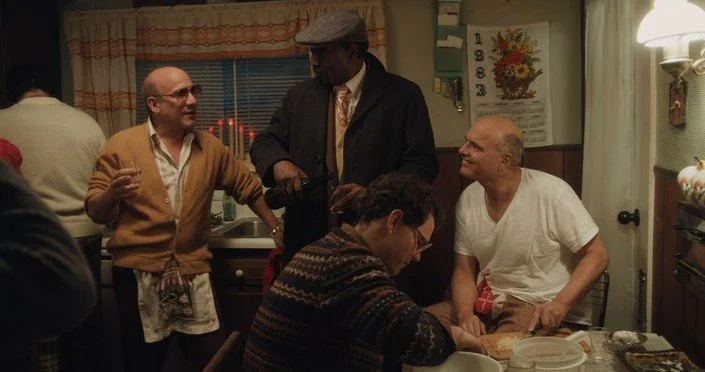
I think that’s one of the things that’s so interesting about Feast. It’s a multifaceted movie that takes on a lot more than I had expected when I thought I was settling in for a cute Christmastime rom-com. A lot of Christmas movies feel exactly the same; they tend to fall into a handful of archetypes. You have the “But it’s Christmas!” movies where something happens that requires Christmas to be saved. Then there’s the more modern accidental Christmas movie, where people who are trying to opt-out of the Christmas tradition get dragged in and usually learn a lesson about togetherness or whatever. And finally you have the Bad Santa-style anti-Christmas movie, which, admittedly, I do enjoy at times. But to watch a Christmas movie that has so much more depth to its storytelling was truly unexpected. Xenophobia and racism are addressed. The amplified loneliness of being excluded at a time when people put so much importance on being with friends and family is addressed as well; and I’m not just talking lip service, there’s an entire subplot dedicated around people being left out. And in the midst of this strongly held, painstaking ritual (which Tony goes out of his way to mention that the religious significance of the Feast itself doesn’t really factor into the way his family celebrates), there’s a less than quiet story about generational expectations and personal agency.

Both Tony and Beth are being crushed under the weight of what their families want from them, but under very different circumstances. Tony comes from an immigrant family; it’s unclear how many generations have been in the US, but even though both WW2 and the Great Depression are mentioned, it’s clear that Italian culture still has a very strong presence in their lives and that American culture—whatever that may be—hasn’t been fully integrated into their community either. And we can debate melting pot v. mixed salad all day long (I offer a third theory, which I call cake, where people of different backgrounds all mix in the same bowl and eventually, with the help of a little heat and some stern words from Paul Hollywood, something new is baked), but as the well-read town mechanic Juke says, their town is a community with one foot in the US and one foot still in Italy.
Emigrating is no small decision; you do it because you are hoping for something more and if you end up having a family, you want something more for them too. We’ve been down this road with Encanto and Everything, Everywhere recently. Back in 2022, I said “[a]ll too often, parents forget that their children are people too, with their own hopes and dreams for their own lives, with their own journeys to travel” and that remains true. In purely Encanto terms, Tony is Mirabel, a family member who is breaking with the family’s preordained plans by wanting to go to art school instead of staying and taking over the family business and Beth is Isabela, forced by her mother to be perfect so she can have the life her mother wants her to have. Private school in the city instead public or Catholic schools in the area like where Tony and Cousin Angelo went. Ivy League for undergrad. And the expectation that all that money spent and all that education learned will land Beth with a husband who has the same qualifications so she can stay home and raise his kids while he does whatever the hell he wants instead of doing what she wants to do (of course it should go without saying that being a stay-at-home parent is as valid a choice as any other; it’s not having the choice to be that or something else that I, the film, and Beth object to). Beth’s mother denies her agency, Tony is too afraid to express his, preemptively crushing his own dreams by assuming he’ll be denied the opportunity. Their courtship is cute and fraught with some slightly unrealistic obstacles, but also some very realistic turns, so the movie delivers on that front as well. But it’s so much more than just a romance and it’s so much more than just a Christmas movie.

At 1 hour, 39 minutes, it knows how to spend its time well and none of the scenes drag or feel unnecessary once you reach the end of the film. There were some moments where I was with a group of characters and wanted to be with a different set, but by the time the credits rolled, all those moments fell into place and they made sense in the narrative and meta-narrative of the story. There’s some language (as well as the aforementioned usage of slurs) and mature themes, so I would avoid watching this as the family Christmas movie if you have little kids; it might not be appropriate for them. Normally I’d just point to the movie’s rating, but it seems like this is unrated. It’s streaming on both Prime and YouTube and it was marked as 18+ and TV-14, so your mileage may vary. The Parents’ Guide on IMDB may be of some help to you if you’re considering watching it with kids. But Feast of the Seven Fishes is most definitely worth a watch. This movie is not just deeply funny, which it is, making me laugh out loud several times, it’s also narratively rich, giving this moment in time a so fully realized portrait in film. It’s an incredibly successful movie that managed to get to me on an emotional level despite taking on more than I imagined it could. And as much praise as I’ve heaped on this movie, here’s the thing that I found most remarkable. Feast has a shocking universality about it that I had never expected for a Christmas movie. Nothing about about the culture is opaque enough to turn you away, the Christmas of it all is not alienating to people who don’t celebrate, and it feels like a real family that’s getting together for what could be any get-together where family, friends, and neighbors are all welcome to come and go and spend time enriching each other’s lives. It really is a beautiful film. It made me yearn to be included on a night like the Feast, where everyone, family or not, is family that night.