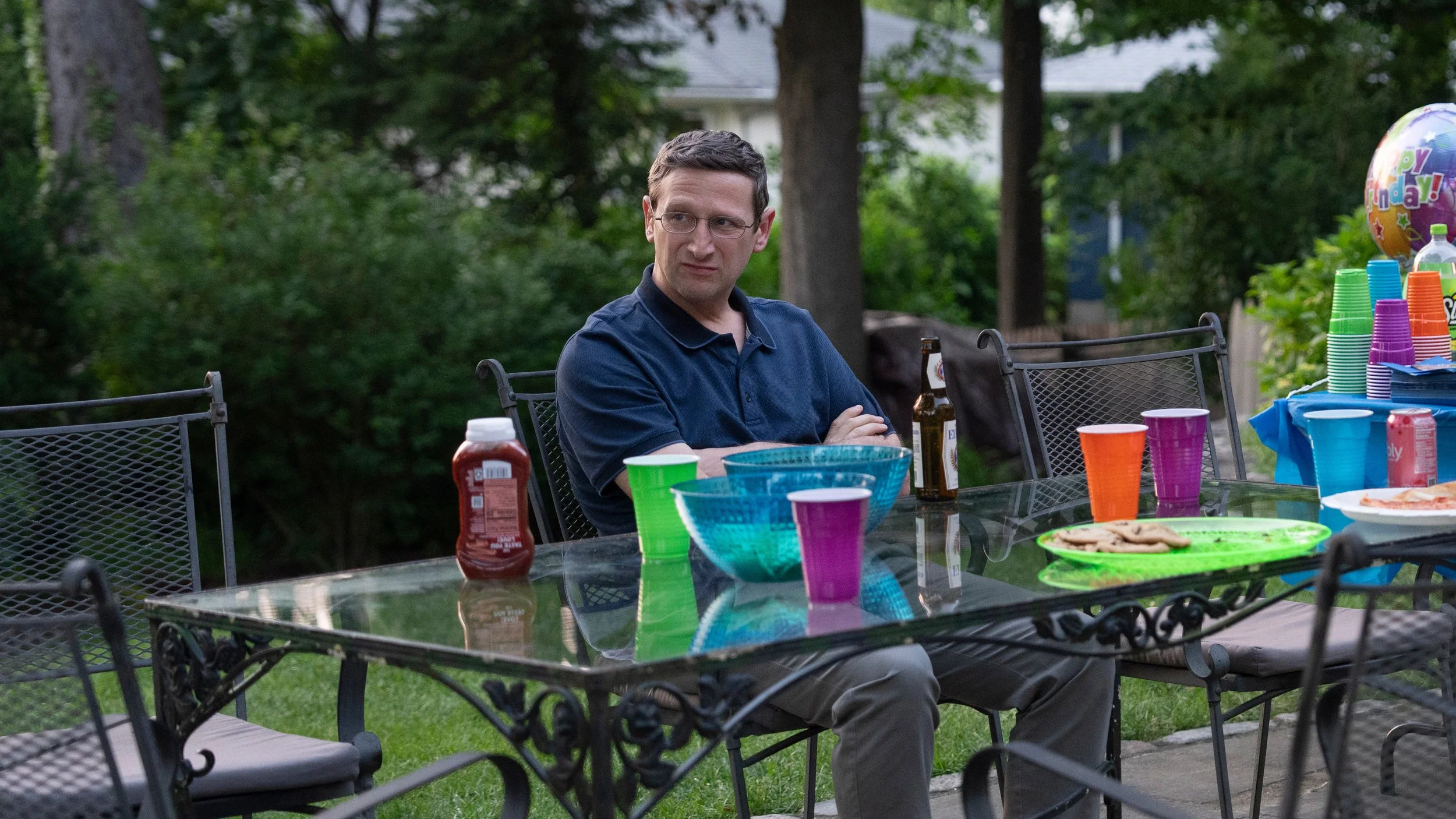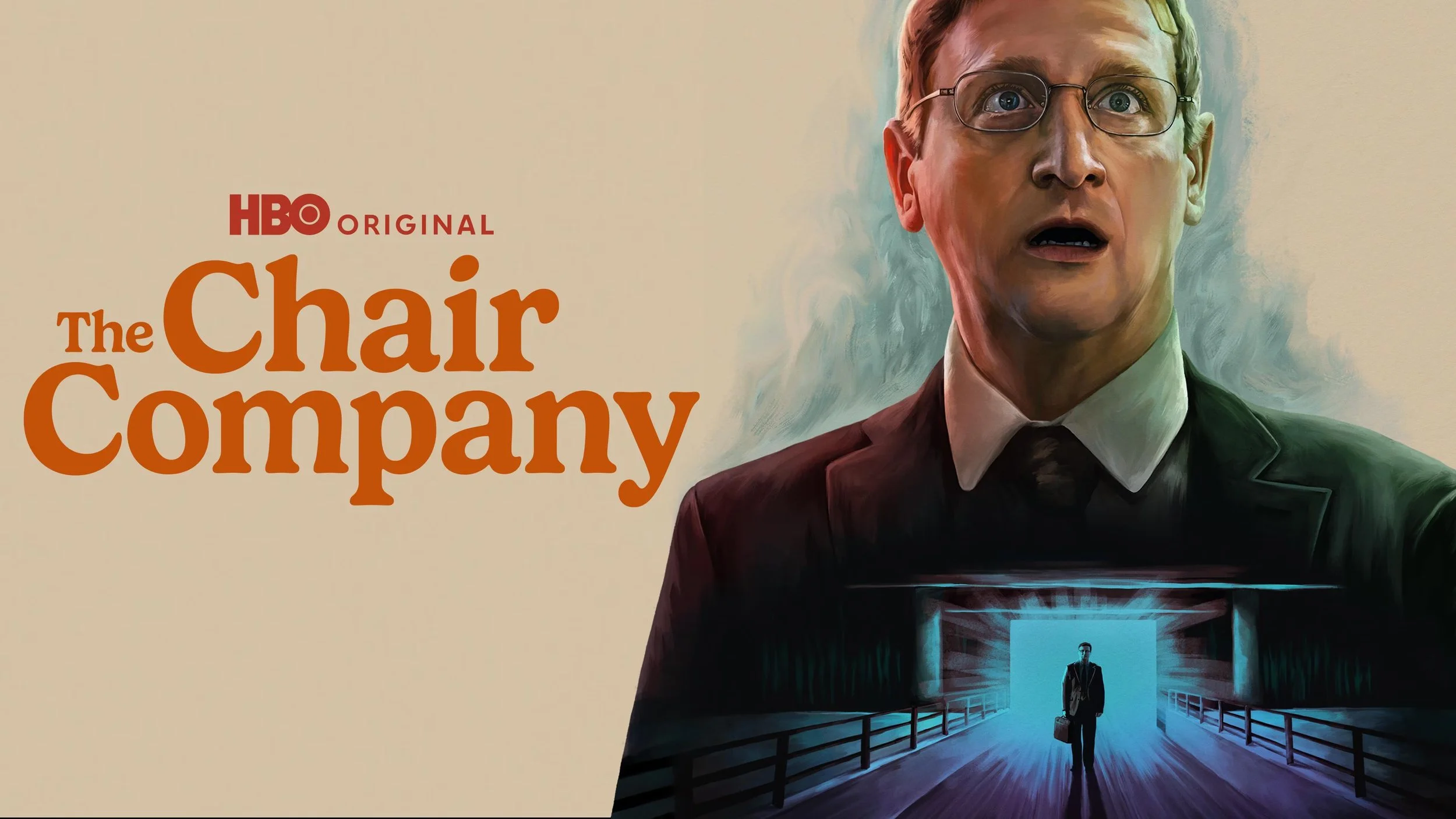
I just watched the season finale of The Chair Company and I think I’m more confused by what I’ve seen than anything else I’ve ever seen. But that’s not necessarily a bad thing. It all starts out very simple. Ron Trosper is on the up. He recently got promoted at work and he’s heading up a huge project, the design and construction of a new luxury shopping mall. And after giving a rousing speech at one of those corporate hype up meetings office workers are often subjected to, he goes to sit back down in his chair. And it breaks. He falls to the floor, a little embarrassed, but very much none the worse for wear. He even makes a little self-deprecating joke as he gets up and they move on.
It’s an embarrassing little moment of course, one I’m sure many of us have had. I, for one, remember once getting off the bus on the way to a final exam in undergrad and wiping out as soon as I put my foot on the icy curb. I got up, I made a little joke, and I limped to my exam. That was the end of it. Well, I did limp for a few days after that and I had come a day early for the exam, misreading the schedule, but overall, it was just a blip. For any other person, it’s a bad day at work at the most. These things happen, but life goes on.
Not for Ron Trosper, though. For Ron, his chair breaking is the start of a shadowy flight into the dangerous world of a chair company that does not exist.
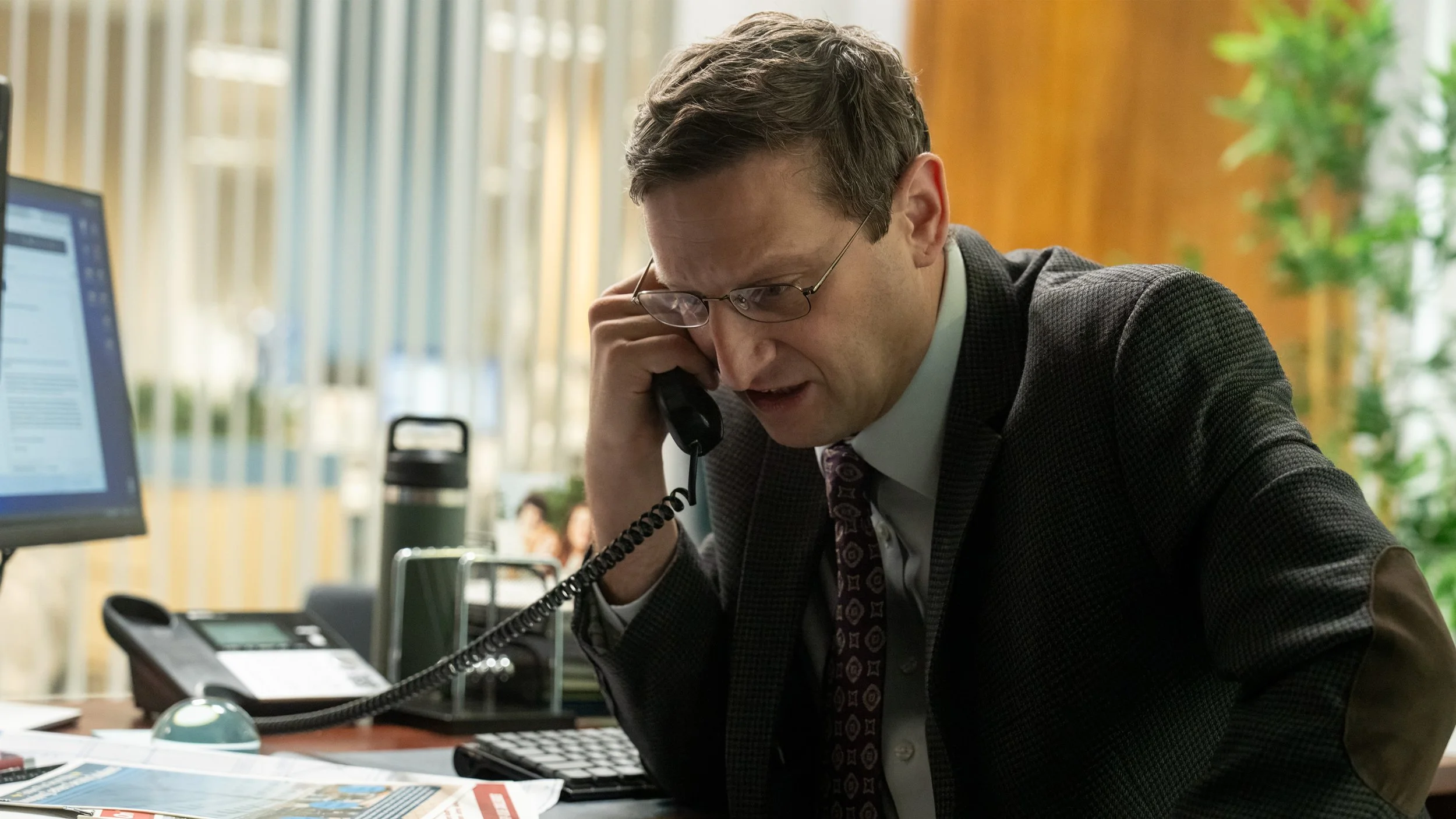
Ron is played by creator and writer of the show Tim Robinson (Friendship, I Think You Should Leave), and while I don’t think I’ve always gelled with his comedic styling, I can’t imagine this role working with anyone else. There is a level of commitment that it takes to play a character like Ron so well that can only come from the mind of the person who created him. That’s my theory, anyway. Because I don’t think there was a single moment in the series that I could point to where it felt like Tim Robinson was acting. And that speaks both to the strength of his performance and the strength of the writing.
This is a hard one to talk about because I feel like trying to relay the story to you much further would not only rob you of experiencing it yourself, but also, it would feel a bit like I’m lying to you by pretending I understood everything I just witnessed over the 8 episode season of The Chair Company. This was by far the wildest, weirdest, strangest, and most confounding show that I can remember watching. This is the kind of thing that maybe I really appreciate because of the amount of media I consume, it gets harder and harder for things to stand out. So when something does, I really become engrossed in it. Even if I don’t strictly like it right away, I tend to stick with it because I enjoy being immersed in the fringes of creativity when we’re often in a sea of same feeling shows and movies. Much like Pluribus, The Chair Company is unpredictable from scene to scene and I love it for that. Every time I think I know where something is going, it takes me in a completely different direction. And not just opposite to what I thought would happen, no, some wildly unforeseen option that keeps me completely on my toes.
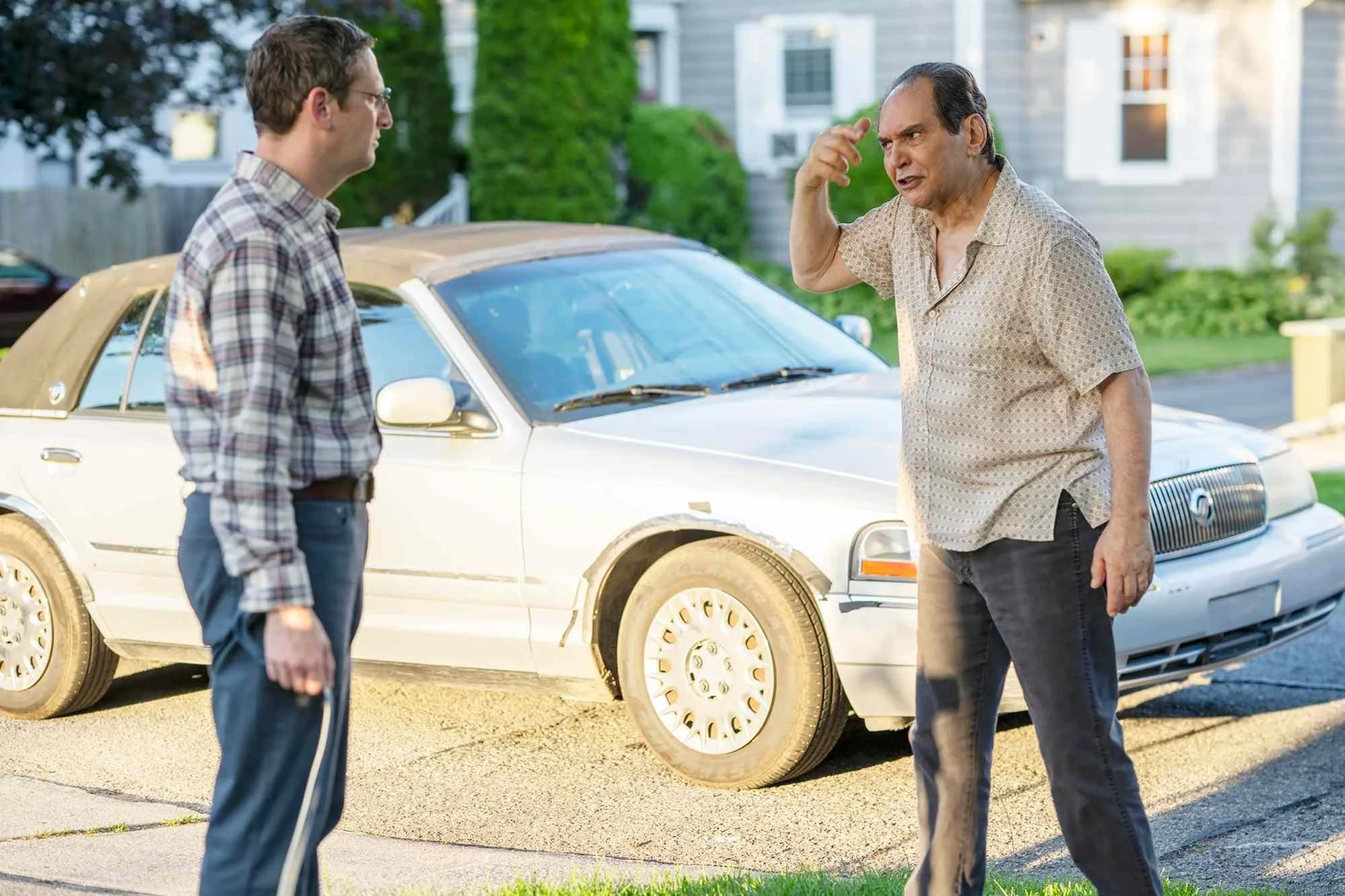
Nothing about this show is pretty. Everything is unpleasant. The people are unpleasant, the way they communicate is unpleasant, the abnormal amount of screaming is unpleasant—you get the idea. Even the drab Ohio suburb that could exist in any place across the United States feels like it drains the color out of your life when you see it (Ohio is really having a moment; Columbus and its surrounding cities here and Toledo in The Paper). I scarcely believe what I’m about to say about what is ostensibly a comedy, but it’s gritty. People get into fights and it’s ungainly and that makes sense. Why would Ron, who works in real estate development and has never shown any proclivity towards any sort of martial art, be an accomplished fighter? His punches are floppy, his form is unbalanced, and he spits and drools in feral rage. And when things start to get out of hand, no one is averse to just yelling loudly and nonsensically until the altercation simply stops. It feels so uncomfortably realistic, but I also have to imagine that’s the point.
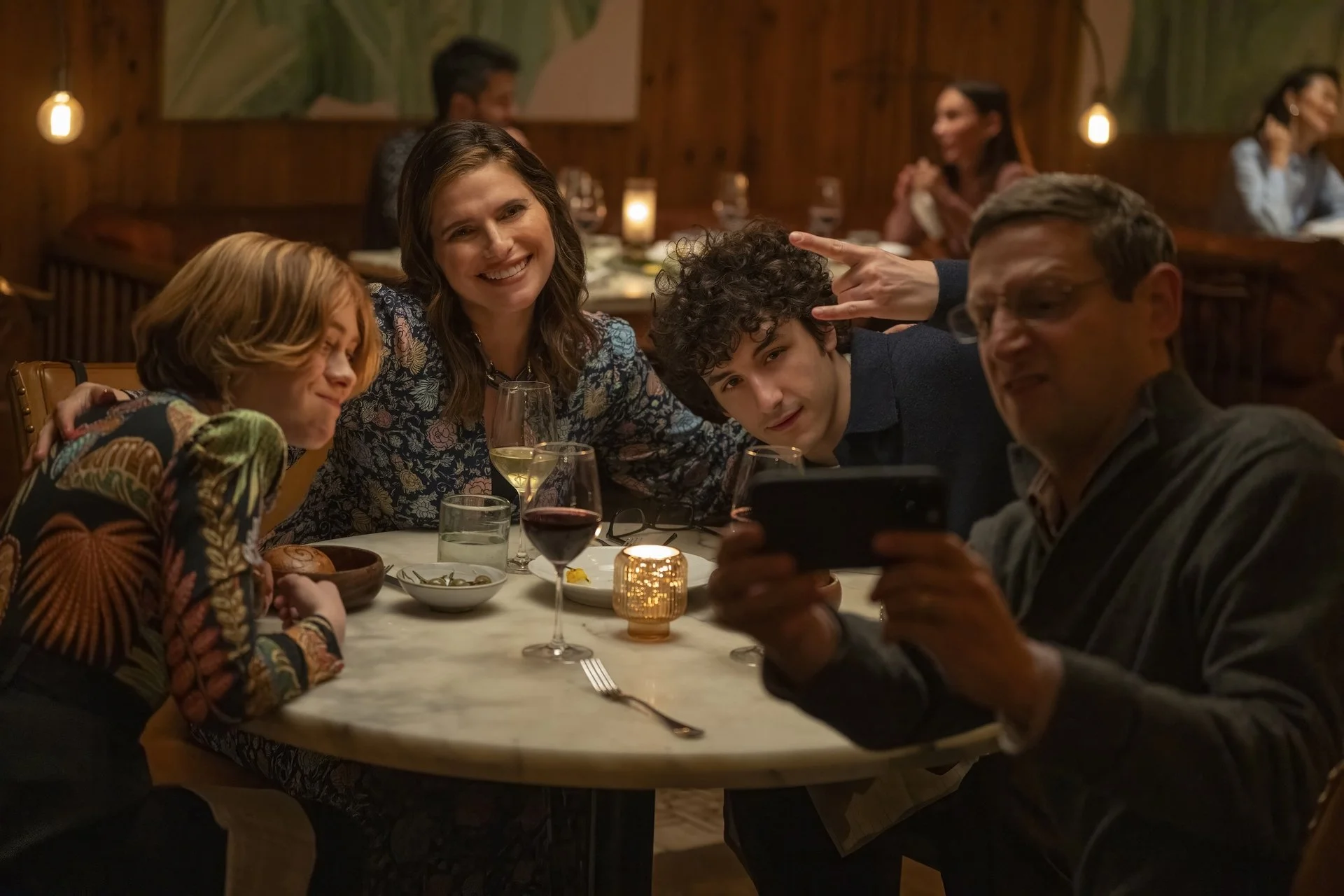
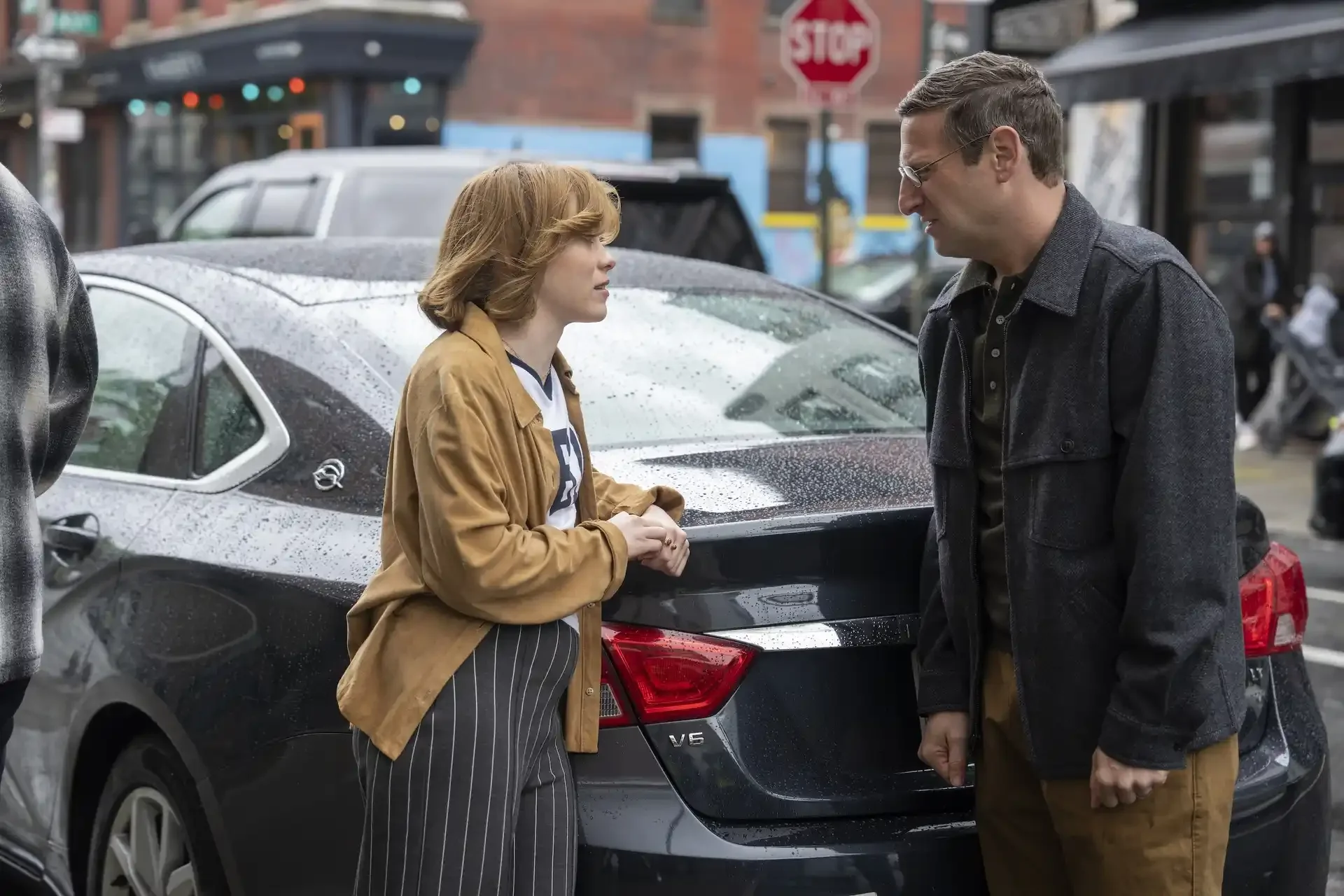
Of course, the people you meet along the way through this chair conspiracy rabbit hole are just as important as the plot itself because it’s the characters that sell this simultaneously mundane and fantastical premise. Ron’s wife Barb, played by Lake Bell (Childrens Hospital, Bless This Mess), has quit her job to spearhead a new startup, which is a time-intensive project, so she has her nose to the grindstone as Ron spirals. Ron’s son Seth, played by relative newcomer Will Price, is struggling with his own teenage dilemmas and, frankly, it’s not a child’s job to keep tabs on their parents anyway. So a lot of this goes unnoticed except by the always excellent Sophia Lillis (Dungeons & Dragons, It), who plays Ron’s older daughter Natalie. In the midst of planning her wedding to her girlfriend Tara, Natalie is pretty much the only one who starts to see that Ron is unraveling as he gets deeper into the conspiracy about the chair company. Her role smaller than I expected for an actress of her caliber, but I get the feeling we’re going get more of her as the show continues. Along the way, he meets Mike, played by journeyman Joseph Tudisco (he was definitely in one episode of a network show you might have seen), an unstable strongman who acts as a private eye and becomes Ron’s only confidant and ally in his hunt. And then there’s Jeff Levjman, played by the always reliable Lou Diamond Phillips, who seems to pop up in shows like this more often now, later in his career (some memorable appearances for me include Psych, Search Party, and Brooklyn Nine-Nine). Jeff is Ron’s obscenely wealthy, self-obsessed boss and CEO. His role in the show grows as the season goes on and I’m so, so excited to see how it changes.
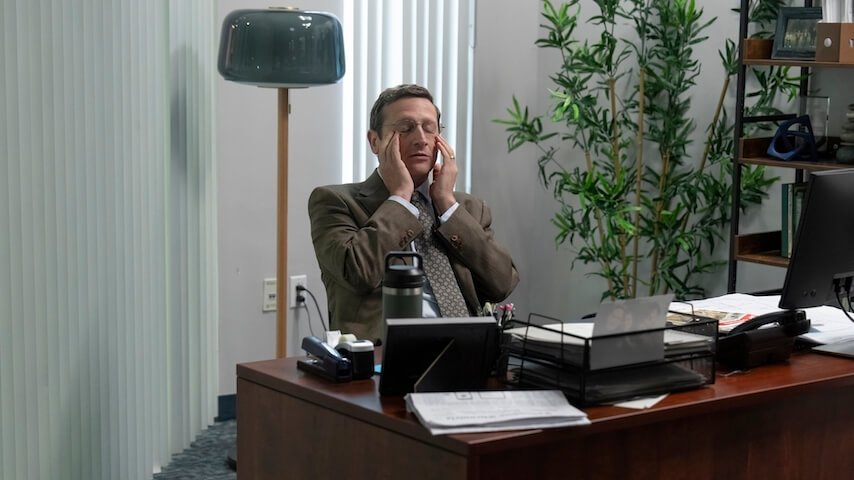
Like I said, this show is a little hard to explain. Even Lake Bell struggled to explain the series to her own mother, sort of settling on a version of “it’s about a guy who sits on a chair that breaks and he tries to find out why it broke”. And I think this is where much of the brilliance of the show lies. Tim Robinson exhibits this mastery of the mundane being taken to the absolute breaking point of absurdity. On the surface, it feels a lot like cringe comedy, especially as you see him at a family dinner at a restaurant arguing with the waitress about the continued existence of malls and how almost anything can be a mall, including that restaurant. But what starts feeling like a dated cringe bit turns into a wildly escalating scenario that snowballs out of control almost every time. Robinson subjects the audience to high levels of absurdity in almost every corner of the show—little things like the custodian at his office being highly protective of his wheelbarrow or a clerk at a shirt store pulling out all the stops to get people to sign up for their membership program. I can’t wholeheartedly tell you that all this works because I’m not entirely sure it does, but it grabbed me in a way that really surprised me.
The conspiracy starts out as a pretty normal kind of thing in the facade-focused world in which we live. He wants to reach out to the company that makes the chairs, Tecca, and lodge a formal complaint and get an apology over what happened to him. But he gets the customer service runaround, even more so than normal, when he reaches out to Tecca, finding them to be incredibly circuitous and secretive. I’ve had some bad customer service experiences in my time, including four hours on the phone over a TV installation that never happened, so it’s really relatable. At first. Before the spiral. Oh, but the spiral. The spiral is this show. As he peers through the looking glass into the world of Tecca, we as the audience get to question so many things. Has Ron stumbled upon a vast conspiracy? Is something going on with the chair company? Is he in danger? Is his family in danger? Or has he just gone down the Charlie Day cork board route and is blowing everything out of proportion? Are the people staring at him menacingly really staring at him menacingly? Or are they just having a bad day? Are those people talking about Ron and tracking his every move? Or are they just having a quiet chat? Not only does the show string you along this journey of Ron’s as he goes through layer after artichoke layer through shell companies and whispers and lies, but it also puts you in Ron’s mindset. The show itself is part of the conspiracy, I’ve stopped trusting what I see. Are the reveals really reveals? Are they happening? Is Ron completely misreading everything? Are we watching the show through the lens of an unreliable narrator? I just don’t know. And the show doesn’t want you to know. And that’s what I find so captivating about The Chair Company.
Still, as much as I liked the first season of this show, it’s hard to recommend. I would wager that if you’re a fan of Tim Robinson, you’ll like it a lot. I haven’t seen that much of his work other than a few sketches here and there, and while it’s been a little hit or miss for me (as sketch comedy tends to be), this feels like a very Tim Robinson experience. If you’re into that, you’re probably going to love it. But as someone fairly lukewarm to Robinson, I found myself reaching for the remote every time I got the little notification on my phone that a new episode was available and watching it immediately. So it very well could have wider appeal than just Tim Robinson fans. I think the hardest part of this show is how you decide to engage with it. As you know, I’m a huge whodunnit fan and I’m from the era of Lost conspiracy theories and the subsequent bevy of JJ Abrams-like mystery box shows that followed, so I’m always looking for a mystery to solve. But I think the best way to experience this show is far more hands-off. Let Ron do the detective work for you and just sit back and enjoy the spectacle of a relatively normal man thrust into what could be the highest stakes or lowest stakes thing in his life.
It’s weird and unpleasant and strange and oddly wonderful. There are some nice moments throughout the series, especially towards the end of the first season, where you get to see glimpses of Ron as a good father and good husband. And while they seem a bit abrupt compared to the other moments of the show, they manage to not feel unearned; rather they seem a bit like a parting in the storm clouds of Ron’s fervor and they can be quite touching if you let your guard down for the rare genuine moments in the show. Which can be hard to do because the show really puts you on edge. As I said, it’s billed as a comedy, but it’s also called a thriller. The blend of comedy and horror mechanics, often leveraging the score to put real tension and a sense of dread in some scenes. It’s unsettling at times. Because the nature of the show is so amorphous, it leaves you feeling that truly terrible things are on the table because you just don’t know where it’s going to go. Again, the throughline here is unpleasantness and The Chair Company is as unpleasant as it is engaging and entrancing. The entire first season is out on HBO Max now and it’s already been renewed for a second season, thank goodness.