• The Study Room
  • Information
  • Contact
Menu

The Study Room

A Blog for a Podcast that Might Still Happen
  • The Study Room
  • Information
  • Contact
×

Empire of the Run

Aslam R Choudhury January 21, 2026

It doesn’t take a lot to get me on board for a movie.  Well, that’s not true; there are certain specific phrases that will get me interested in a film.  To name just a few, you could say “starring Mark Duplass” or “directed by Rian Johnson” or “elaborate heist” and I’m immediately interested in what comes after.  And there’s another name that triggers the same response.  Edgar Wright.  If you read my post on Last Night in Soho, you’ll already know how highly I regard the director of icons like Hot Fuzz, Shaun of the Dead, and Baby Driver (though the less said about some casting decisions the better).  So when I heard he was teaming up with actor-I-have-a-soft-spot-for Glen Powell (Hit Man, Twisters) to do a new version of Stephen King’s The Running Man, I was ready for it, even though I’d never read the book nor seen the 1987 Arnold Schwarzenegger film of the same name.

He’s quick to anger.  And by quick to anger I mean he’d punch his reflection in the mirror for looking at him; Ben Richards has absolutely no chill.  His daughter is sick and he and his wife can’t afford medication anymore because he lost his job and has been blacklisted for talking to union reps about radiation exposure.  Right off the bat, we see a world where workers have no rights and where a reality TV landscape in which humiliation is the only currency rules the airwaves.  Humiliation and one other thing.  Ben sits at home trying to care for his baby daughter Cathy and watches a trivia show where a man runs in a giant hamster wheel until it kills him.  The only thing the poor have to offer other than their humiliation, is their death.  Let’s get into The Running Man, currently streaming exclusively on Paramount+, a lighthearted romp through nostalgia where life has no value unless you’re super rich and an entertaining death is all the poor are valued for.  Can you imagine living in a world where the poor are dehumanized and looked at as expendable fodder for the rich?  Terrifying.  I’m so glad to live in a world where we value people for their inherent humanity and not for how much money they have.

Ben’s wife Sheila, played by Jayme Lawson (Sinners, The Batman), returns home with black market meds for Cathy because that’s all they can afford.  Sheila is a waitress at a club and in the process of discussing their problems, she mentions the idea of taking an overnight shift.  Her clientele is the wealthy, and while as a waitress, she’s not the main show at the club, there’s no end to the entitlement of the men Ben refers to as savages and fears for her life.  Because even though she could make an entire $20 in one shift, she wouldn’t be the first waitress to work that shift and end up as an unsolved murder.  Can you imagine living in a world where women can be assaulted or killed at the hands of powerful men with no consequences to them?  Thank goodness this is fiction and not the real world.  Ben’s only choice is to go to the television studio and try to get on one of the game shows.  Anything but “The Running Man”.  He’s got a mind for trivia; he’d probably be pretty good at a less deadly game show, but with his background, at the end of the assessment, he was only ever going to end up on one show.  All this happens about 9 minutes into the movie, blink and you’ll miss it.  The Running Man certainly isn’t hanging around.

As Ben goes for his assessment the mantra of this world in which he lives becomes painfully clear.  Eyes forward, mouth closed, no sitting, no lying down.  No rest, no conversation.  No support from one another.  I mean it.  A man collapses in line after spitting up blood and when Ben tries to help him, the officers stop him and say loudly for everyone to hear “No helping” and they stop Ben from helping him with violence.  That’s right.  In this world, armed police will stop a citizen from helping another person who is lying on the street bleeding to death.  Can you imagine.

If you’re not familiar, “The Running Man” is the most popular show in this version of the United States, where the rules are easy.  They give you and two others a snazzy red jumpsuit and you just have to last 30 days to get a billion new dollars.  Considering Sheila was willing to put her life on the line for 20 bucks, a billion seems like it’s an even bigger deal than it is in our world.  That’s never want for anything money, not just for you and your family, that’s your entire bloodline generations to come covered.  The only catch is that there’s a cash prize for the person who gives the tip that leads to your death at the hands of an elite squad of hunters.  It leads to this paranoid, high intensity game of Survivor (Jeff Probst could never) where any person who recognizes you could make the phone call that leads to your imminent death.  But, if Ben can survive even a week, he’d have earned enough money to get his wife and daughter out of the slums.  The action that follows is kinetic, Edgar Wright utilizing drone shots to impart his style on the film in a way that adds to the visual storytelling.  The hunt and the kill is part of the show, so the cameras in the show are drones, so we get diegetic drone shots.  It fits.  It’s all televised mayhem and misery, with the callous disregard for any form of innocent life getting huge ratings as families gather around TV the way they used to.

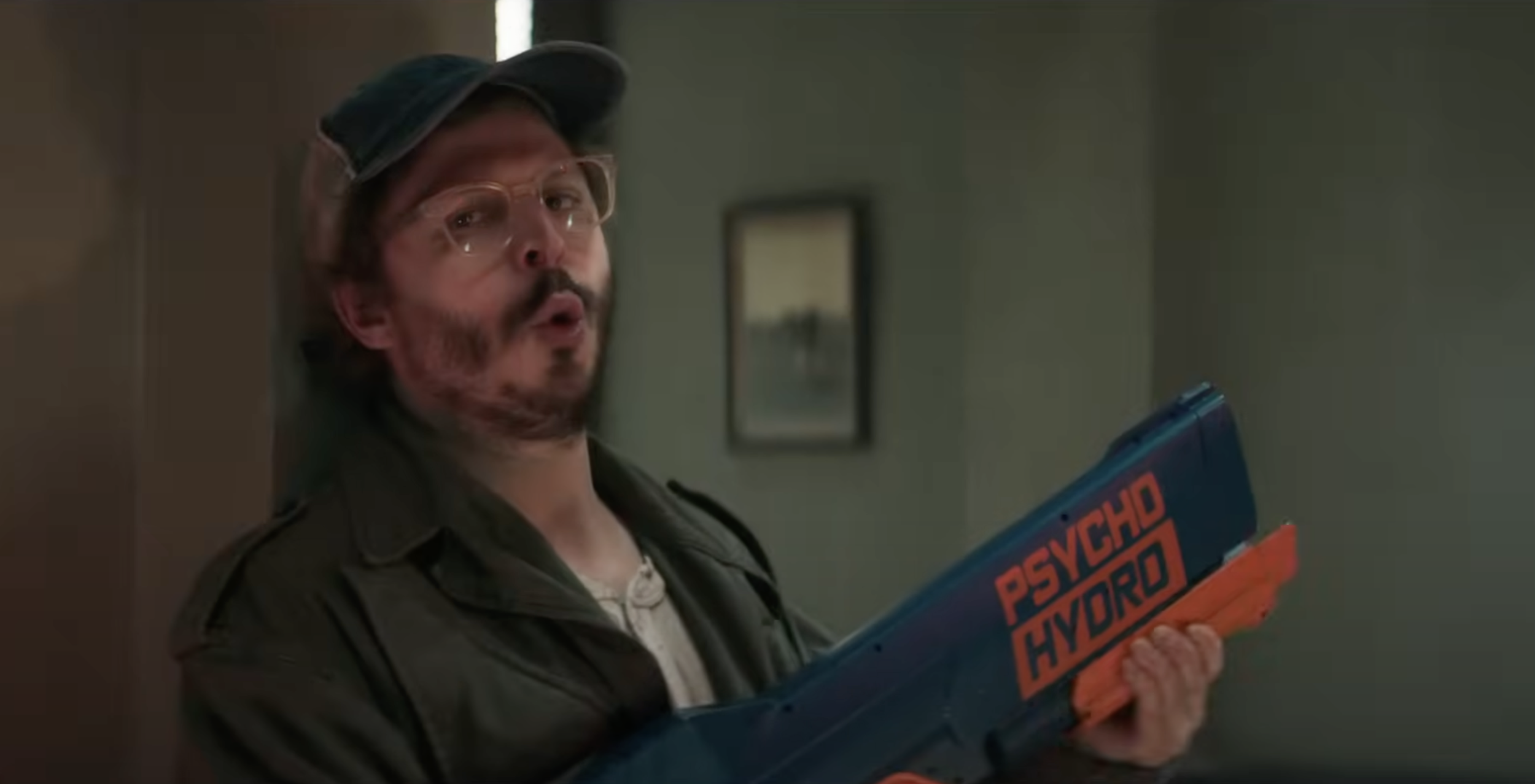
While the action doesn’t reach the stylishly fun levels of Baby Driver, there’s a lot to delight in the action sequences and they lighten the tone of the otherwise very bleak and angry film.  That’s all done very well. But where we do run into some problems is the comedy in the film.  There are some moments where I’m not sure if the violence is supposed to be over the top for comic effect or over the top to shock you into disbelief.  Some of the jokes work, with Michael Cera (Arrested Development, The Phoenician Scheme) providing a great deal of angsty comic relief as a member of the underground who helps Ben.  But when it comes, it always seems to be flanked by the tragic realities of their world and ours.  You could get whiplash trying to keep up with the tonal shifts.

Now, if I’ve been unsubtle in my sarcasm thus far, that’s how the movie is.  Everything about it is over the top and it really feels like it’s on purpose.  There’s a lot to unpack here, so let’s do the hits.

Colman Domingo’s (Sing Sing, The Four Seasons) performance as Bobby T, the extremely Billy Dee-coded host of the show, is a pure showman and Domingo eats up every frame he’s in.  His amoral, everything for the ratings approach is as entertaining as it is detestable, but for sure you can’t look away.  Josh Brolin (No Country for Old Men, Avengers: Endgame) does an acceptably generic and intimidating job as Dan Killian, the evil network executive who is an expert gaslighter and is so talented at making people think he’s on their side.  Emilia Jones (CODA, Task) is in it also, but while her character is pivotal to the story, her role feels so small and rushed, there wasn’t much for her to do.  I’m glad she’s having a moment because she deserves it, but I hope this leads to meatier roles.  Lee Pace, who remains for me the most “Oh, that’s who Lee Pace is” actor in Hollywood, was also in it as the masked head of the hunters Evan McCone.  The top dog hunter, he wants nothing more than to find and kill Ben, and like Brolin, he’s sufficiently intimidating as a literal faceless evil relentlessly hunting human beings. 

And then there’s Glen Powell; playing against type, he swaps the likable confidently cocky for no good reason guy out for the likable angry at everything all the tim guy.  It’s Powell’s first attempt at playing a serious action hero and, frankly, I’m tired of pretending that he’s not a star.  While I’ve always been a fan of Powell, this isn’t the first time his acting has shown range; his performance in 2022’s Devotion should have been his star vehicle—and his costar’s, but he went and ruined that by being a horrible person.  Powell’s rage isn’t always convincing, but it’s always earnest.  There’s this vein of righteous anger that runs through him that makes it work; he’s otherwise unhinged, but he rarely directs that anger at people who don’t deserve it and he’s always the first person to put himself on the line for others, even at his own detriment (peep the blacklisting for trying to protect his workers from radiation exposure). Give me more Glen Powell, make it happen. Just not Twister 3, please. That particular well has spun itself dry.

The Running Man tries to do a lot.  It wants desperately to be a pointed social commentary with a dystopian future that feels far too much like today and it wants to be a light action-comedy at the same time.  Unfortunately, that leads to a very uneven movie.  It’s incredibly heavy-handed and over-the-top and implausible as well.  I’d call it good fun if it weren’t so relevant.  And I understand why it’s so heavy-handed, though. The world has lost the ability to read subtlety anymore.  That’s why a show as unsubtle as The Boys still had fans who took four seasons to realize the guy who kills children is the bad guy.  Maybe this movie isn’t heavy-handed at all, but rather written in conversation with audiences that seem to be missing the point at ever more alarming rates. You know I don’t like when filmmakers don’t trust the audience, that’s one of my big things that bother me, but in this case, I feel like there was a worry that if the movie were more subtle, there would be those in the audience that don’t realize that the murderous authoritarians who foster so much poverty and misery that people have to wait in lines that stretch around the block to get basic medicine at the pharmacy are the bad guys.  A worry that the world in The Running Man will be taken as an ideal and not a cautionary tale.  After all, the original novel is set in 2025.   But while Wright can usually balance tone and impact very well, The Running Man can’t quite reconcile what kind of movie it wants to be.

There’s that feeling when you’re watching baseball, which I haven’t done in many years but this still looms large in my mind, when a batter hits a fastball on the sweet spot.  All that work, years of training, hours and hours of conditioning, practice, practice, practice, and it all culminates in a crack that cuts through the air and tells your ears that a home run has just been hit before the ball ever crests over the fence.  Movies have that crack too; it used to be a round of applause when you’d go to the movie theaters, those moments when we, as a crowd, stood together and applauded a screen bathed in the light of a projector for the work a cast and crew did long before and far away.  Now it’s different.  It’s not the sound of applause or the crack of a Louisville Slugger, no; now sitting at home, watching a movie on a streaming service, it’s the sharp breath in that you hold.  That’s how you know a movie hit the sweet spot before the credits ever roll.  Edgar Wright is usually a master of this.  But this time, The Running Man just fell short of the outfield wall.

Despite all this great action fun, there was a feeling that stuck like a thorn in my side as I watched this.  No, it wasn’t that it’s so over the top as to lack the subtlety that I crave in a film.  That is true, but for as much as I am a proponent of of filmmakers trusting their audience, I think this was an example of a filmmaker basing the movie around the idea that current audiences are unfortunately untrustworthy.  And it hit me.  This is a fun action movie.  But for a dystopian future, it’s a little too close to now.  We watch people shot dead on TV and argue about it on the internet.  People can’t afford medication for their children and diseases that were a non-issue for years are suddenly killing people again.  We are being fed AI slop and forgetting that slop is what you feed a pig before slaughter.  Wright doesn’t trust the audience because the audience is the lesson.  The people gathering their families around a TV that watches them back to see just how many people are going to be murdered on their favorite reality show can so easily become us.  We’re already becoming numb to watching murders unfold in front of our eyes and then arguing over whether it was justified or not.  With how much this movie reflected our society, as much as it was the mirror art is supposed to be, ultimately, what I saw in the mirror was just a little bit too tasteless for me to lose myself in the fun of The Running Man. 

At times, the fun felt pointless because it didn’t change the reality around the movie, nor the reality around me.  It’s not Edgar Wright’s fault that his mirror is reflecting what it’s reflecting; it’s ours.  It’s our society that has become so disappointing; surrounded by technology, but dictated by primitive ideas that drag us further and further away from a truly modern society.  It’s a tough balancing act and I’m not entirely sure how he could have fixed it.  From what I’ve read, Wright’s version sits between the camp of the 1987 film version and the serious bleakness of King’s novel.  And perhaps that’s why it just fell short of being great.  The Running Man is a bit too long at 2 hours, 13 minutes, with some pacing issues, but I enjoyed this movie; I was affected by it emotionally, I will continue to go on record that I was saying that Glen Powell was going to be a star back when I saw him on Scream Queens, and The Running Man is definitely a movie I will watch again just for myself, but it either needed to be a little less fun or a little more over the top to breach that upper limit of a B-movie.  A solid, well made, enjoyable B-movie, for sure.  Ambitious and with something to say, of course.  Worth your time?  Yes.  But is it great?  No.  I just hope it’s not prophecy.
Comment

Deep Blue Tea

Aslam R Choudhury January 14, 2026

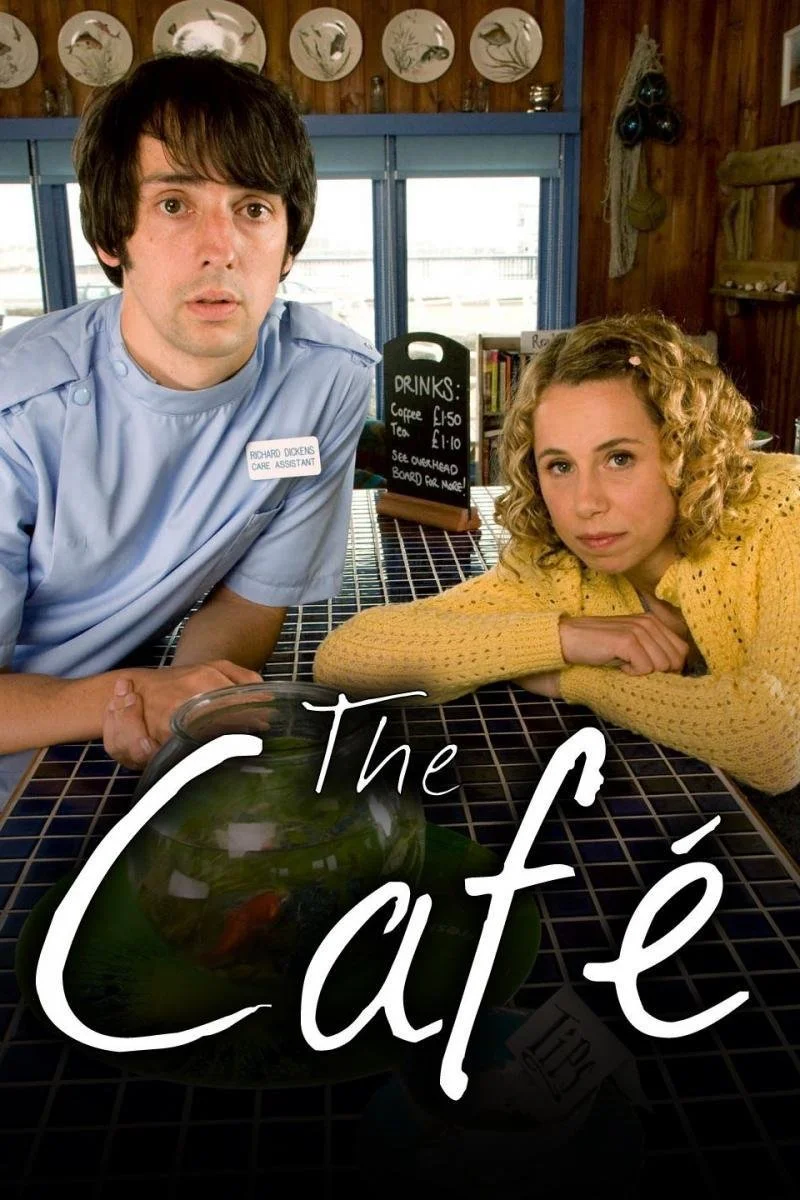
Life doesn’t always go as planned, especially when you want to be a writer, and Sarah Porter has learned that one the hard way.  Like a lot of millennials, she’s had to move home after chasing a dream that didn’t quite work out the way she hoped it would.  Some sobering time in the big city can make one long for the comforts of home and family; after all, London can chew you up and spit you out if you let it.  So Sarah heads back to her hometown to live with her mum and nan, who run a cafe in Weston-super-Mare, a sleepy coastal town near Bristol, in England, just across the Bristol Channel from Cardiff.  I checked, it’s not that close to Torquay, so you might not be able to grab a coffee at the cafe and then pop over to Fawlty Towers for the night.  I was raised on British comedies (and The Golden Girls and The A-Team), so I’m always on the lookout for them and while I’ve watched many that have been fine, I eventually came across one that I wanted to share with you.

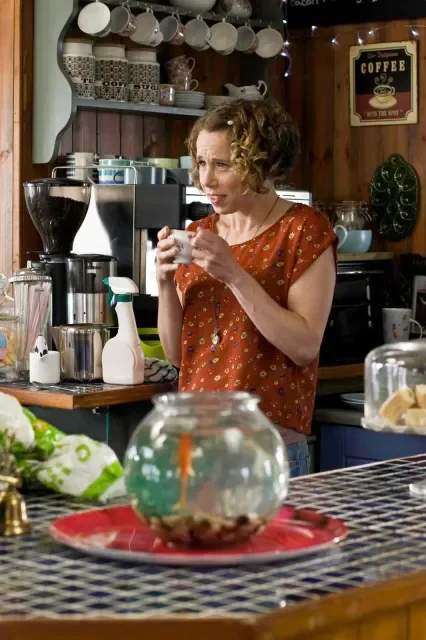
It took me a little bit to connect with The Cafe, as you do really see Weston through the eyes of Sarah, played by Michelle Terry, who also wrote the series about her real life hometown.  You’d probably imagine that she’s not too happy to be back in Weston and you’d be right.  Disappointment always takes time to bounce back from, so I get it.  But she does mope around a bit as she comes to terms with her new reality.  Now, I haven’t lived in London and I definitely haven’t lived in Weston-super-Mare, but I’ve lived in big cities and small towns and coming back to a small town after the city is quite a culture shock.  All of a sudden, your whole world narrows, your choices are limited, and everything feels so different.  But small towns can have their charms, especially on TV (you know me, I’m a city boy through and through; when told to touch grass, I have to take an Uber to the closest grass zone, which is what I think normal people call them).

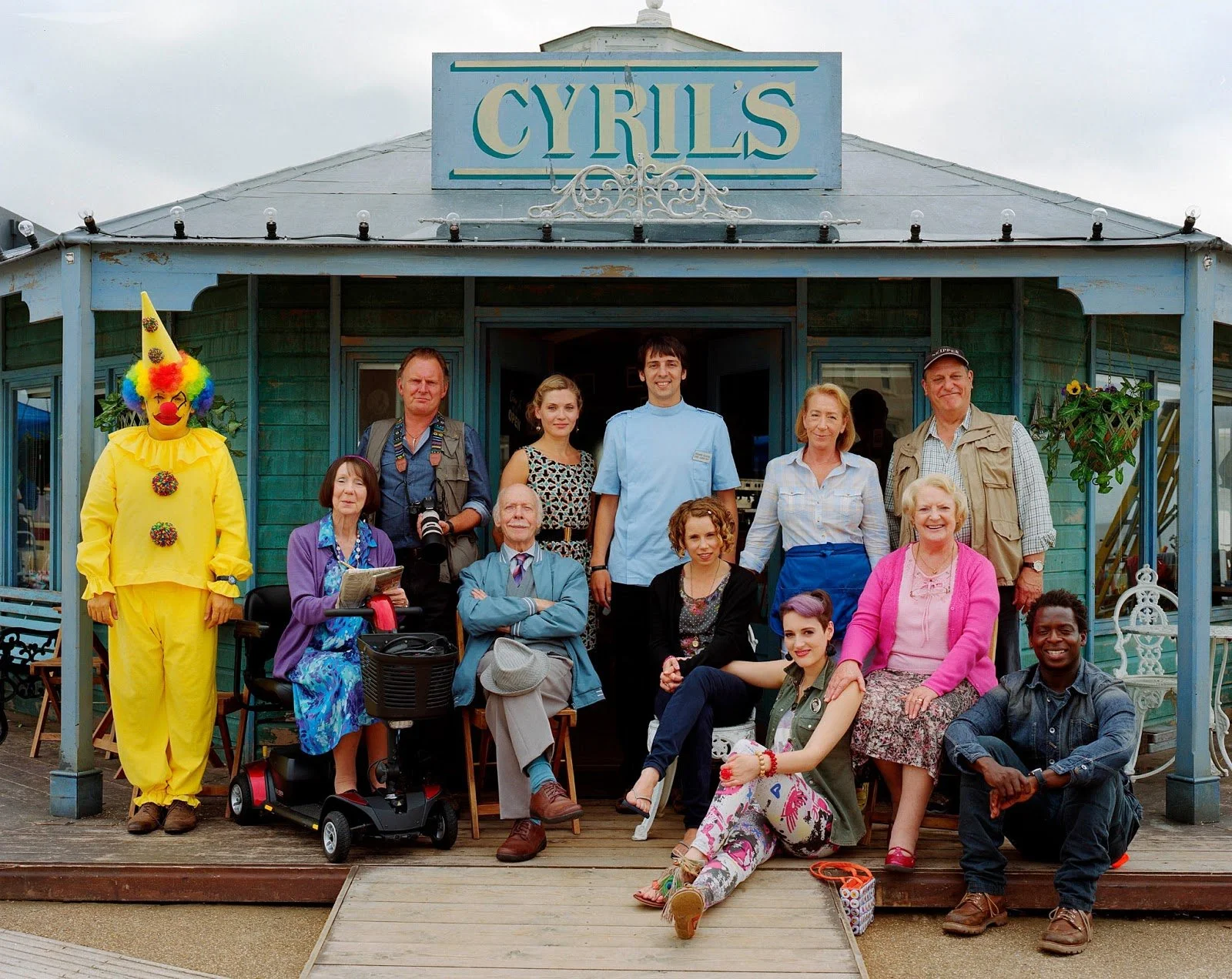
Sarah’s mom Carol runs Cyril’s, a struggling cafe that represents the dreams of her dead husband, right on the boardwalk by the shore.  It’s an idyllic spot.  Every time the opening credits crawl over the wide shot bringing us into the cafe, despite the theme song being a version of “Beyond the Sea”, which is a song I’ve always found funereal and have, as a result, never liked, I can’t help but think it seems like a hell of a nice place to visit.  Carol, played by Ellie Haddington (Enola Holmes), is both happy to have her daughter back and concerned about her future, often pushing her to settle down.  She’s also in an incredibly Victorian-feeling will they/won’t they with Stan, the local florist.  The series is contemporary to the time it was made, which is 2011, but you wouldn’t really know it to look at it.  I mean, the struggling cafe owner in a very Westley and Buttercup relationship with the local florist, who brings her clippings everyday so she’ll have fresh flowers?  Most of the time, that kind of thing feels saccharine and would make my stomach turn, but here it’s just so…Luke’s in reverse without the gruffness. 

It’s a sleepy town, with not a lot going on, an aging populace, and modernity far away, Weston feels like it came out of a time capsule.  Much like other colorful small towns, though, it’s really the residents who give it the bulk of its charm.  And this little borough has its fair share of Stars Hollow-like folks who call Weston their home.  Don’t get me wrong though, there’s still not much exciting going on.  The major conflict in one of the episodes is about whether, when having a cream tea, a traditional English afternoon snack, you should put the clotted cream on the scone first or if the jam should go on first.  Now, it’s fair to say that will sound completely foreign to most Americans, but if you contextualize it as milk before cereal or cereal before milk, it’s completely relatable.  We all get needlessly pedantic about kind of meaningless things all the time, it’s part of the human condition

Also, it’s cereal before milk, obviously.

Then you have Carol’s mom; Nan to Sarah, Mary Ellis to everyone else.  Mary Ellis, played by June Watson (The Death of Stalin), mostly just knits, but she also nitpicks.  It’s really interesting to see these three generations of women all together, each generation looking at its successor and predecessors, trying to learn, trying to teach, and sometimes, well, more often than not, being a little too judgmental.  But there’s wisdom and caring too, which is why I suppose people put up with family.  Mary Ellis’s friends come in for tea and scones and arguments with Mary Ellis of course.  Then there’s also Richard, who comes by everyday for his regular cuppa.  Sweet, kind Richard, played by Ralf Little (Death in Paradise), who is also a writer on the series, has had a crush on Sarah his entire life and that hasn’t changed, and while they were some sort of item when they were younger, he doesn’t seem to have shaken those feelings, but in a very innocent kind of way.  He’s such a good dude, though; always on the cusp of finally getting a car, he’s a man of endless patience.  He works at the nursing home in town and seems to care genuinely about the people who live there. 

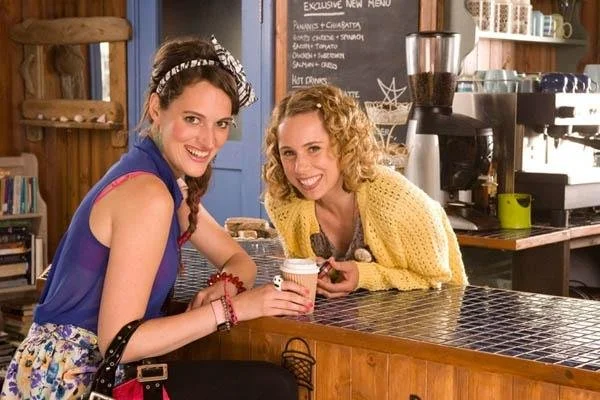
Sarah’s childhood best friend Chloe is still in Weston too: a bit ditzy, quite a bit more outgoing than Sarah, and a true free spirit.  Chloe, played by the incredible Phoebe Waller-Bridge (Fleabag, the best part about Indiana Jones and the Dial of Destiny), is always a bubbly presence on screen and brings a lot of the show’s laughs.  She also happens to be Stan’s daughter.  Kieran, the living statue is always coming by in his newest ludicrous getup, spanning from Hellboy to Homer Simpson.  And who can forget Frank?  I admit, I don’t really know Frank’s whole deal.  But he generally seems to hang around outside the cafe and ask for leftovers too early in the day.  I don’t know if he’s unhoused or just unable to find a job, but to see him at the cafe everyday, being treated with dignity and kindness make his little cameos endlessly pleasant and often quite touching.

But even a show as cozy as this has conflict.  Of course, there are Carol’s past due bills and the ever forward march of progress that threatens the cafe’s continued existence.  Oh yes, that old dance, the ever-present bugbear we call progress.  It’s not progress that’s the problem, of course.  Progress has given us so much.  It gave us the Internet.  Okay, bad example, that one’s a pretty mixed bag.  It all depends on who’s steering the ship, doesn’t it?  Sometimes progress is just change for the sake of change, so someone looks busy while they collect a check.  Sometimes it’s nefarious, involving someone collecting more than a check.  Sometimes, it’s good, though, which is why all have to keep progressing, annoyingly enough.  But the real black hat here, at least depending on your perspective, is John, played by Daniel Ings (who will be in the upcoming Game of Thrones prequel).

John grew up in Weston and has long since moved to London.  He’s gotten in shape, he has a good job and a Porsche, and he’s back in Weston to deal with the affairs of his ailing mother, whom he hasn’t seen in years.  And boy, do you just hate John the second you see him.  John is perfectly crafted to be disliked from the very first frame.  Driving his Boxster down the motorway, talking on a Bluetooth headset, with so many shirt buttons undone as to render them mere suggestions, and an attitude that says “I’m too good to be here”, he’s immediately at odds with everything his hometown is and represents.  I mean, his ringtone is the James Bond theme song.  Even in 2011, that was douchey.  And I should know, my ringtone used to be fairly off-putting to people.  John butts heads with Richard, who has been his mother’s caretaker at the nursing home, for several reasons.  Richard seems to resent that John hasn’t had contact with his mother for several years as she’s staring down the barrel of dementia and her memories losing a battle with time, but they’ve had beef that goes back to childhood. This particular Wellington, of course, has everything to do with Sarah.  John fancied Sarah when they were younger, which upset Richard quite a bit and apparently in the way that you hang on to.  But I suppose even Richard is allowed his sharp edges here and there, I sure know I have them.  So you hold on to that grudge, Richard.  Sparks don’t exactly fly between John and Sarah, but there is a connection and jealousy rears its head again.  Not that romance is the main focus of the series, but it’s always nice to have a love triangle to get invested in (like in Star Wars, with the gold robot guy, the little trash can, and the old guy who lived in desert).

Also, of course progress is the real black hat.  At least this kind of progress.

Despite all this small town quirkiness, the problems all seem very relatable.  Sarah is trying to figure out what to do next.  So is Carol, whether she wants to admit it or not.  Sarah may not have realized it yet, but it will eventually dawn on her; just because you “grow up” doesn’t mean you have all the answers, it only seems that way when you’re a kid.  Carol is just like any one of us; she has to weigh her options, think of the pros and cons, make a decision, and, crucially and cruelly, she has to live with them.  So do I.  So do you.  So does Sarah.  So does John.  John, for whatever reason, isn’t very close with his mother, but now she’s dying and in one of the worst ways possible; by losing herself slowly, a little more each day.  And he’s trying to cope with that and do right by her at the same time, splitting his life in two, between Weston and London.  He’s got a journey ahead of him.  And while I only watched the first season, I get the feeling it’s going to be a satisfying one.  Our cast of characters live in a postcard, a picturesque utopia where nothing goes quite right and it feels like one big wave, from the ocean or otherwise, could come crashing down at any moment and wash it all away.  They call this a comedy, but it’s not.  Not just a comedy, anyway.  Sure, it’s funny, often more smirk funny than laugh out loud, but it’s not the comedy that’s the star of this show.  No, not at all.  It’s the connections the residents of Weston make with each other, their quiet struggles, their refusal to not be there for each other when they need it, those are the things that stand out to me.  I do always say the best comedies are a bit sad because comedy often comes from a place of sadness (The Bear, Fleabag, Lodge 49, the list goes on) and there’s definitely enough sadness to go around in Weston-super-Mare.  But there’s more than that too.

The Cafe rarely has me rolling on the floor in fits of uncontrollable laughter, but through the first six episode season, I admit to having to wipe a tear more than once.  But the good kind.  The kind that lets you know that even though you definitely spent too much time scrolling Twitter and getting mired in the helplessness of the world, there’s still some life left in that chest cavity and it’s not gone completely frozen over just yet.  It paints an unbelievably cozy picture that leaves my heart full and hopeful.  In a time when it seems like everyone is hurting, seeing these characters look out for each other and care for each other is really nice, like a warm blanket with a British accent.  After all, it’s not where you are that matters nearly as much as the people you surround yourself with.  Because you never know what people are going through and it never hurts to help lighten their load if you can.  Apparently, sometimes it takes a small seaside town on the Bristol Channel to help you feel like things might get better out there.  The Cafe is streaming on Peacock and BritBox and it ran for two seasons.

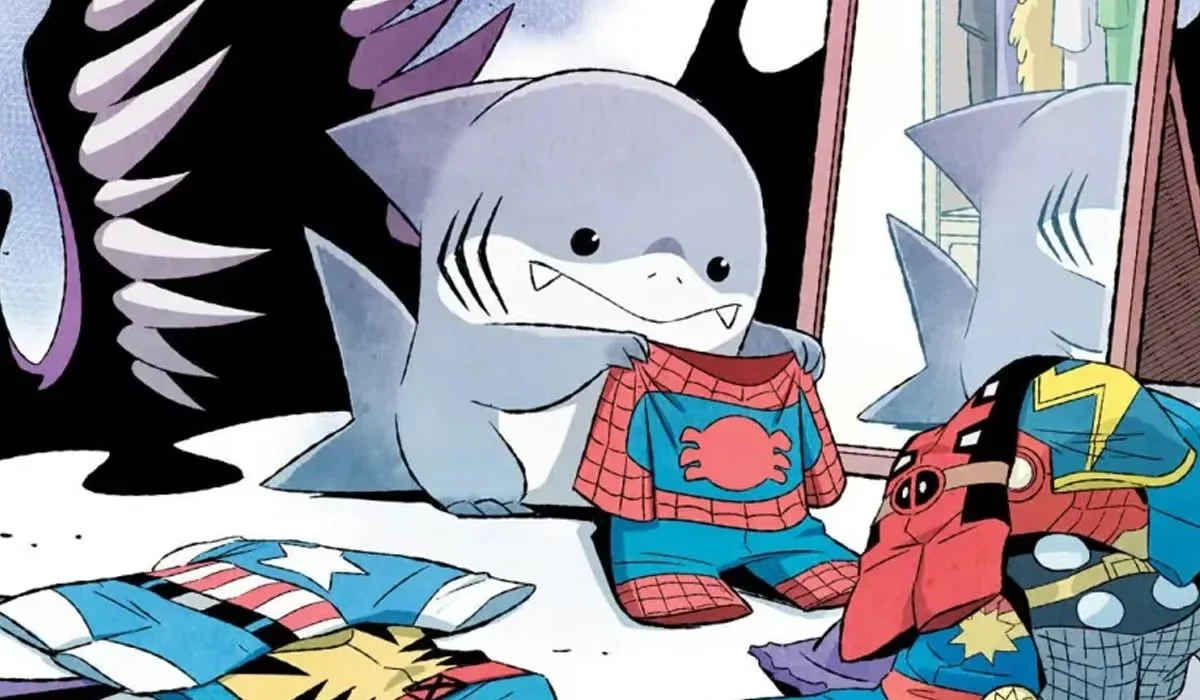
Also, there aren’t that many high res photos out there for to share with you, so apropos of nothing, here’s Jeff the Land Shark looking cute as heck.

Comment

The Last Toy Scout

Aslam R Choudhury January 8, 2026

As we dawn a new day (or several new days, I know this post is late) on a new year, let’s go back to the early 2000s for a moment.  It was a simpler time; our phones weren’t all that smart, if you said the word “grok” people just thought you were a nerd, not an idiot, and stores still existed that you could go to, walk in, look at the products on shelves, pick them up, and then buy them.  Right then and there.  No ordering and waiting and then receiving a box, opening the box, thinking “Oh yeah, I remember buying this”, and then hanging on to the box until recycling day.  But sometimes when you go into a store, you want to do it with a little flair, like cutting through the roof and locking the staff up in the freezer and helping yourself to the contents of the safe.  Sometimes, you do that 45 times.  And then sometimes, you decide that you’re going to move into that store until the heat’s off.

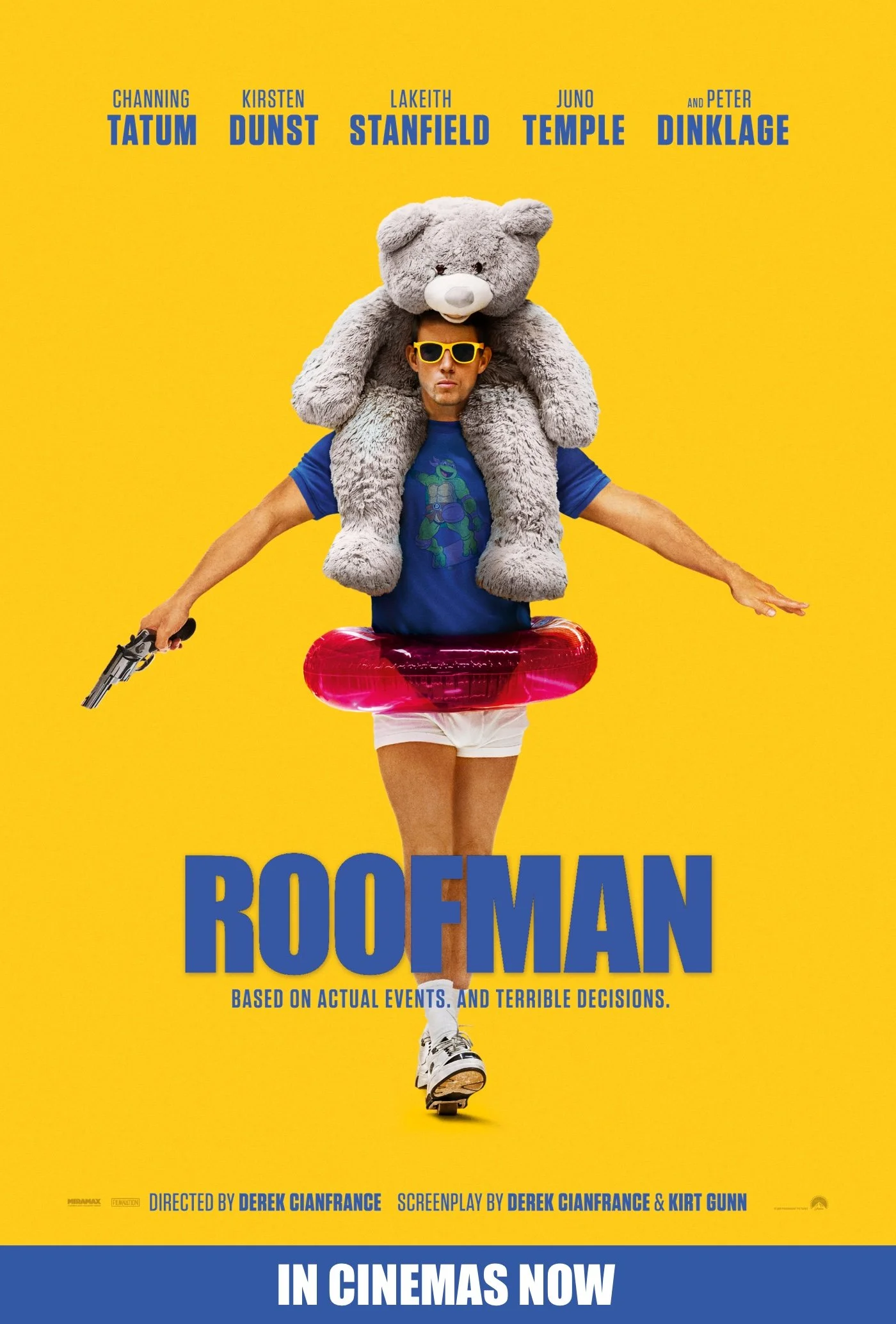
And that’s the life Jeffrey Manchester was living back then.  He’s a veteran in a sadly familiar position for many Americans, veterans included, where he can’t quite make ends meet and finds his dreams quickly fading away.  He and his wife are estranged and he’s hardly his kids’ hero, even though the relationship between him and oldest child, his daughter, is very sweet.  He just can’t seem to get it together.  Jeffrey, as his friend points out, is hyper-observant.  I’m talking Shawn Spencer without the whimsy levels of noticing things here.  And his friend Steve, played by LaKeith Stanfield (Atlanta, Sorry to Bother You), tells him that he needs to find a way to use that skill, his superpower, to make the money he doesn’t have.  Unfortunately, Steve, Jeffrey’s sergeant when they were in, has used his skills in a variety of different ways, most of them seemingly not very legal.  And that maybe inspires Jeffrey down the wrong path.  As Steve also points out, Jeffrey is bad at following the rules, even in the military.  He just messes things up.  But when Jeffrey figures out that most McDonald’s restaurants operate using roughly the same blueprint and roughly the same schedules, he sees his next steps.  Cut a hole in the roof on the night before the cash is picked up by the armored car.  Go inside and hide.  Wait for the staff to arrive so he can get into the safe.  Put them in the freezer until the authorities arrive.  Repeat 44 more times, earning the nickname “the Roofman”.  Success.

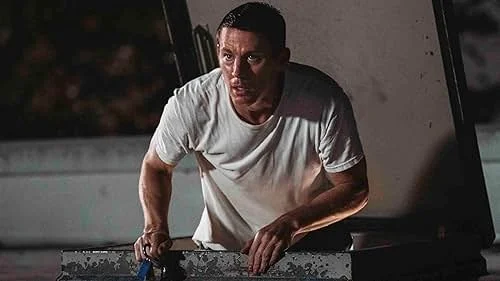
But Jeffrey, played by Channing Tatum (Logan Lucky, 21 Jump Street), does something most people committing armed robbery don’t do.  Before locking the staff into the freezer, he tells them to put their coats on.  And when the manager says he doesn’t have a coat, Jeffrey takes off his own and gives it to him.  He doesn’t want them to get cold; the freezer is just secure storage while he makes his getaway, he doesn’t actually want to hurt anyone.  That’s the last thing that he ever wants to do, though somehow he keeps doing it.  And before you think that this is just too silly a character to base a movie around, let me tell you that it’s true.  Roofman is based on a true story and the movie is happy to show its receipts when it comes to accuracy.  Jeffrey Manchester really did all that.  And that’s just the tip of the iceberg.

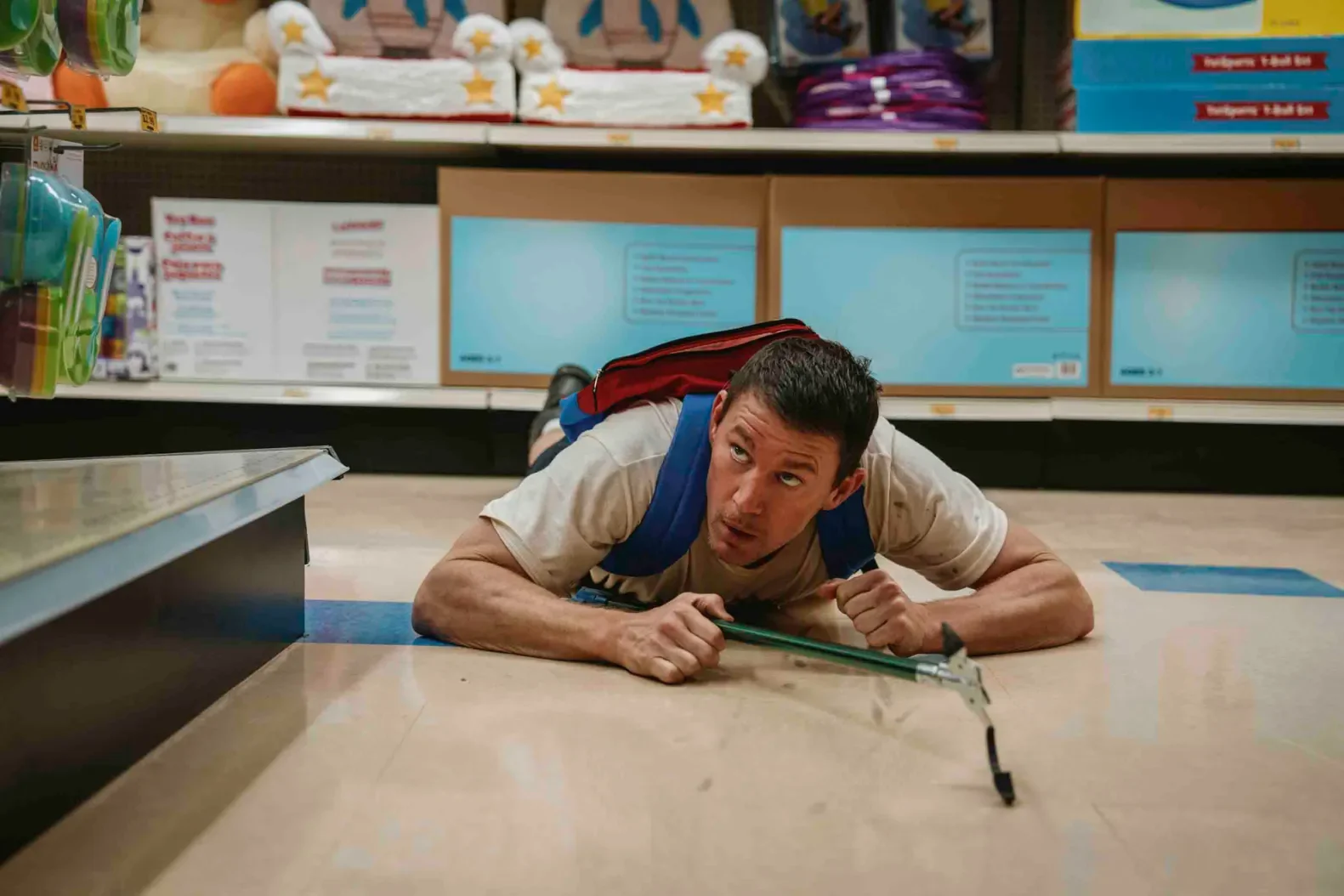
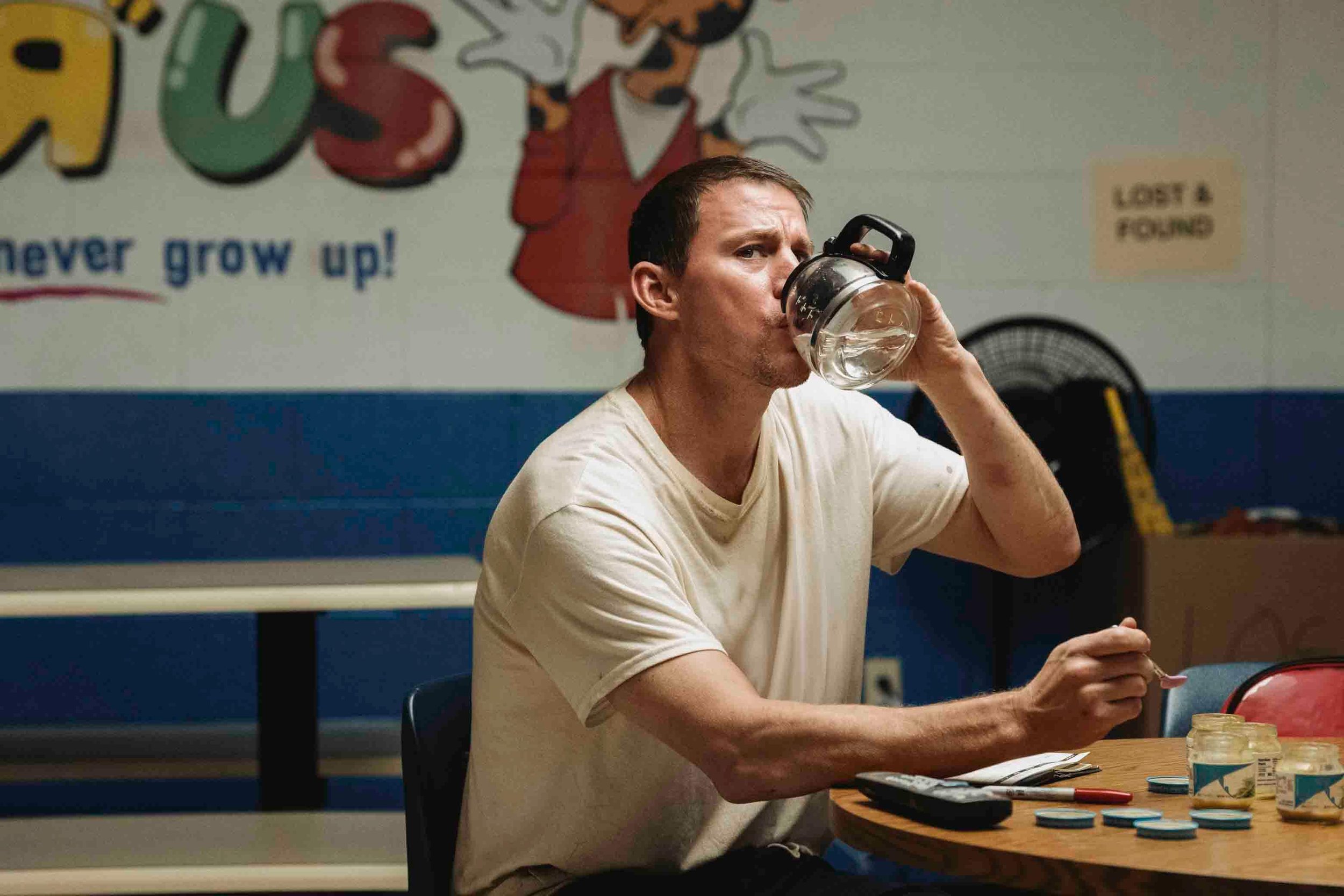
Of course, that sort of life catches up to you, even in early 2000s, and Jeffrey finds himself in prison with an incredibly, unfairly harsh sentence that would mean the next time he was a free man, his children would be middle aged.  But luckily, Jeffrey uses his skills to devise a simple and genius plan to escape and it works like a charm.  He ducks into a store to avoid the manhunt and decides to stay there until the heat is off and he can try to see his family again.  Or at least talk to them.  But until then, he’s forced to live inside of a Toys R Us, living out every 90s kid’s dream.

(As a side note, I really do miss toy stores.  There’s a wonder to them that just isn’t replicated by the toy aisle of a big box store, just like a digital lending library will never feel the same as walking into a public library and smelling all those old books.)

It’s not nearly as fun as Bart and Millhouse make it seem to be, though.  Hiding right under the noses of hundreds of people a day while the manhunt continues can weigh on a person, especially when you’re in self-imposed silent solitary confinement.  He can’t make noise during the day, he could get found out.  As a result, he becomes a nocturnal animal, making the Toys R Us his playground every night after closing.  It looks like so much fun, I used to dream of things like that as a kid.  He literally lives off M&Ms and other candies and plays with toys every night.  But for an adult, especially a fugitive, that’s not really enough.  Eventually, Jeffrey sets up his own surveillance system in the store and uses them as his own personal soap opera.  Things get a bit complicated when he develops a crush on Leigh, a single mom who works at the Toys R Us.

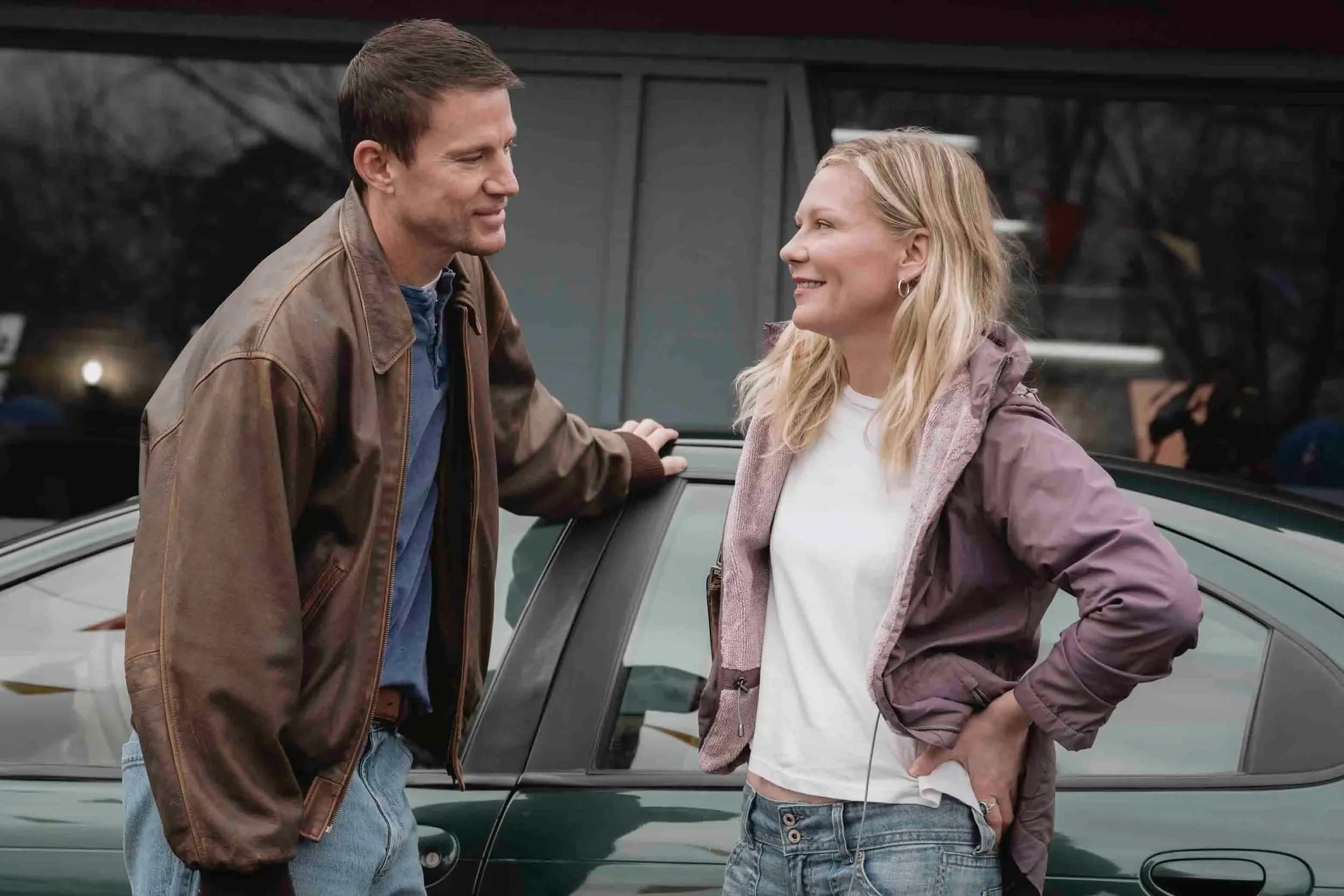
Leigh, played by Kirsten Dunst (Fargo, Jumanji), is a fairly newly divorced mother of two who is struggling.  It’s no surprise that Jeffrey is drawn to her.  I don’t want to get too much into their interactions because it’s really such a genuinely nice to thing to watch that I don’t want to tell you any more about it and spoil that particular emotional journey.  But what I can say is that this movie showcases both Channing Tatum and Kirsten Dunst at the peak of their acting ability.  And they’re no slouches to begin with.  Channing Tatum has been in some excellent films and has shown great skill in different genres and with characters of various depth.  Kirsten Dunst can do more than just kiss you upside down in the rain; her run in Fargo season 2 was fantastic.  The subtlety on display here, the amount of acting they can do just by moving or not moving their faces is astounding.  The two of them are absolutely magnetic on screen and they have easy chemistry together.  I knew that Channing Tatum was capable of delivering this kind of performance, especially because he was able to be emotionally compelling in a movie as plainly silly as White House Down.  His arc of esteem in my mind has been so completely unexpected—I thought he was, you know, another actor for the longest time.  Then came the Soderbergh films Haywire and Side Effects, where he had small roles, and then there was 21 Jump Street, where he made the jump from “he’s fine” to “hey, I like this guy”.  With Logan Lucky, he completely won me over.  While I’ve always liked Kirsten Dunst, it’s rare that she’s given a role where she’s allowed to have this kind of emotional depth (and that’s more a Hollywood problem than a Dunst problem) and she expresses it with the kind of subtle power that is rare this side of Manchester by the Sea.  Her openness and vulnerability and kindness are on display at all times.  She could be saying nothing and her facial expressions would write several dusty tomes filled from margin to margin with her emoting.  Roofman is truly a vehicle for Tatum’s talents, with so much of the movie being him alone and trying to stay sane and positive and find a way out of his predicament while maintaining an amount of caring for others you sadly don’t normally see in people, but don’t for a second sleep on Dunst’s performance here.  If there isn’t Oscar buzz for the both of them, there should be.

And this is where it gets a little tough.  Jeffrey and Leigh feel like such full, real characters that you can forget the reason they feel that way isn’t just excellent acting, it’s because these are real people, who lived this in real life.  So when I started yelling at my TV, realizing I had become way more invested in what I thought was going to be a silly movie about a man who turned a Toys R Us into his own personal version of The Terminal, I realized that narrative structure and satisfying endings no longer mattered.  I knew how I wanted the story to go as a story and even though I didn’t know the story of the actual Roofman, I’ve lived enough to know that the reason we tell stories is that real life is often too heartbreaking to live in without an escape.  That’s not to say sadness and pain shouldn’t be part of storytelling, not at all; it’s just that you get the feeling that if things went well and everyone ended up happy then it wouldn’t feel like a real story.  Because real life doesn’t usually get a happy ending.  Or a happy middle.  Or often times, a happy start.  As you watch Roofman, you’re constantly vacillating between being drawn into the relationships between the characters and the knowledge that a man who lives inside a toy store while being the subject of a manhunt is not hurtling towards a normal, stress-free family life.  You switch between being hopeful and filled with dread, but you’re rooting for Jeffrey the whole time.  Even though I didn’t even really know what Jeffrey winning would look like.  All I knew is that I wanted it to happen and that it couldn’t happen.  And the easy, silly laughs in the first two acts of the film feel like a warmth that’s been blown away by an icy gust of gale force winds.

This movie is so fun.  It’s also completely and utterly devastating.  It encapsulates the wonderfully eccentric life of a man who wanted simple things.  He wanted a family, he wanted kids that adored him because he was a good dad, he wanted a partner who didn’t hate his guts, he wanted good things for himself and others.  He wanted to belong and be connected with something.  It’s a tragedy in itself how much a man like that had to live in self-imposed isolation.  But when it all plays out, it still feels good somehow.  You’re hurting, yeah, because people did get hurt along the way (more emotionally, but also physically), but it’s not in a bad way.  Yes it’s sad, but not the bad kind of sad, if that makes sense.  It’s a little inspiring, in some ways.  I’m not saying that I had the urge to climb up a ladder and cut through a roof, but it did make me wonder.  If Jeffrey could be so considerate and kind in the situation that he was in, can I?  Can others?  I can’t go so far as to say that the world would be a better place if more people were like Jeffrey, because he’s a real person with real flaws; he’s not Captain America, he’s not Superman.  He makes bad decisions.  Jeffrey really proves that you can be a good person and still make bad choices, but it doesn’t make you a bad person (and then also the reverse must also be true; you can make good choices and still be a bad person, which is something I want to explore at some point).  But maybe it would be a little bit better if we could leave behind the armed robbery bits and isolate that part of him that made him care about others.  Because that’s really lacking in the world right now, at least from what I can see.

Roofman is perhaps a few minutes too long at 2 hours and 6 minutes; it could have tightened a little bit in the edit, but it doesn’t waste your time or really drag ever.  With the true story nature of it, it feels ever evolving, not like other movies where you watch until a certain moment and get to the point where it really starts.  It’s also rated R, with a decent amount of profanity and a lot of naked Channing Tatum, so this is perhaps not one to watch with the kids.  It’s also on Paramount+ exclusively at the moment, but I do hope it gets to more popular streamers in the future, because this movie is really very good and engages on an emotional level that was completely unexpected for me.  It’s a unique blend of Superstore and Shawshank, and it really works.  Roofman is a fascinating real life story that feels important somehow.  And with this one, definitely stick around through the credits, you’ll see why.

4 Comments

Tuesdays with Memento Mori

Aslam R Choudhury December 31, 2025

You know, I never hated Mondays.  Don’t get me wrong, logistically, they’re a nightmare.  You have two days, two and a half at most if you count Friday evening, but I personally think that’s cancelled out by somber feeling of a Sunday evening, and then you’re back at it for five days.  So yes, Mondays weren’t great and it was a rare Monday that I’d wake up chipper and at it (but that’s rare any day since my mid teens, I suppose).  But whatever the practical issues of a Monday, it was also the start of a new week; a new chance, a fresh start, fifty-two times a year.  And one time a year, we get a New Year’s Day, the start of a new year.  If Mondays, in some small way, felt like clean slate, then New Year’s Day is like the Super Bowl of fresh starts.

I’ve always thought it’s good to end a year the way you want the next one to start.  I think that’s why we dress up, force ourselves out into the cold, surrounded by suburbanites who flock to my fair city to try and pack a year’s worth of missed opportunities into one night, to pay too much money for too few drinks (or too many), all while muscling your way through a crowd of people and peacocking so thick that you might as well be trying to leave a Walmart as the doors open on Black Friday and the crowd comes rushing in.  The countdown and the ball drop get all the press, but New Year’s Day is important too.  And for 2026, I want to start on a hopeful note.  So I want to give to you as a final gift this festive period, a look at a movie about a fresh start.  In the face of your own imminent death, but hey.  Nobody’s perfect.

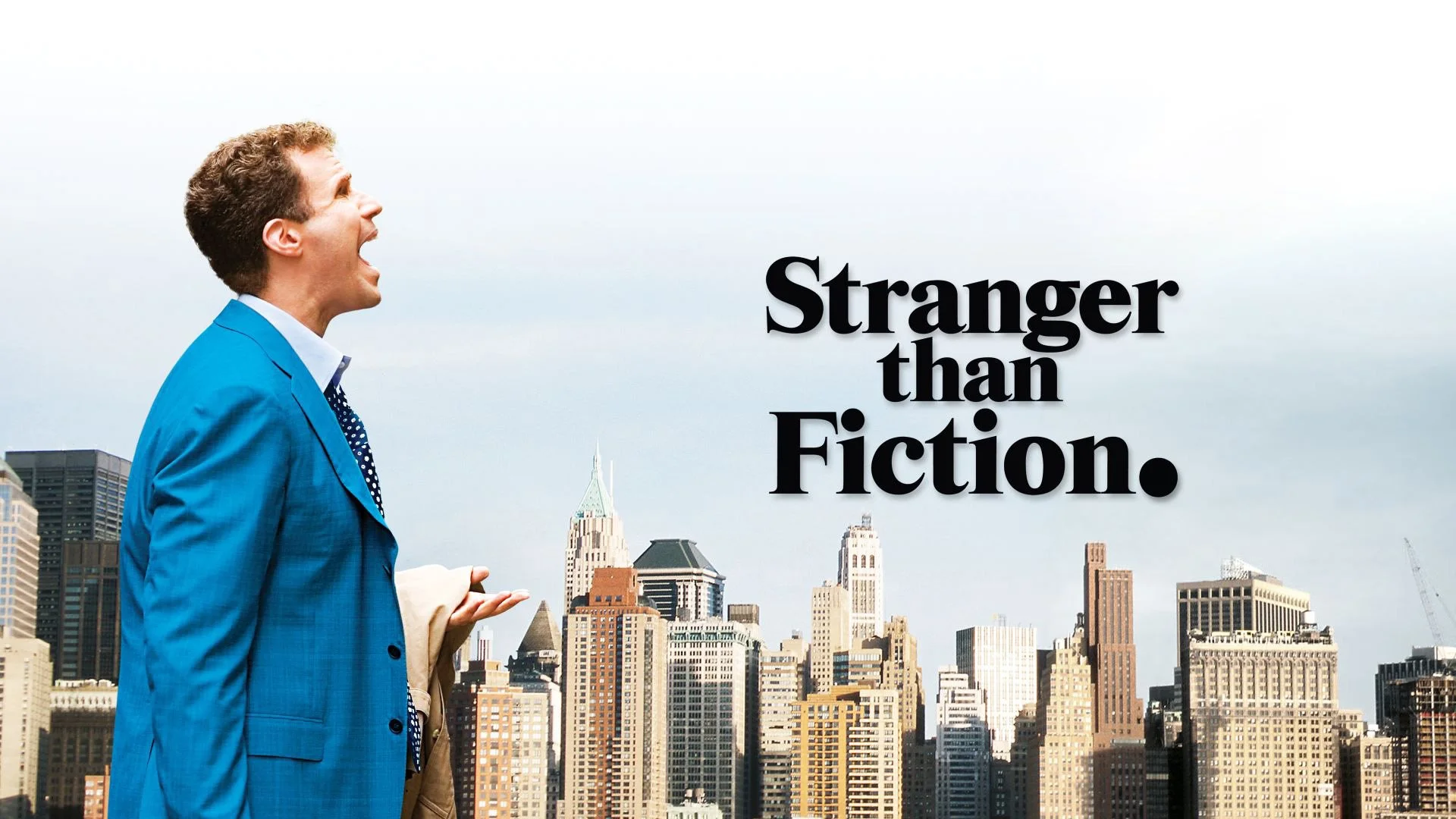
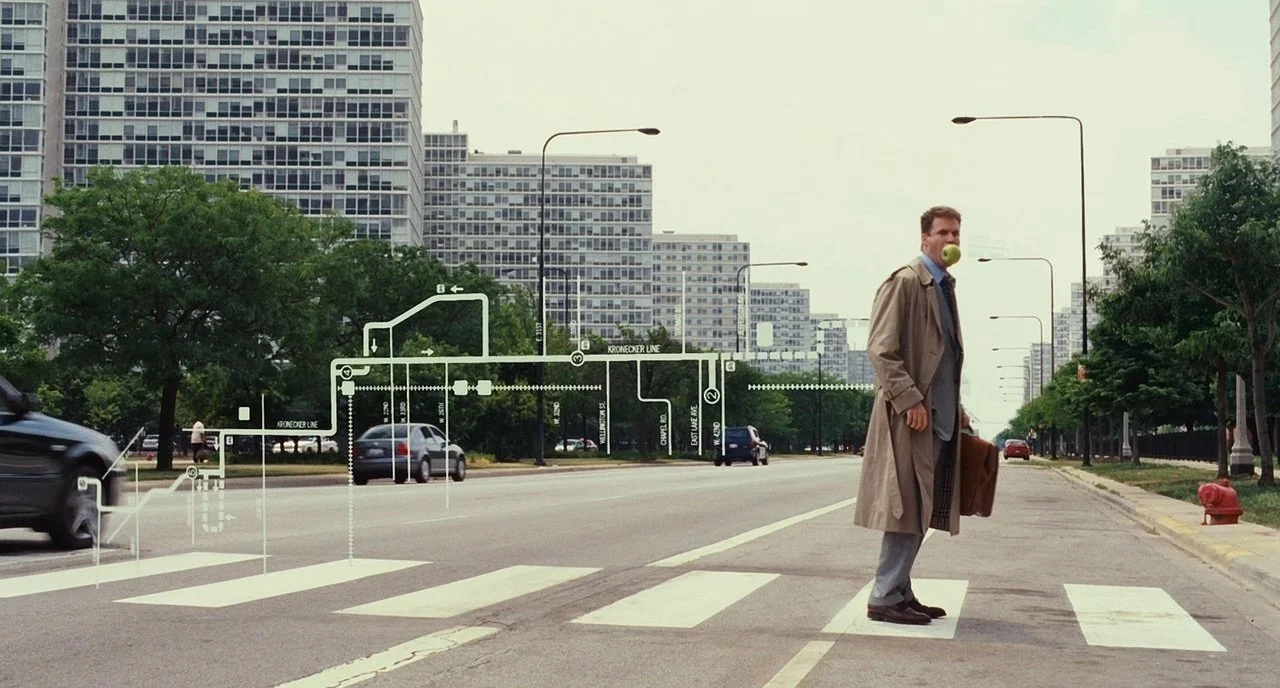
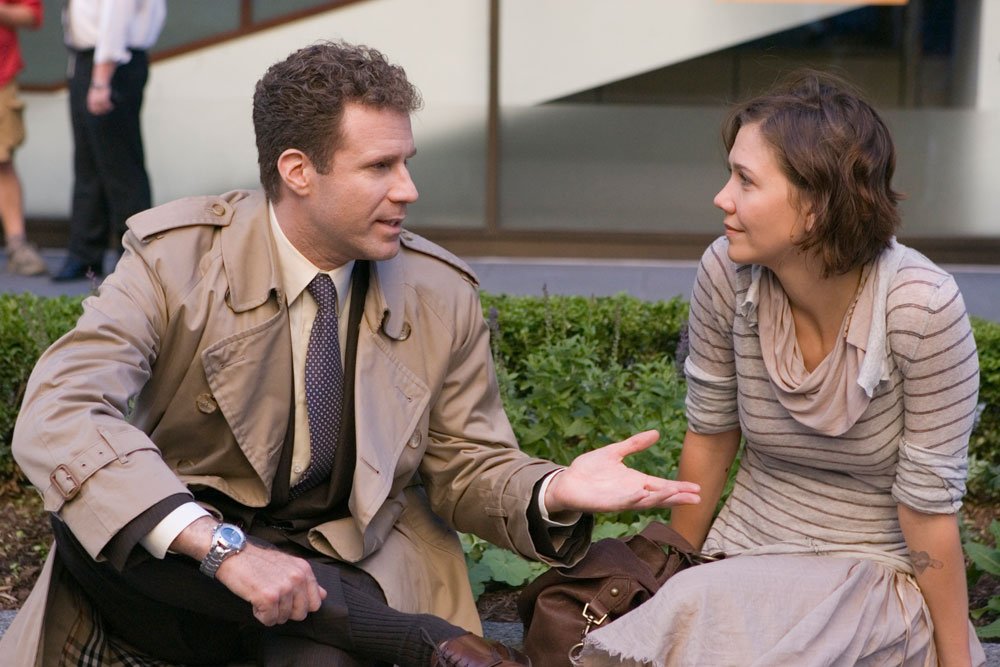
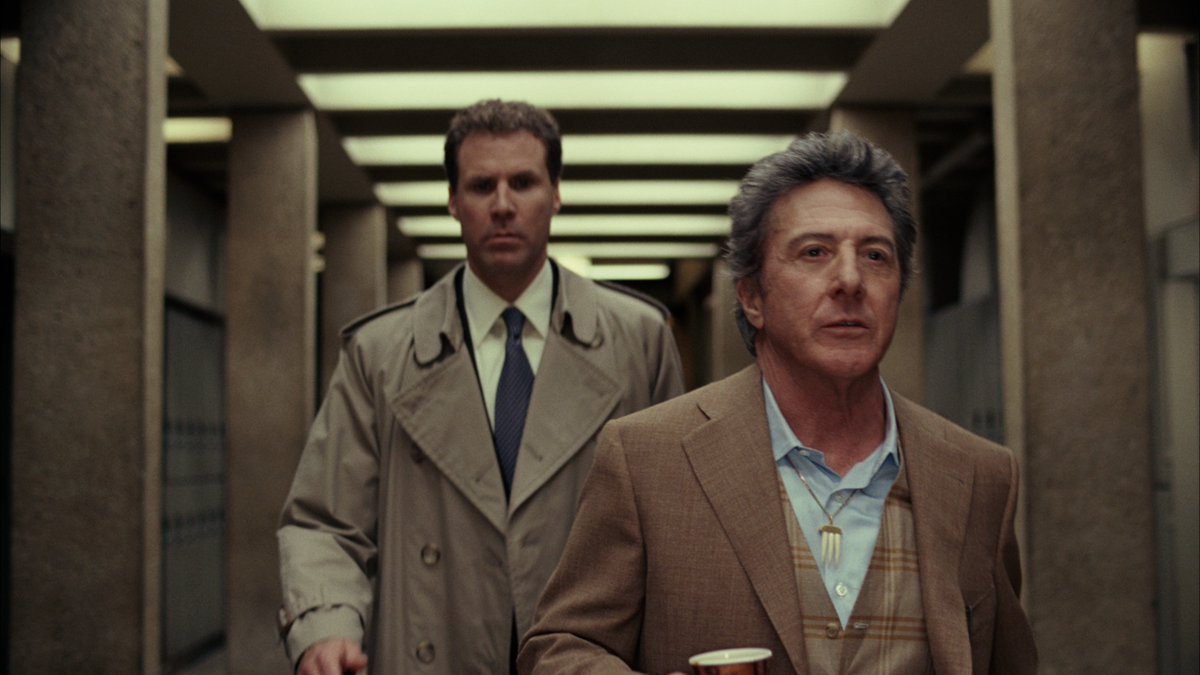
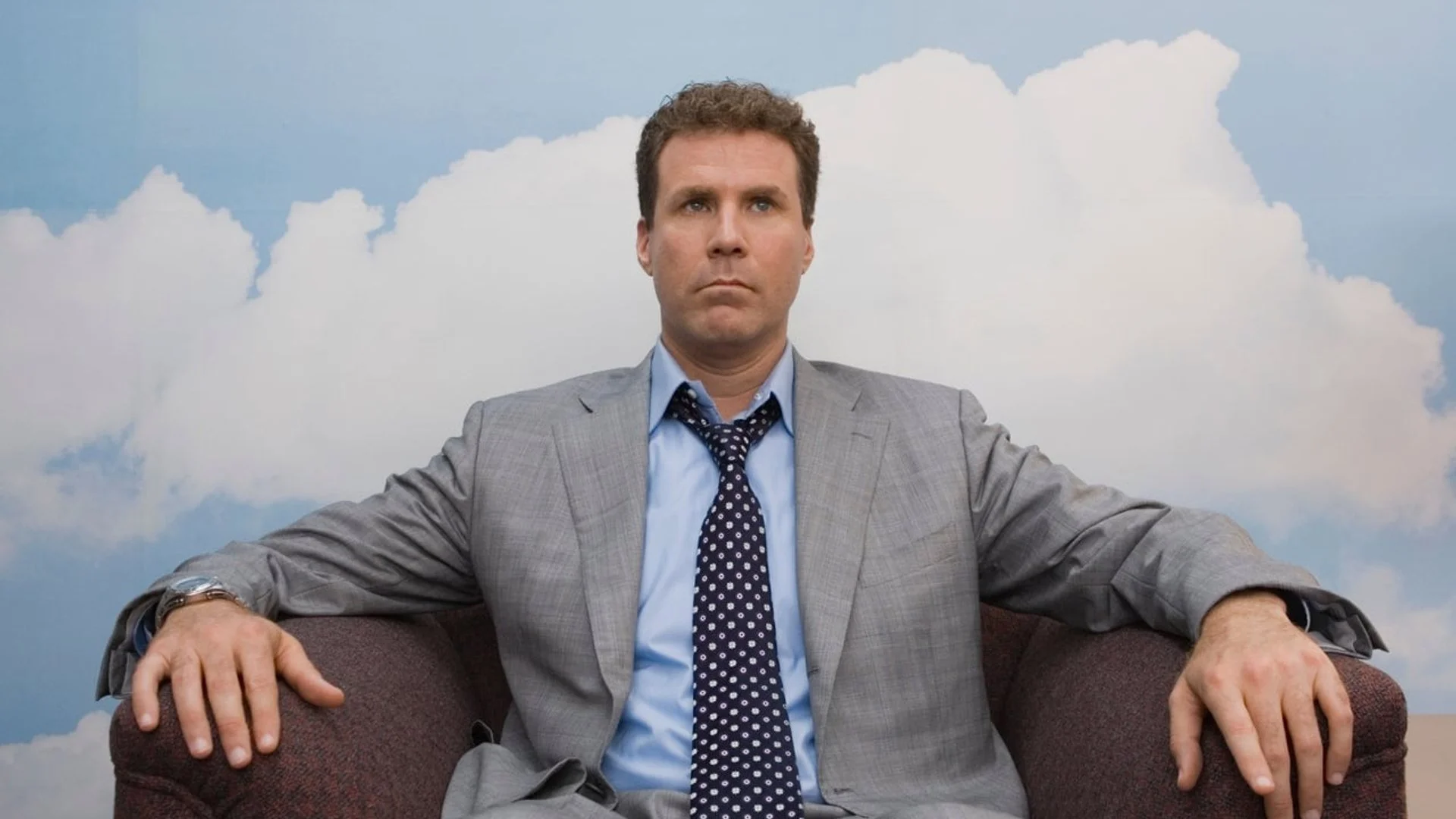
Meet Harold Crick.  Harold lives a horrendously routine- and efficiency-based life.  He is the absolute definition of no nonsense; no wonder he works for the IRS.  He’s even the same amount of late for the same bus every morning.  Of course, most people live routine lives, that’s not sad in itself, but he’s about to learn something about taking chances.  His life is as rote and predictable as a network crime procedural until one morning, when he starts hearing a voice in his head narrating his every move.  When he stopped, it stopped.  You can see why this is alarming; most people don’t hear voices in their head, let alone the voice of a British woman who’s just talking about the things you’re doing.  And that’s how Stranger Than Fiction begins.  Will Ferrell’s first foray into more dramatic acting, you’d get whiplash if you jumped from Talladega Nights to this, his other live action film from 2006.  Let’s get into it.

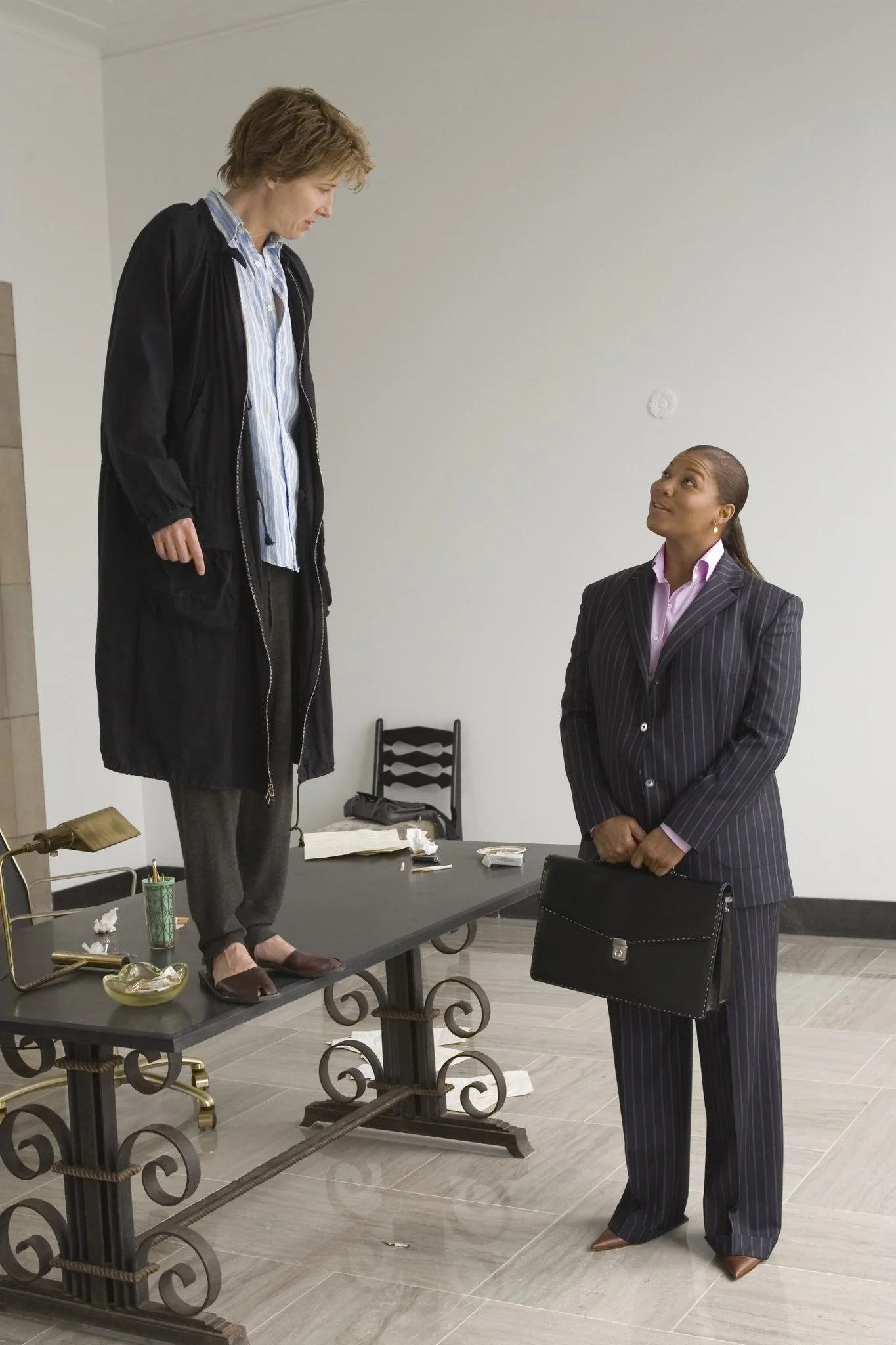
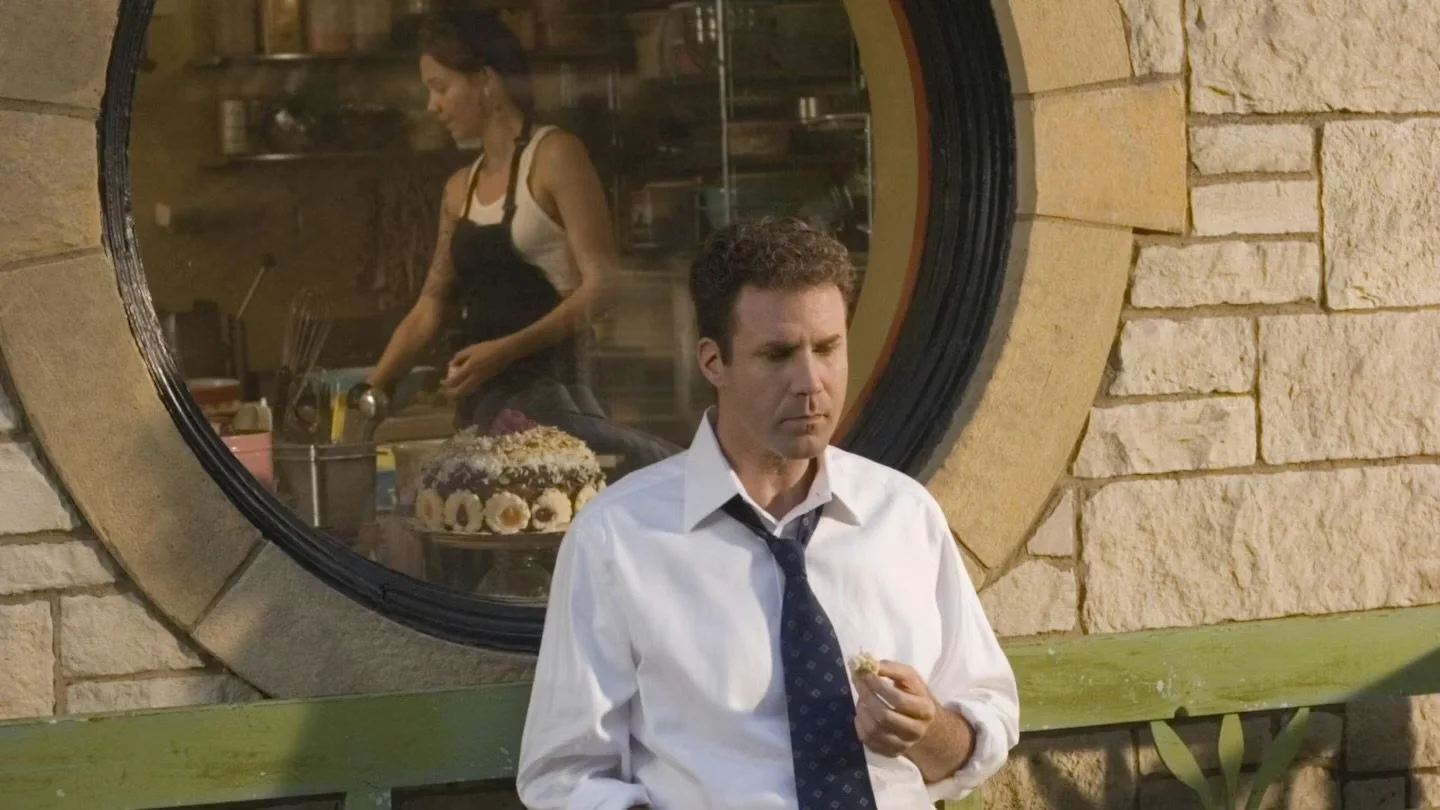
The voice in Ferrell’s Crick’s head is Karen Eiffel, played by Emma Thompson (Love Actually, The Remains of the Day), a celebrated author who’s about 10 years overdue for her next novel.  She’s got a case of writer’s block so bad that her publisher sends Penny Escher, played by Queen Latifah (Set It Off, Chicago) to be her assistant and get her over the line.  Karen is resistant and curmudgeonly, as is how we generally depict writers in media (and as one myself, I don’t have the courage to say it isn’t accurate), but her writer’s block is killing her.  And while her narration is already so distracting that Harold can barely cope with it as he tries to audit the lovely and very principled baker Ana Pascal, played by Maggie Gyllenhaal (The Dark Knight, Donnie Darko), she just told Harold that he’s going to die because of his wristwatch.  You’re already hearing voices and now it drops the dreaded “little did he know” in his head and then tells him he’s going to die.  That’s a bad day.

Harold is indeed a reminder that we will all die some day and that our time here is painfully, cruelly, and demonstrably short.  I’m reminded of a line Death speaks in The Sandman, saying that we all get what everyone gets, the time that we got.  But that’s not exactly true, is it?  I’ve always hated that line.  Some get a day, some get a hundred years, some less, some more.  Most people don’t know.  Harold does.  Harold has to go on with life knowing not only that he’s going to die, which is already tough enough for most people to deal with, as evidenced by the massive weight of media and literature devoted to reconciling that idea, but also when.  Not vaguely, not some notion of a faraway death; Harold gets to know the moment is coming and soon.  And yet he must choose to go on.

Now, on another day, I would go into great detail about how Harold’s lack of agency in life as a character in someone else’s book mirrors our own as we go through life in a society that pushes people to put aside their wants, needs, desires, and even their own identity at times for the sake of others’ comfort and fitting in.  I could talk about the idea that choosing to die rather than running away from it is Harold’s most significant means of taking his agency.  On another day, I could mention Stranger Than Fiction alongside masterpieces of mortality like The Green Knight, Puss in Boots: The Last Wish, and Logan, and perhaps on another day, I will.  But not today.  Today’s about hope and fresh starts.  So I’d rather focus on his other main act of agency.

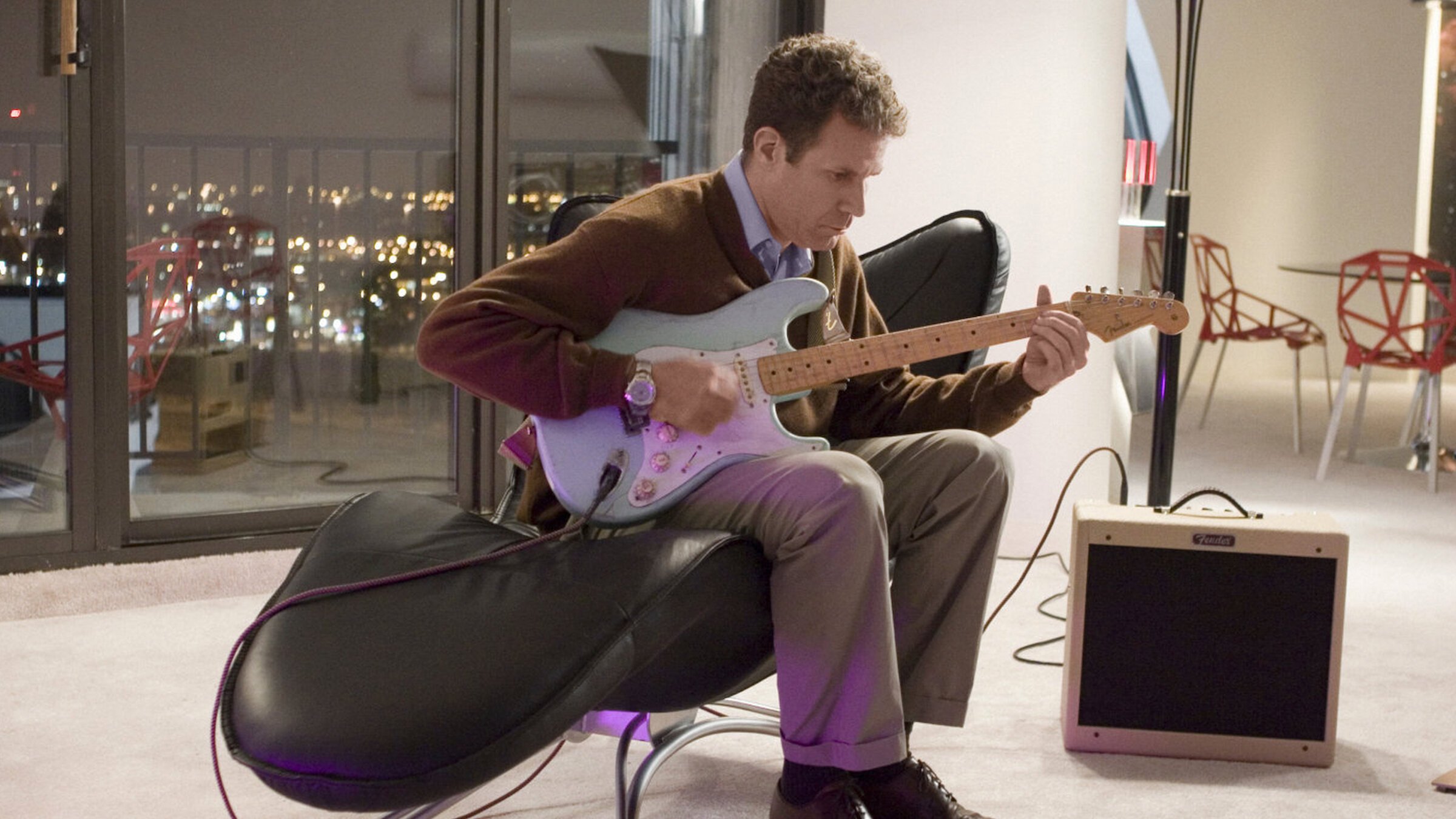
Harold buys a guitar.  He’s always wanted to learn to play, but he never did.  For whatever reason, life got in the way of that and he made it to middle age without ever getting to (I know the feeling, with my own midnight wine Stratocaster gathering dust in some forgotten corner).  But first, he goes to a psychiatrist who tells him that he’s experiencing symptoms of schizophrenia and when he protests, she suggests he speaks to someone who knows about literature, if he is indeed in a book as he believes.  Enter Professor Jules Hilbert, played by Dustin Hoffman (Rain Man, Kung Fu Panda 4), who devises a series of tests to find out what kind of story he’s in.  When Jules comes to his conclusion, he tells Harold to just live his life.  He is marching inextricably towards his own demise.  He has no control over his life and he could die at any moment, so he should live life to the fullest.  So Harold buys a guitar and decides to act on the feelings he’s been developing for Ana, whom Gyllenhaal plays with a great deal of charm.  Ana plays Harold hot and cold, being mean to the auditor and making his life miserable, but also doing something nice for him to balance things out.  Harold can’t help but fall for her and I get it.  Not only is there a voice in his head telling him that he’s catching the terrible ailment called romantic desire, but Ana is beautiful, caring, gentle, free-spirited, and unlike anyone Harold has ever met.  No wonder he’s intrigued.

I will say that the romantic plot line of the film is its weakest; 20 years ago, I thought it was very sweet, but now I do see it a little differently.  I wouldn’t go so far as to call it problematic—we’re not talking Three Days of the Condor here, but it’s not the most artfully handled and I think we could have spent more time with the two of them as the different storylines progress and intertwine.  It’s still a bit sweet, for sure, watching this repressed man try to reconcile his feelings for a free spirited woman who is nothing like him, and while Ana is far from a manic pixie dream girl, I do wish we got a little more meat to her character.  She’s not just some object of desire, though, Ana does get to be her own character, but I would have liked a little more.  Gyllenhaal is so good here, I can’t help but want more of her in this movie.  And perhaps some less clumsy writing as Harold tries to express his feelings, but overall, it doesn’t detract too much from the film.

It’s that.  Choosing to die may exercise his agency in the ultimate way, but choosing to live—to really live, to do more than just work and survive—is his most profound act of defiance, it is an unbelievably beautiful choice.  So this is where Harold stands.  Death imminent, but still unknown, deciding that he’ll no longer be a passenger in his own life, that love and passion are worth pursuing with the time he has left, and that maybe, just maybe, doing his work as an IRS auditor and counting how many times he brushes each tooth and tying his tie with a certain knot to save fractions of a second over a different knot, isn’t the be all, end all of human existence.  That’s his fresh start.  He’s freed from the rote mechanical existence he’d been living by knowing that he’s going to die.

But here’s the thing.  We’re all going to die.  And very few of us know when or how.  So Harold isn’t just a reminder that we’re all going to die, he’s also a reminder that we need to remember to live along the way.  It’s in these moments, as Harold lays eyes on the battered, used Fender Strat he eventually buys and realizes that taking a chance on love is better than quietly waiting for his time to run out, that I take great, great hope for tomorrow.  Because we all can choose that.  We all can choose to live right now.  We can all buy a guitar or whatever our repressed passion may be, we can all take a chance on someone, we can all decide that whatever time we have is more precious than whatever we’re protecting by not doing the things we really want to do.

Stranger Than Fiction isn’t perfect, but it’s an absolutely beautiful, heartwarming film that I feel is overlooked, partly because of where it stands in Will Ferrell’s oeuvre.  It’s his first dramatic role, but he’s funny, playing one of his more typical characters almost in reverse.  It’s comedic, but it’s not a comedy.  It’s romantic, but it’s not a romance.  It’s ambitious and meta, but it’s not full of itself.  Sure, it’s a little full of itself, but you want a little bit of that in writing; you have to believe you’re telling a story worth telling, otherwise you wouldn’t spend the time creating it or hope that others will spend the time experiencing it.  The meta narrative about writing and literature particularly resonates with me as a writer myself, and every main character is named after some prominent philosopher, mathematician, or similar—Pascal, Eiffel, Crick, Escher.  So yeah, it’s a little into itself.  And while it has its flaws, there’s too much beauty in the way this story is told to ignore.  Yes, Everything Must Go might be Ferrell’s dramatic centerpiece, but Stranger Than Fiction is what got him there and it’s the role that made me take him seriously as an actor, and not just an SNL player from an era I didn’t enjoy with one-trick movies that didn’t really appeal to me.  The movie mirrors what Karen Eiffel wants out of her novel; a look at the interconnectivity of life, the seemingly unrelated things that butterfly effect us towards the little and big moments of our life, the importance of sharing our lives with others and enriching both our lives and theirs in the process.  It’s a wonderful movie to start the new year with; a fresh start deserves a fresh perspective and if you haven’t seen Stranger Than Fiction before, maybe it’ll do for you what it did for me.  Currently streaming on Peacock, it’s PG-13, which it really didn’t need to be, because I don’t think this subject matter will appeal much to younger audiences, and at 1 hour, 53 minutes, it doesn’t overstay its welcome.

And now I get to thank you all again for the time you’ve spent here.  It’s a big internet out there, there are a lot of places and ways you can spend your time and I’m honored that you’ve decided to spend any amount of it here, reading my thoughts on movies and TV series, and letting me muse about how important media is.  If you’re going out to celebrate the end of a year and the start of a new one, please be safe and celebrate responsibly.  If you’re staying in, you’ve probably got a better head on your shoulders than I do.  I wish you all a happy and healthy 2026 and may we all take Harold’s example and choose to live rather than just exist.

Also, sorry for referencing Tuesdays with Morrie in a blog title again.  It just fit too well.  Happy New Year!

Comment
← NewerOlder →

Search Posts

Featured Posts

Featured
Image 2.jpeg
Feb 17, 2026
The Great Gotham Break-Up
Feb 17, 2026
Feb 17, 2026
IMG_2035.webp
Feb 12, 2026
Can’t Hardly Date
Feb 12, 2026
Feb 12, 2026
IMG_1813.jpeg
Feb 6, 2026
Wed Reckoning
Feb 6, 2026
Feb 6, 2026
IMG_1655.jpeg
Jan 28, 2026
The Gin Blue Line
Jan 28, 2026
Jan 28, 2026
IMG_1354.webp
Jan 21, 2026
Empire of the Run
Jan 21, 2026
Jan 21, 2026
IMG_1230.jpeg
Jan 14, 2026
Deep Blue Tea
Jan 14, 2026
Jan 14, 2026
IMG_1144.jpeg
Jan 8, 2026
The Last Toy Scout
Jan 8, 2026
Jan 8, 2026
IMG_0920.jpeg
Dec 31, 2025
Tuesdays with Memento Mori
Dec 31, 2025
Dec 31, 2025
IMG_8504.jpg
Dec 24, 2025
Stretch and the Family Four
Dec 24, 2025
Dec 24, 2025
IMG_0066.jpeg
Dec 16, 2025
Beauty and the Feast
Dec 16, 2025
Dec 16, 2025
IMG_9898.jpeg
Dec 10, 2025
The Task of Amontillado
Dec 10, 2025
Dec 10, 2025
IMG_9736.jpeg
Dec 2, 2025
The Chaircase
Dec 2, 2025
Dec 2, 2025
IMG_9490.jpeg
Nov 25, 2025
The Beetle Has Landed
Nov 25, 2025
Nov 25, 2025
IMG_9385.jpeg
Nov 18, 2025
The Karate Midlife Crisis
Nov 18, 2025
Nov 18, 2025
IMG_9267.jpeg
Nov 11, 2025
The Contrast of Us
Nov 11, 2025
Nov 11, 2025
IMG_8716.jpeg
Nov 4, 2025
Chomp and Circumstance
Nov 4, 2025
Nov 4, 2025
IMG_8440.jpg
Oct 30, 2025
The Neon Dreaming
Oct 30, 2025
Oct 30, 2025
IMG_8216.jpg
Oct 27, 2025
3 Body Problem Child
Oct 27, 2025
Oct 27, 2025
IMG_8062.jpg
Oct 24, 2025
A Ghost Wanted Man
Oct 24, 2025
Oct 24, 2025
IMG_7855.jpg
Oct 21, 2025
Tower Rangers
Oct 21, 2025
Oct 21, 2025
IMG_7423.jpg
Oct 16, 2025
Splatter is the Best Medicine
Oct 16, 2025
Oct 16, 2025
IMG_7122.jpg
Oct 13, 2025
The Parapsychosocial Network
Oct 13, 2025
Oct 13, 2025
IMG_6674.jpg
Oct 9, 2025
Trappin’ in the Woods
Oct 9, 2025
Oct 9, 2025
IMG_6451.jpg
Oct 6, 2025
One Flew Over El Cuco’s Nest
Oct 6, 2025
Oct 6, 2025
IMG_6176.jpg
Sep 30, 2025
Loop Dreams
Sep 30, 2025
Sep 30, 2025
IMG_5597.jpg
Sep 20, 2025
News Cruise
Sep 20, 2025
Sep 20, 2025
IMG_5172.jpg
Sep 15, 2025
Last Action Zero
Sep 15, 2025
Sep 15, 2025
IMG_4929.jpg
Sep 5, 2025
Tuesdays with Morbidity
Sep 5, 2025
Sep 5, 2025
IMG_4705.jpg
Sep 1, 2025
School of Goth
Sep 1, 2025
Sep 1, 2025
IMG_4228.jpg
Aug 25, 2025
Once More With Man of Steeling
Aug 25, 2025
Aug 25, 2025
Featured
Image 2.jpeg
Feb 17, 2026
2 Comments
The Great Gotham Break-Up
Feb 17, 2026
2 Comments
Feb 17, 2026
2 Comments
IMG_2035.webp
Feb 12, 2026
Comment
Can’t Hardly Date
Feb 12, 2026
Comment
Feb 12, 2026
Comment
IMG_1813.jpeg
Feb 6, 2026
Comment
Wed Reckoning
Feb 6, 2026
Comment
Feb 6, 2026
Comment
IMG_1655.jpeg
Jan 28, 2026
Comment
The Gin Blue Line
Jan 28, 2026
Comment
Jan 28, 2026
Comment
IMG_1354.webp
Jan 21, 2026
Comment
Empire of the Run
Jan 21, 2026
Comment
Jan 21, 2026
Comment
IMG_1230.jpeg
Jan 14, 2026
Comment
Deep Blue Tea
Jan 14, 2026
Comment
Jan 14, 2026
Comment
IMG_1144.jpeg
Jan 8, 2026
4 Comments
The Last Toy Scout
Jan 8, 2026
4 Comments
Jan 8, 2026
4 Comments
IMG_0920.jpeg
Dec 31, 2025
Comment
Tuesdays with Memento Mori
Dec 31, 2025
Comment
Dec 31, 2025
Comment
Support my work

Powered by Squarespace