Link to the audio version of this post is HERE
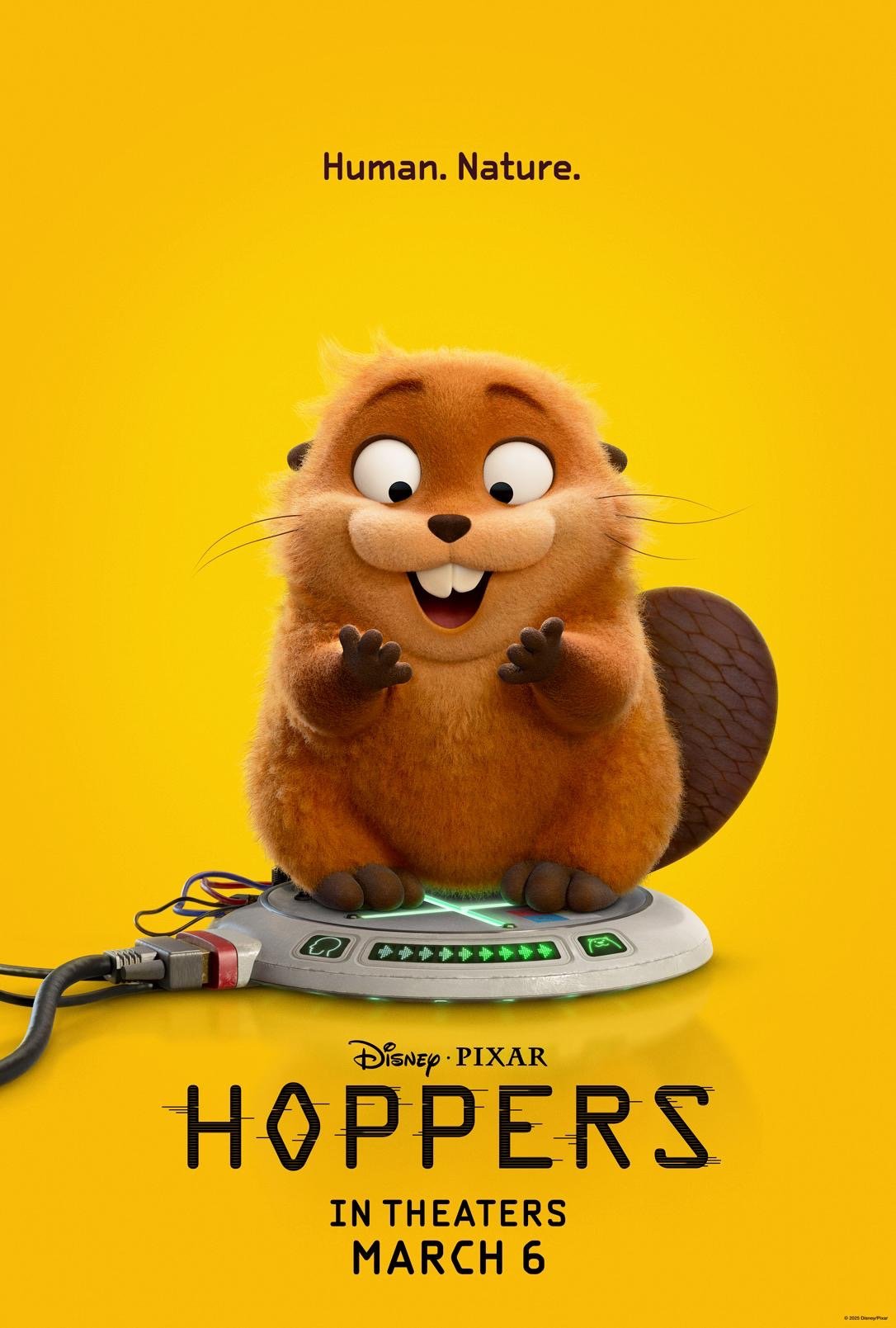
Summertime is the time of going outdoors, I know. As much as I am a city boy, where the glass and concrete have become nature, even I recognize the power of being in actual nature. It’s restorative. The amount of time it takes to restore people can be different for sure; for me, an occasional foray to the land of green stuff is more than enough to keep my nature meter sated. But for others, nature is much more important to their daily lives and can give a sense of peace and tranquility. Mabel is one of those types. She loves animals and nature and has pretty much devoted her entire life to protecting it, as futile as that may seem at times. Let’s get into Pixar’s 2026 animated feature, Hoppers.
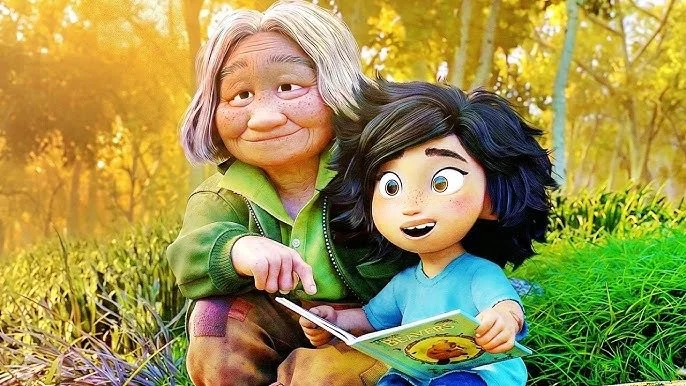
We start on Mabel Tanaka as a young child in school. And she’s plotting a jailbreak. Class pets are the main subject of her breakout; you see, Mabel really, really loves animals. And she hates to see them caged up and kept away from their natural habitats. But, like most jailbreaks plotted by 9-year-olds, it’s largely unsuccessful. But in the aftermath, Mabel’s parents drop her off at her grandmother’s place to watch her and she takes Mabel to the glade. Before I talk about how this affects Mabel, I want to take stock of how big a swing this is. This is the beginning of the movie; yes, we had the thrilling elementary school prison break, but immediately after, we grind to a halt and sit in a forest clearing to take in nature with our characters. This is paramount to the story. Mabel, voiced by Piper Curda (The Morning Show, I Didn’t Do It), the sister of Twisted Metal’s Saylor Bell Curda, grows into a 19-year-old eco-activist, fighting Mayor Jerry at every turn. And it’s this moment, where she quietly sits with her grandmother to take in the natural beauty around her that shapes her as a character. Mabel is headstrong, overbearing, slightly obnoxious, highly pessimistic, and a misanthrope as well; if you didn’t get a chance to experience for yourself what and why she’s fighting so hard to protect, you wouldn’t like her (and test audiences didn’t until this scene found its home in the opening act of the film). Sitting in that glade with her grandmother defines her.
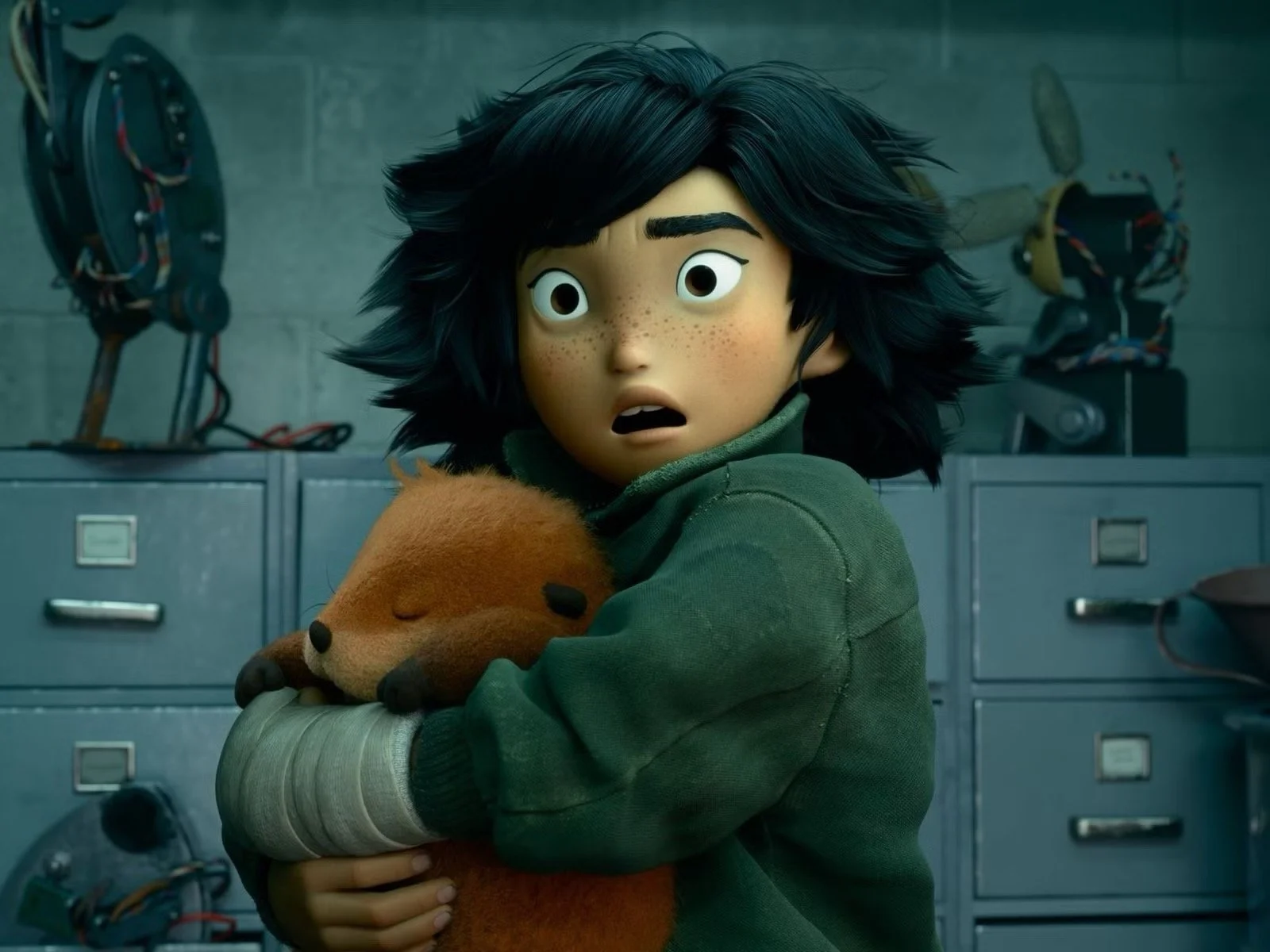
Jumping forward to now, the glade sits empty and a new highway looms over it like the knowledge of impending death. Mayor Jerry Generazzo, voiced by Jon Hamm (30 Rock, Grimsburg), is determined to run this new highway right through the glade, replacing it with the concrete and tarmac I usually hold so dear. As you can imagine, to Mabel, this is perverse. The destruction of nature for some slight convenience? She can’t stand for it. But she’s on a ticking clock and without any actual wildlife in the glade to protect, the glade’s been approved for destruction. Mabel goes to her professor and mentor Dr. Sam, voiced by Kathy Najimy (King of the Hill, Sister Act), and discovers that she’s been working on a top secret project to transfer the human consciousness into a robot animal body for the purpose of study. This allows them to communicate fluently with the animals and insinuate themselves into ecosystems unbeknownst to the animals that it’s really a human at the wheel. Dr. Sam let it slip that the presence of just one beaver would be enough to restore life to the glade, thanks to all their hard work; building dams creates the ponds and streams and is necessary for wildlife to survive. Can’t live without water, my doctor keeps telling me. Red Bull is made of water, I keep telling her. Normally, this is where I mention that our protagonist hatches a plan, but Mabel isn’t the planning type. She acts almost purely on instinct, jumping into the machine and hopping into the body of a robot beaver so she can find a real one to repopulate the glade. That’s what Dr. Sam calls it, hopping. I guess that’s why this movie is about beavers (or one specific lizard, depending on your perspective) and not rabbits. No matter, Pixar animation is sufficiently cute, regardless of the animal subject matter. Do an otter movie, Pixar. Please. They’re so cute.
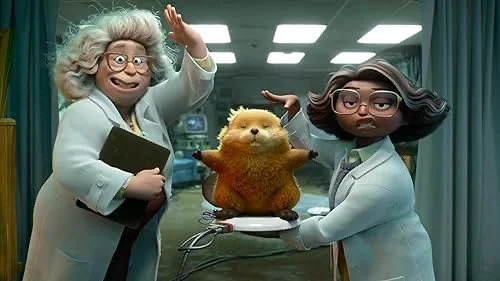
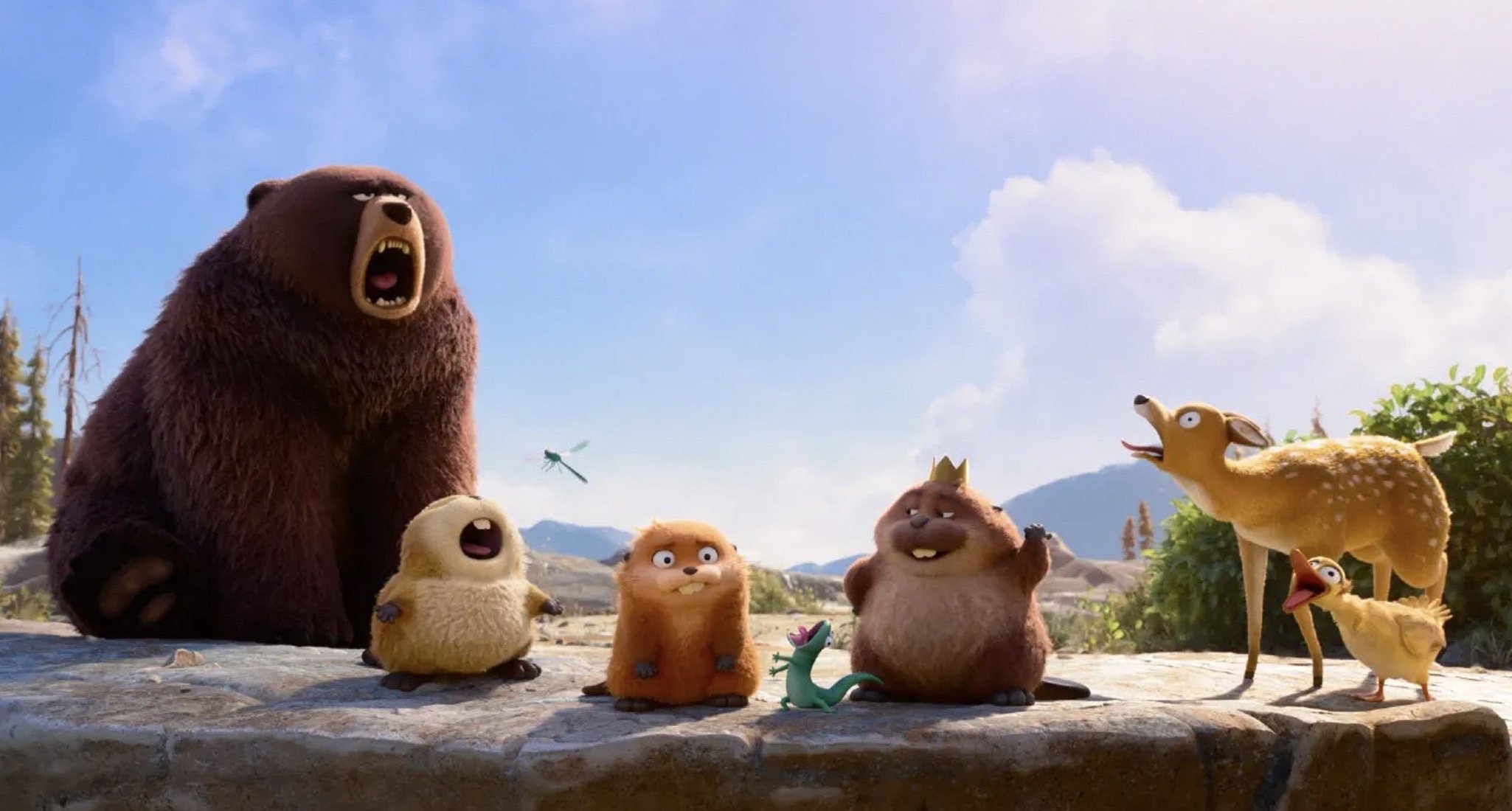
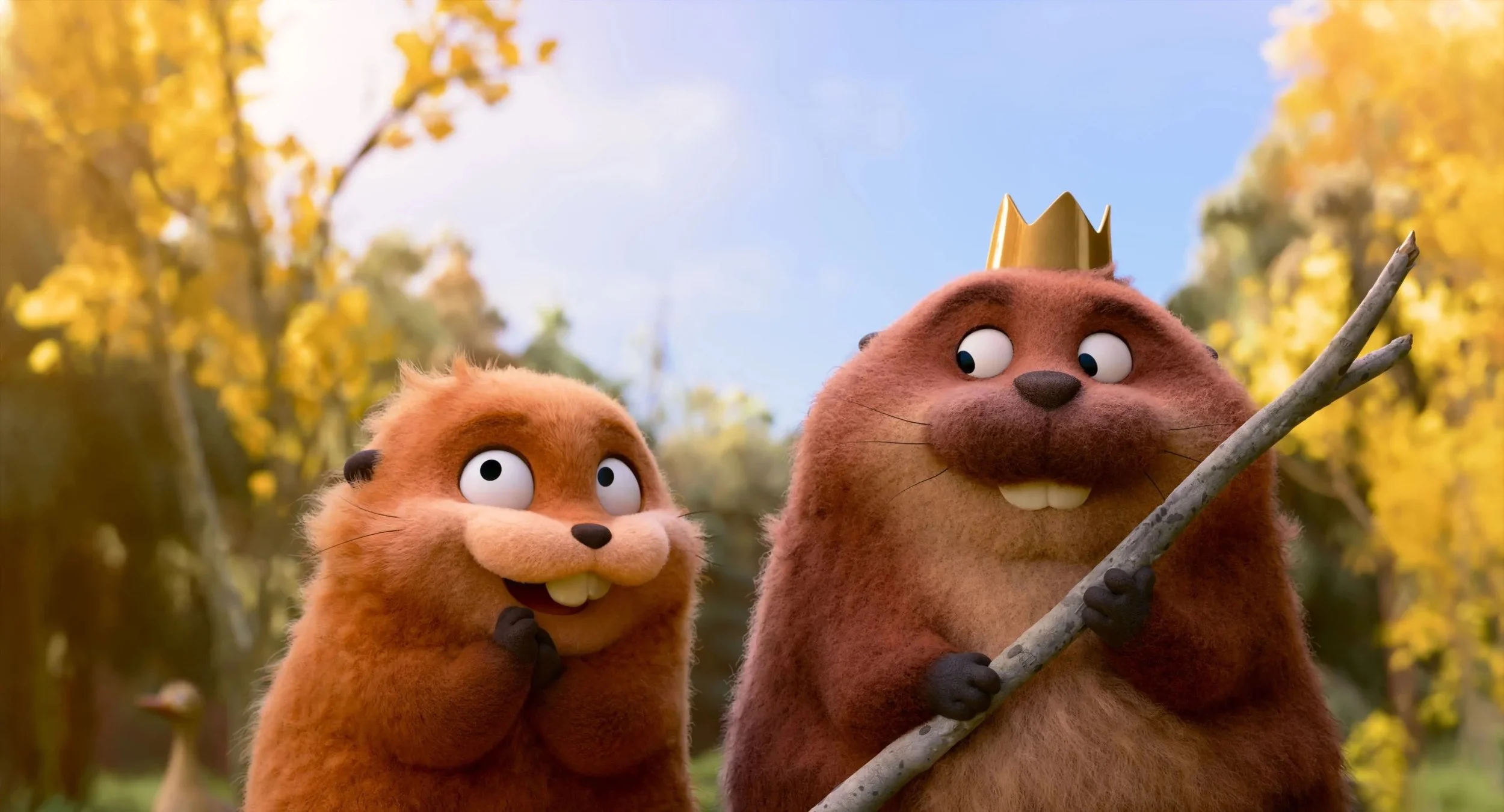
After interrupting the natural order of things (as a reminder, the animal kingdom is a cruel place; it’s worse than having to listen to Snyder bros on Twitter), Mabel is brought to King George, a beaver. George, as he likes to be called, is the cool king, and is voiced by Bobby Moynihan (The Fall and Rise of Reggie Dinkins). George has created a space for the animals being driven out of their natural habitats, cramped though it may be. And he’s the one that Mabel has to convince to go back to the glade and repopulate it so it can be saved (repopulate by building a dam and creating a hospitable habitat, that is; this is a Pixar movie we’re talking about). George is a bit of an odd duck, pardon the expression, with him being a beaver and all. He’s fun. Lighthearted. Trusting. Kind. But he still breaks it to Mabel that no one will ever move back to the glade because it’s too noisy. Mabel figures out the issue and they all move back to the glade, filling it with life. Job done, right? Of course not, we’re barely halfway through the movie.
I’ll get the bad out of the way right now. Hoppers is not an all-timer from Pixar. This is not a movie that’s on the level of the Spider-Verse films or KPop Demon Hunters from Sony, nor can it match the masterpiece that is The Last Wish. But it is a really good movie. And that’s despite the fact that the third act is a complete mess. The narrative holds together, but the rules of the world seem to no longer apply and the film starts genre hopping in a way I really didn’t expect. I was happy to be taken for a ride and enjoyed Pixar’s foray into slightly darker humor, but I’m not sure it was the best idea. However, these problems don’t get in the way of it being an enjoyable movie with a great message and it certainly won’t bother kids that some of the film’s internal logic seemingly got thrown out like litter on the side of the road. But if you allow yourself to forget about all that and just enjoy the absolutely unhinged action-packed third act, you’re going to have a really good time.
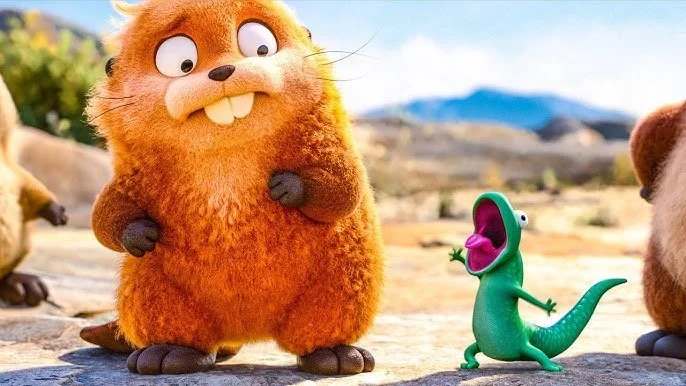
Mabel grows a lot, which is nice because sometimes when there’s a character like Mabel who starts off in the right, it can be difficult for them to have meaningful growth in their character arc. This is one of the places where the writing really shines. Mabel is angry. She hates Mayor Jerry. And I don’t blame her. This is a righteous anger that she feels, a righteous anger that fuels her, but never really pushes her over the line. But when she falls victim to her own rage at the injustices being perpetrated against nature generally and the glade specifically, she sets the animals down a path that leads to darkness. We all know that anger leads to hate and hate leads to suffering (credit to the great philosopher Yoda) and there is plenty of suffering to go around. But the second her righteous anger turns to hateful fear-mongering, Mabel snaps it back with George’s help. Mabel may be right at the start of the movie, but that doesn’t mean that she’s perfect. She has a lot of growing up to do; after all, she is only 19. I remember what I was doing at 19, and it definitely wasn’t trying to save the environment or getting into shouting matches with the mayor (I did transfer my consciousness into a robot marmoset once, but that was nothing like this). And through the course of this movie, she does quite a bit of growing up.
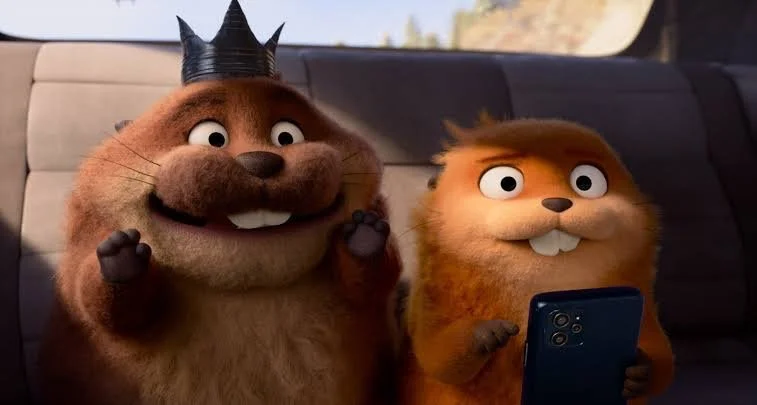
A lot of that is thanks to George. George has a truly Shakespearean backstory and he’s happy to share it. Everything he’s seen and been through, his first instinct is still to greet folks with openness and try to look for the good in them. Even humans. He’s even open to seeing the goodness in humans and as someone who is still active on Twitter, he does a much better job of finding it than I do. George is instrumental in Mabel’s growth and their friendship is so beautiful to watch unfold. And Bobby Moynihan’s voice acting is just fun to listen to. I’m so happy that he’s getting roles like this because he delivers banger after banger in Reggie Dinkins and I’ve grown so much affection for him as a result. But it’s through George, because of George that Mabel learns to see things from others’ perspectives. And without this, without learning this specific kind of empathy, Mabel would never be able to accomplish what she sets out to do. It’s not that Mabel isn’t empathetic; she has tons of it, of course. But because she’s unable to put herself in the shoes of another human, it makes her ineffective as an activist. Now I’m not saying that you need to open your mind to the point that you agree with those who are on the other side of your argument. Rather, if you don’t try to understand where they’re coming from, you’re never going to be able to change their mind. A decision doesn’t exist in a bubble, protected from change by magic; it sits atop a pedestal built on a pile of thousands of thoughts, experiences, emotions, personal values, and morals. If you can’t understand those underpinnings, you can never hope to get into that pile and start changing things. And if you can’t change the pile, you’ll have no chance at changing the pedestal or what’s on it; that decision you’re seeking to alter.
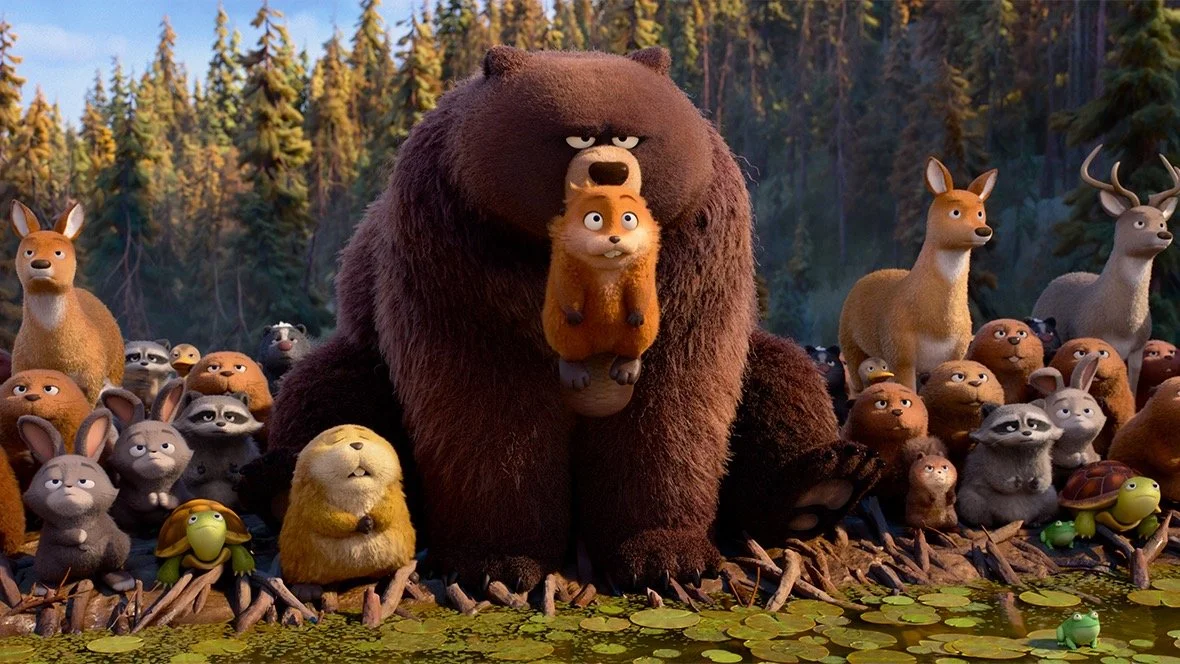
Despite the movie’s flaws, Hoppers is a worthy entry into the Pixar catalogue. Like most top tier kids’ movies, Hoppers isn’t just fun and funny; it also has a moral and a lesson to it and I think both of those are important. Human beings, as much as we like to believe it, are just as much a part of nature as the rest of it. And nature, filthy and dirty and covered in mud and bugs as it is, is not just worth protecting, it’s necessary, because harming nature is harming ourselves. We can pretend we’re different, we can pretend we’re above nature, but we’re not. And though I am a city boy, even I can’t deny the restorative power of being in the natural world. Once every few years, I try to find a way to commune with nature and allow myself to feel like I’m connected to something much bigger than I am. And that’s a huge part of what this movie is about. It’s about making sure we don’t forget that we’re not islands. Hoppers is a reminder that while we can have fun living life as a wave, we shouldn’t forget that we’re all just part of the ocean. All of us connected, every living thing a part of something that humanity has spent its existence trying to understand on a scientific, philosophical, and moral level. And as messy as the third act is, that doesn’t take away from how good this movie made me feel at the end of it. It made me want to go out into nature; not just in the moment, but as a life change. Instead of finding a place where grass grows once every few years, maybe I’ll do it once a year. An annual trip to a place where trees don’t grow tied to stakes in the sidewalk. Not a bad idea, really. Hoppers is rated PG, runs 1 hour and 44 minutes, and streams on Disney+. It’s great summer fun for the whole family with a message that people should hear. I’ll be watching this one again.