Link to the audio version of this post is HERE
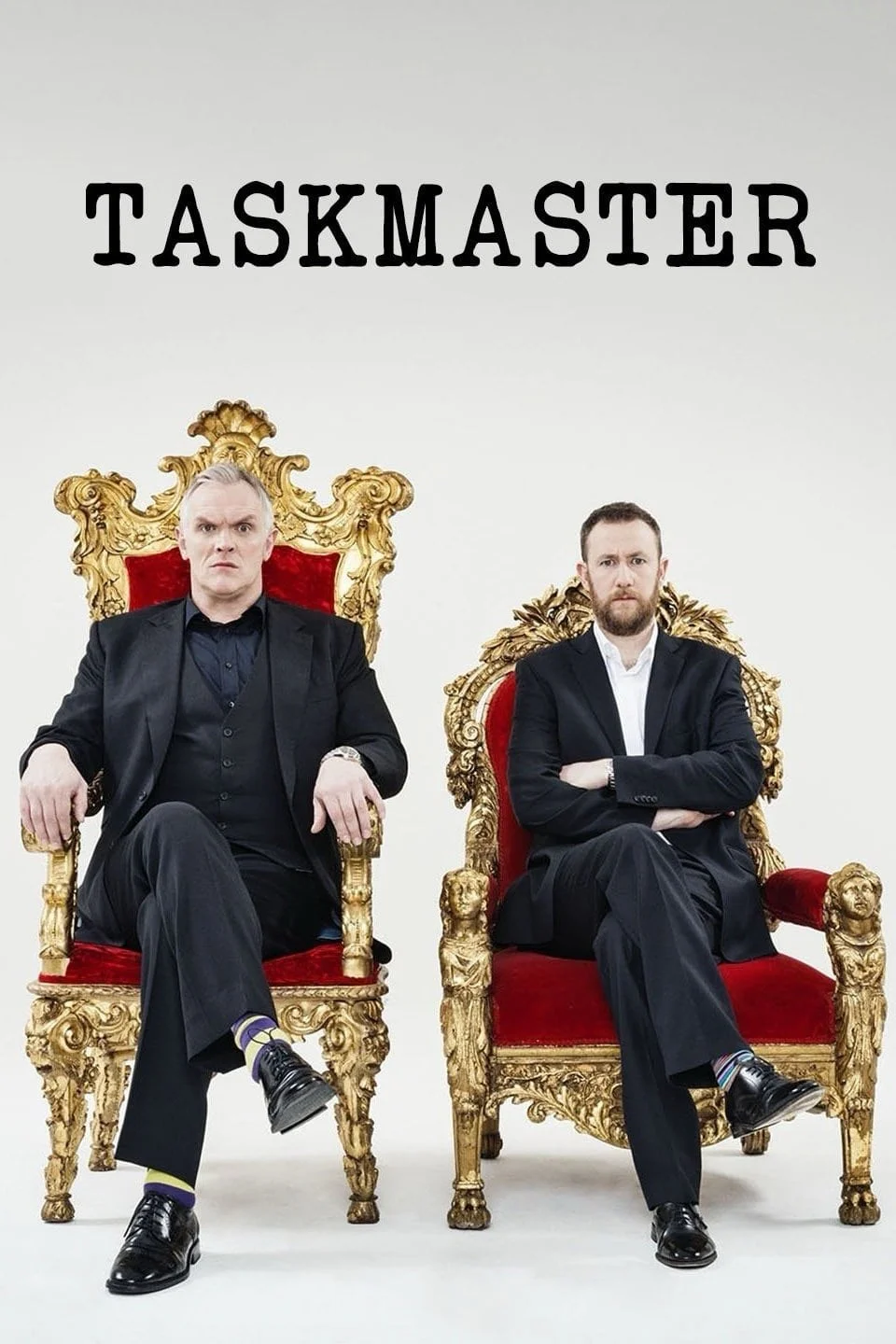
The summer is halfway over, the World Cup has ended (big congratulations to Spain, well deserved) and sports are illegal until the Premier League starts up again. So what to do with the rest of your summer? As long as I can remember, I’ve loved puzzles. Not jigsaws, mind you, I feel like the payoff of buying a box with a picture on it and then spending hours reassembling the picture from a bunch of interlocking pieces just seemed like a waste of time to me and still does. The win state was the picture on the box, there’s no surprise there. But being given a problem to solve? That’s more like it. When I was a kid, most of my neighborhood friends went to sleep away camp for the majority, so I was left with a lot of free time in the middle of summers. And I would have loved to have silly, needlessly complicated tasks to complete. I love solving problems. I think it’s why I enjoyed math as a kid (I’m sure this comes as a huge surprise, I was a nerd). I would have loved a series of complex and, at times, absurd tasks to complete to while away the boring summer months that my friends were away. Let’s get into Taskmaster and Junior Taskmaster.
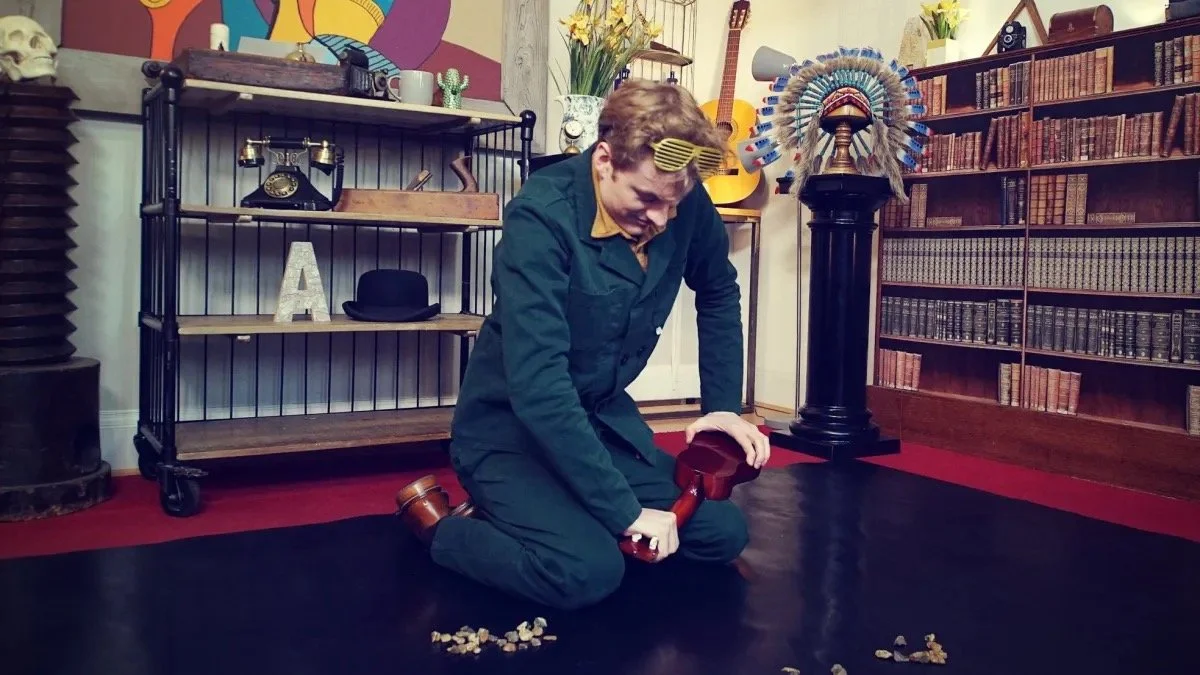
Taskmaster is the marriage of a British panel show like 8 out of 10 Cats or Would I Lie To You? and a reality competition show, where five comedians (usually, but not always) are pitted against each other in a series of complicated and absurd tasks. Which is exactly what I was talking about in the last paragraph, so I’ve gotten lucky with the topic this week. In the main version of the show, there are three kinds of tasks. Each episode starts with a prize task, where contestants have to bring in an object from home that fits a specific brief given to them and then the winner of the episode gets to keep all five objects. These prizes are all over the map and often quite silly; the briefs can range from the most useless expensive thing you own (such as a worm trumpet or a model of a streaker being chased by the police meant to go with model trains) to the thing that makes you look the most tough (with one contestant revealing a surprise Mohawk in stark contrast to his buttoned down appearance). Then you have three of your regular tasks, which are pre-recorded and edited tasks either solo or in a team, done at a number of locations, but most at the Taskmaster House, a place you’ll get to know very well if you watch the series even a tenth as much as I have. I’ve watched so much Taskmaster that I’m fairly confident I could walk through the entire Taskmaster House blindfolded and barely bump into anything (in 2025, I was a top 1% viewer of Taskmaster’s YouTube channel).
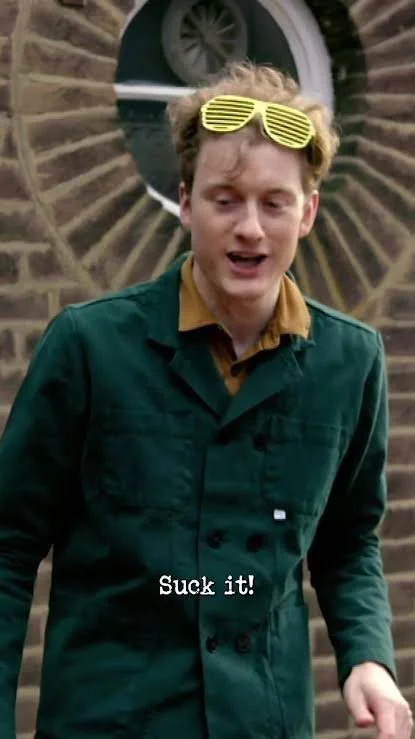
Which would be useful, because a number of tasks involve blindfolding the contestants. These are often layered tasks with clever solutions that can be found if the contestant is patient enough to find it, but the real comedy here comes from how people react to them. More on that later. The final task of each episode is a live task, done in the studio in front of the audience. This is where I’ve seen the most growth in the show, as they continually refine the live tasks to make them more engaging to watch. The live tasks aren’t foolproof, as nothing done live in front of an audience ever is, but over the years they’ve worked on them. Some of the live tasks end up finishing much faster than they expected, some end in anti-climaxes. But every season, these get better. What’s even more impressive is that in all the episodes I’ve seen, which is all of them and over 200 now, there hasn’t been a single repeat task. There are some that are variations or refinements on one another, but they’ve never repeated a task; not prize, regular, or live.
The mind behind this is the Taskmaster’s Assistant, Alex Horne. Horne is a comedian and musician (he has a group called The Horne Section) and he’s also the creator and designer of most, if not all the tasks. I don’t truly know how hands on with task creation he is these days, but I get the distinct impression that he’s pretty deeply involved with each task. In the fiction of the show, though, it’s Greg Davies who is in charge, the Taskmaster himself. Davies, a former teacher and a comedian and actor in such lad comedies as Man Down and actually surprisingly good shows like The Cleaner (which is something I plan to cover in the future, but as it’s a series about an irritable crime scene cleaner with a begrudgingly good heart, it doesn’t fit the light summer fun theme), plays the role of the strict Taskmaster, who hands out the points and the punishments with delight and glee. Over the years, his demeanor has softened, which I think has made the comedy of it even stronger when he is harsh to Alex (whom everyone eventually comes to resent, as these tasks test them time and time again). I think the softening on the Taskmaster character has really improved the show a lot, lending it some more of that Bake-Off good-natured vibe.
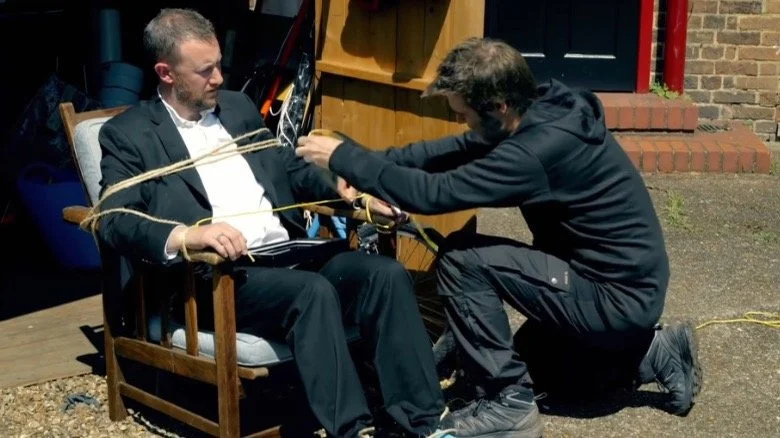
It’s at this point that I’d like to describe a few of these tasks for you so you can get a concrete idea of what these contestants face. The first one isn’t the most complicated, but it is one of the most genuinely exciting to watch moments of reality television I’ve ever seen. The brief is fairly simple. Stood at one end of a train yard on a raised bridge is Alex Horne with a bullhorn. On the other is the contestant, also on a bridge. The goal is to reach Alex without being spotted. And every ten seconds, he will sound the alarm on his bullhorn and hide, then pop up for ten seconds, rinse and repeat. This is one of the more straightforward tasks in the series, but it is so fun and actually harrowing to watch as you root for these celebrities to find their way through a maze of a railway. It’s almost like watching a sporting event, but where one of the athletes is a 50 year old quiz show pro (a chaser on the UK version of The Chase) in a bathrobe trying to navigate railway detritus shortly after recovering from shoulder surgery. Okay, so it’s not exactly the World Cup, but it feels like a grown-up school playground game and I love it. I was later informed in the YouTube comments section of the episode that it was actually a variation of a playground game played in the 1980s in England called “Berlin Wall”. Boy kids games can be morose sometimes, can’t they? Let’s hold hands in a circle and sing about the plague, this a perfect thing for kids.
Is that one too straightforward for you? How about showing up at a deconsecrated church and convent to find that a soldier in a ghillie suit is hiding somewhere on the grounds, saying your name every five seconds, and you have to find him and throw paint on him. The kicker? You’re wearing a device that blocks all your vision save the camera feed from the back of your head. Clues are scattered around the grounds, but you’ve got to find a well disguised man using nothing but your ears and the eyes in the back of your head. I don’t need to tell you that it gets pretty hilarious, pretty fast.
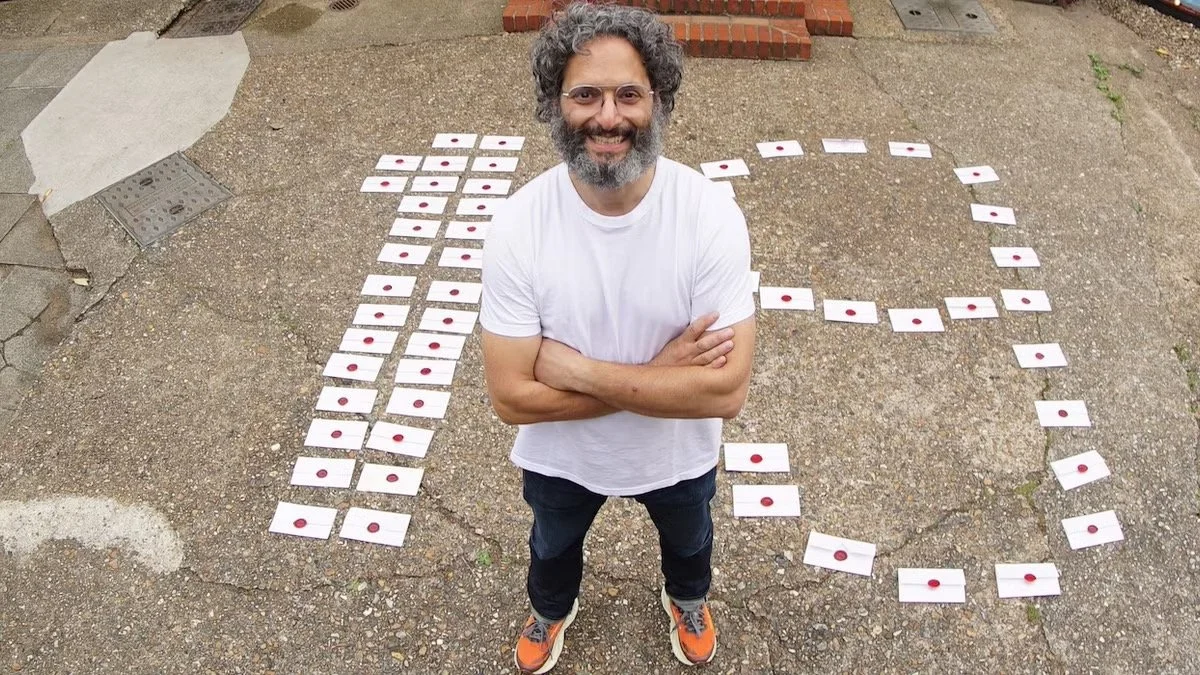
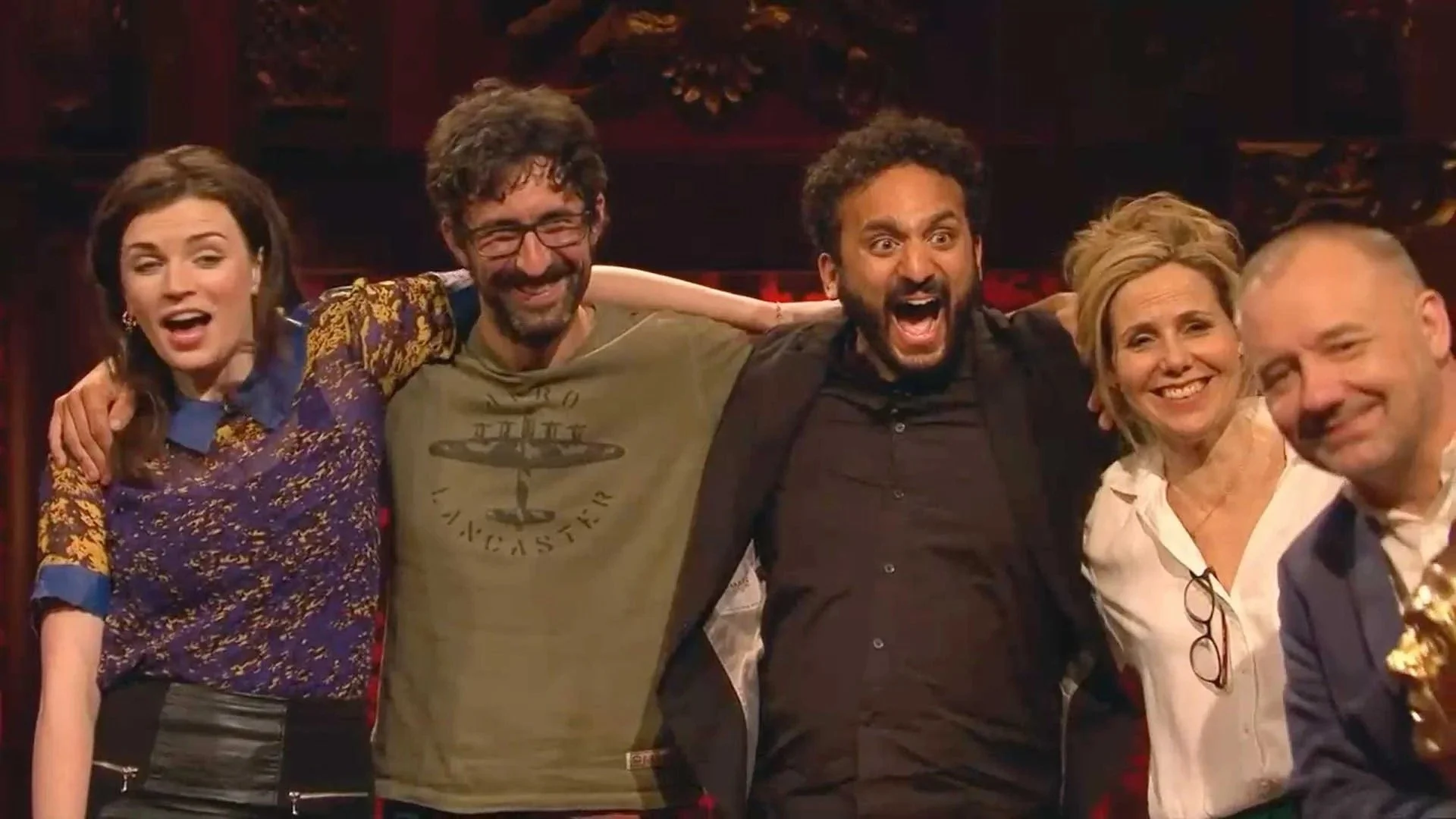
When the contestants aren’t graceful, they are definitely hysterical. And if you’ve ever struggled to feel normal in a world that demands you smooth out your quirks and deal with your issues quietly alone, there is something so validating about watching a hundred or so mostly comedians go through very silly tasks and sometimes have to address their own issues. I never knew balloons caused such a problem for so many people. Sometimes it’s blowing them up, sometimes it’s popping them that’s the issue. I’ve never felt more normal about my own personal quirks. I don’t think the show was intended to help people face their insecurities, but it does, at times have that effect. It’s really quite sweet sometimes. And then sometimes you also hear from lifelong friends of Greg and Alex and they have stories to tell. There’s also a bit more food waste in the early seasons, but when criticized for it, they responded by cutting a lot of that back. Which I’m really thankful for because not only does food waste on TV bother me, but also sometimes it’s just gross to watch. The contestant roster is going to be a mix of names you know and don’t; probably more that you don’t if you don’t watch as much British TV as I do, but I’ll give you just a taste of the highlights. James Acaster (whom I got to see live in January, doing the single greatest stand-up show I’ve ever seen), Nish Kumar (now the co-host of Pod Save the UK), legendary comic Bob Mortimer, Lee Mack (Not Going Out, Would I Lie to You?), Mae Martin, Charlotte Ritchie (Ghosts, You), Aisling Bea, Katy Wix (Ted Lasso, The Windsors), Armando Iannucci (creator of shows like Veep and Avenue 5, as well as the writer of The Death of Stalin), Emma Sidi (SNL UK), Ania Magliano (SNL UK), Nick Mohammed (Ted Lasso), and most recently, two American stars have made it over there: Jason Mantzoukas (Brooklyn 99, The Good Place) and Kumail Nanjiani (Only Murders in the Building, The Eternals), who left a few of the contestants a bit starstruck.
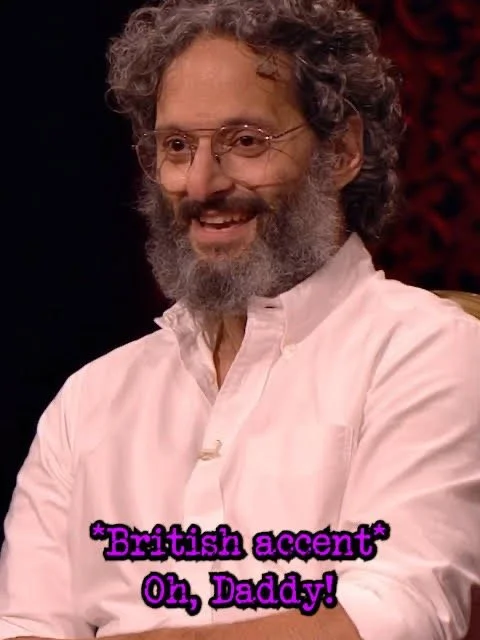
Taskmaster is just such a good time and I tell so many people about it in person that you’re getting the same treatment. But it’s not exactly fun for the whole family. As the series moved through different networks in the UK, there were varying levels of censorship. But at the very least, if adult language isn’t something you’d want your kids to hear on a regular basis. Taskmaster isn’t for them to watch. Enter Junior Taskmaster.

A new Taskmaster, Rose Matafeo, and a new Taskmaster’s assistant, Mike Wozniak, take the place of the originals, both former Taskmaster contestants, and they, well, do the show with kids. Rose is a stand-up from New Zealand and Mike is a doctor turned comedian and actor. And they have such a good rapport with the kids, it’s fantastic to watch. You always worry a little with kids in television, but it really seems like they were supported, encouraged, and cheered on throughout the whole process. The format changes, since you have rules about how much children can do things like film TV shows in a day, so it’s more done in group stages, but the core of the series stays the same. A group of contestants have to do a bunch of absurd tasks and the best one wins. But this time, the tasks are more geared towards the minds of kids, which is really, really fun to see. Kids are less trapped by convention than we are and they often exhibit lots of out-of-the-box thinking. I’m not going to pretend their ideas always work out because they are kids after all, and their brains are the size of a walnut (I don’t know a lot about kids; brains the size of a walnut and they always land on their feet…actually that might be cats I’m thinking of), but they always try things out so wholeheartedly, it’s truly endearing and uplifting to watch. And since the whole show is geared towards kids, the series is itself is designed to be family friendly. This goes back to what I was talking about in the intro. As an adult, I’m far too buttoned up and self-conscious to ever do anything like Taskmaster, but when I was a kid, I was slightly less buttoned up and self-conscious and would have loved to be on something like Junior Taskmaster. Like I said, I love problem solving and Junior Taskmaster, would have been a perfect outlet for that. And who knows, maybe the series could inspire some family game nights? Thus far there’s only been one season of Junior, but I hope that if enough of us keep watching it, they’ll bring it back.
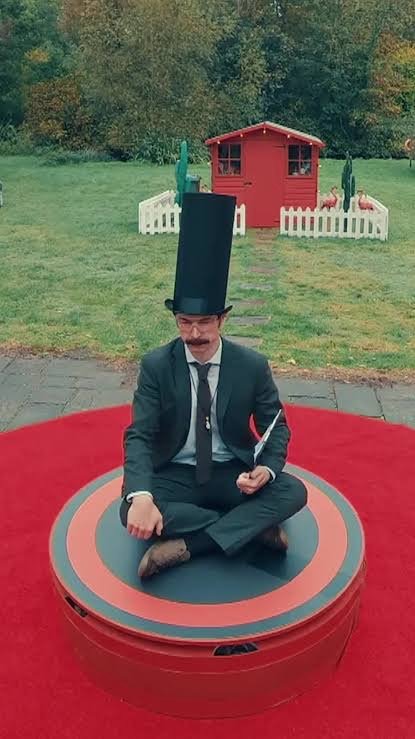
Both series are something truly special and the show does nothing but improve. With 21 seasons of the main show under its belt (ranging from 6 to 10 1-hourish long episodes per season, with later ones being 10), the show just keeps refining itself and getting better. And they’re striving for more diversity and to bring up more smaller comedians as well as mixing in more established celebrities. It’s almost unbelievable how a show that started out as Alex Horne devising games for his comedian friends turned into this juggernaut of a comfort show and panel show and reality contest show all wrapped into one. I can’t say that any series was weak, but you can definitely see how the first was still very rough around the edges. You can pick it up and start anywhere, but I would recommend starting with Series 4, 5, 7, 12, 14, or 21. But, if you want to start out with a true home run, I would start with Series 19, where Jason Mantzoukas becomes one of the first American contestant they’ve had and, like most Americans in Europe, leaves a wake of destruction wherever he goes. It’s unbelievably hilarious to watch. The entire series is available for streaming on YouTube here in the US, so it’s easily accessed, which is really nice. The task is to give it a try. Your time starts now (you’ll get it when you watch it).