• The Study Room
  • Information
  • Contact
Menu

The Study Room

A Blog for a Podcast that Might Still Happen
  • The Study Room
  • Information
  • Contact
×

Disney+’s new series has big shoes to fill and a lot of Jar Jar to make you forget

The Old Man and the Dune Sea: A Kenobi Story

Aslam R Choudhury May 29, 2022

[In this article, the first two episodes of Obi-Wan Kenobi will be discussed with light, non-story-essential spoilers.  Content warning: sensitive topics such as school shootings and genocide will be discussed.  In the wake of recent events, I am at a loss for words to describe the tragedy that has not only befallen the families of the children and teachers killed and their community, but wounded the soul of a nation.  My heart goes out to everyone touched by this senseless act of mass violence that has become too familiar in the American landscape.]

I’m tired of superheroes.  I said it.  MCU fatigue has finally fully settled in.  After I shrugged my shoulders through the entirety of the latest increasingly-confusingly named Spider-Man film, not only did I wonder why they all had “home” in the title (Homecoming, Far From Home, No Way Home, Homeward Bound, Home Alone, Home Improvement, and Sweet Home Alabama; it gets hard to keep track of all of these), but I wondered how far we can go on sheer nostalgia.  Especially if the thing I’m supposed to be nostalgic about doesn’t resonate.  I never watched the Andrew Garfield Spider-Man trilogy—I wrote them off as cynical cash grab meant to hold on to the rights to the franchise.  So when he showed up to a silent audience as I watched at home, I felt nothing.  Nostalgia can only get you so far, right?

Far removed from his days as a Jedi and a general, Obi-Wan lives with his roommates, isolation and regret

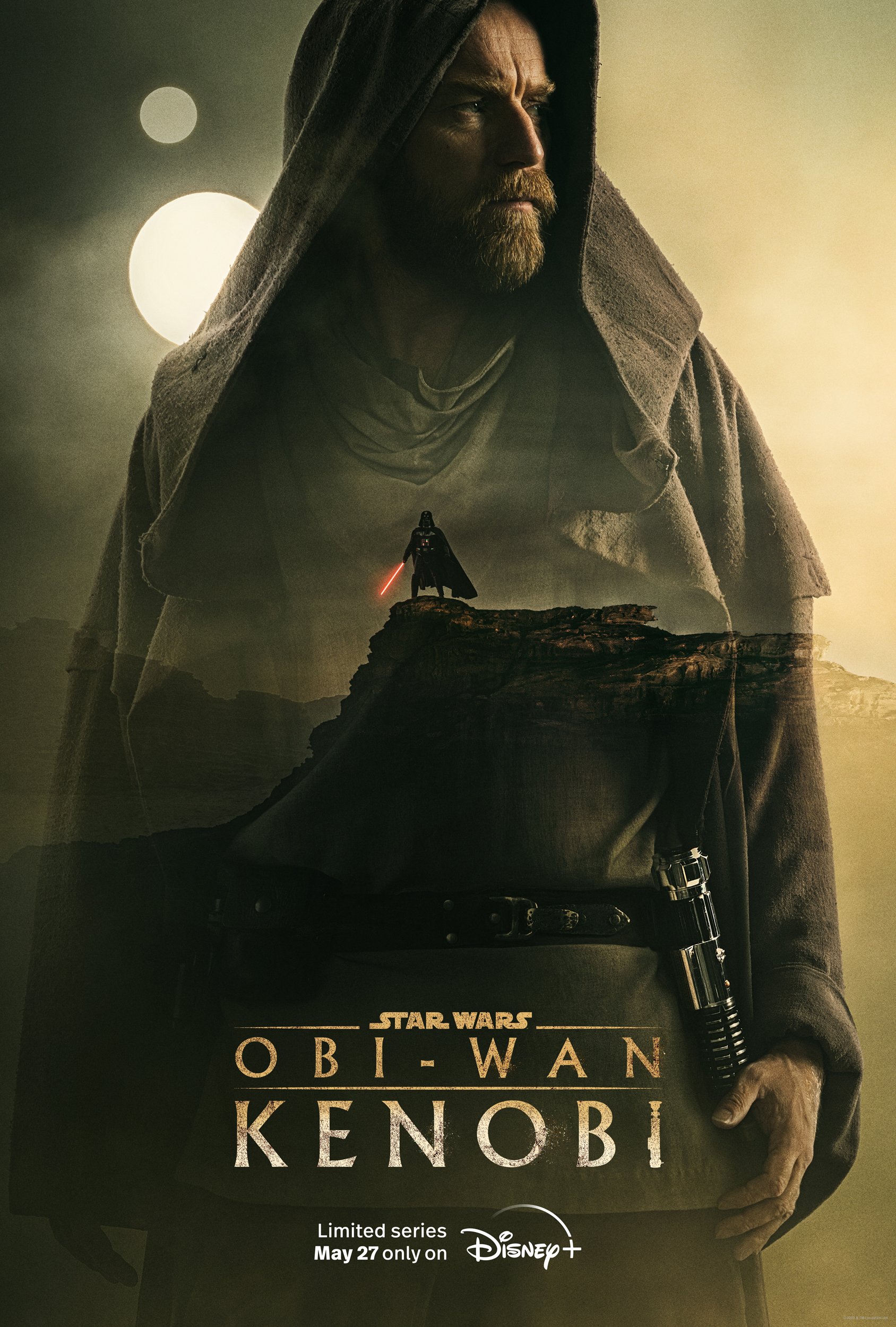
So let’s fire up the nostalgia machine and go again, this time with Obi-Wan Kenobi, Disney+’s new series about the titular Jedi in a world devoid of Jedi.  Here we see the origins of Ben Kenobi, cutting meat and watching Luke from a distance.  He’s old; much older than the 10 years between Revenge of the Sith and Kenobi would have you believe.  He’s sad.  Everything he knew, fought for, and believed in went up in flames over the span of one radio transmission.  He’s alone.  Self-imposed hermitry as the Inquisitors, who are far too inquisitive, search the galaxy for the remaining Jedi and other force sensitives to either turn to the Dark Side or eradicate.  Hardly a casual chat.  Needless to say, we’re tuning in to a rather tough spot for the galaxy.

Old friends, new enemies

There’s a lot at stake for Kenobi.  Unlike The Mandalorian, which had almost no expectations on its shoulders as it graced the screen, Kenobi comes with a lot of baggage.  I know that the there’s been a push lately and opinions on the prequel trilogy have changed in recent years, but having just rewatched them as recently as last week, I can only place them in the category of bad movies I enjoy watching.  The writing is stiff, the acting is stiffer, and the visuals rely far too heavily on green screen and CGI.  There’s a lot frustrating things about the prequel trilogy (including the treatment of Padme in Revenge; especially after seeing how headstrong and badass she is in The Clone Wars series, ROTS-era Padme was a huge disappointment), but much of it has to happen for us to get the story we had in the original trilogy.  So I can’t be too nitpicky on the story choices, even though they often frustrate me again.  Kenobi is more like The Book of Boba Fett, which aims to redeem a character, not only in the eyes of the story, but in the eyes of the audience as well.  Boba Fett is one of those characters we were never honest about—I loved Boba Fett, I wanted Boba Fett’s action figure, I wanted my AOL Instant Messenger name to reference Boba Fett, I tried boba tea for the first time because of Boba Fett.  But in reality, Fett did very little in the original trilogy other than stand around, complain to Vader, and then die, seemingly.  The Book of Boba Fett had to redeem one character (and did so brilliantly; I am planning an in-depth look at the series soon, as I believe it to be woefully underrated due to misconceived expectations), which is hard enough.  But more than his own legacy is on Obi-Wan’s shoulders.

Obi-Wan’s rat tail and half-ass pony do not make a return, leaving one of the worst hairstyles to grace the silver screen in the past where it belongs

Kenobi has to redeem the entire prequel trilogy.  The show has to make that journey, that aggravating puzzle piece to the Skywalker Saga, worth it.  And while it’s hard to say after just two episodes, I think it’s off to a good start.  The series starts with a recap of the prequel trilogy, which, frankly, gives you just about all the highlights you need and none of the memes.  In just a few minutes, enough story is imparted to the viewer that it kind of makes it obvious that the prequels didn’t need to be made.  As a storytelling device, I’ve always seen the prequels from two differing viewpoints with regards to how they impact the overall story.  On one hand, watching the prequels may spoil one of the most dramatic reveals in movie history (if you’re not familiar, it has to do with one character being the papa of another character, despite the fact that they’re on opposite sides of the war, I explained while winking).  On the other, going into the prequels knowing Lil Orphan Ani’s fate, it tells a fatalistic story that lacks gravitas for the reasons the prequel trilogies faltered in the first place.  But all isn’t lost with Kenobi.  In fact, I’d say he’s off to a very good start.
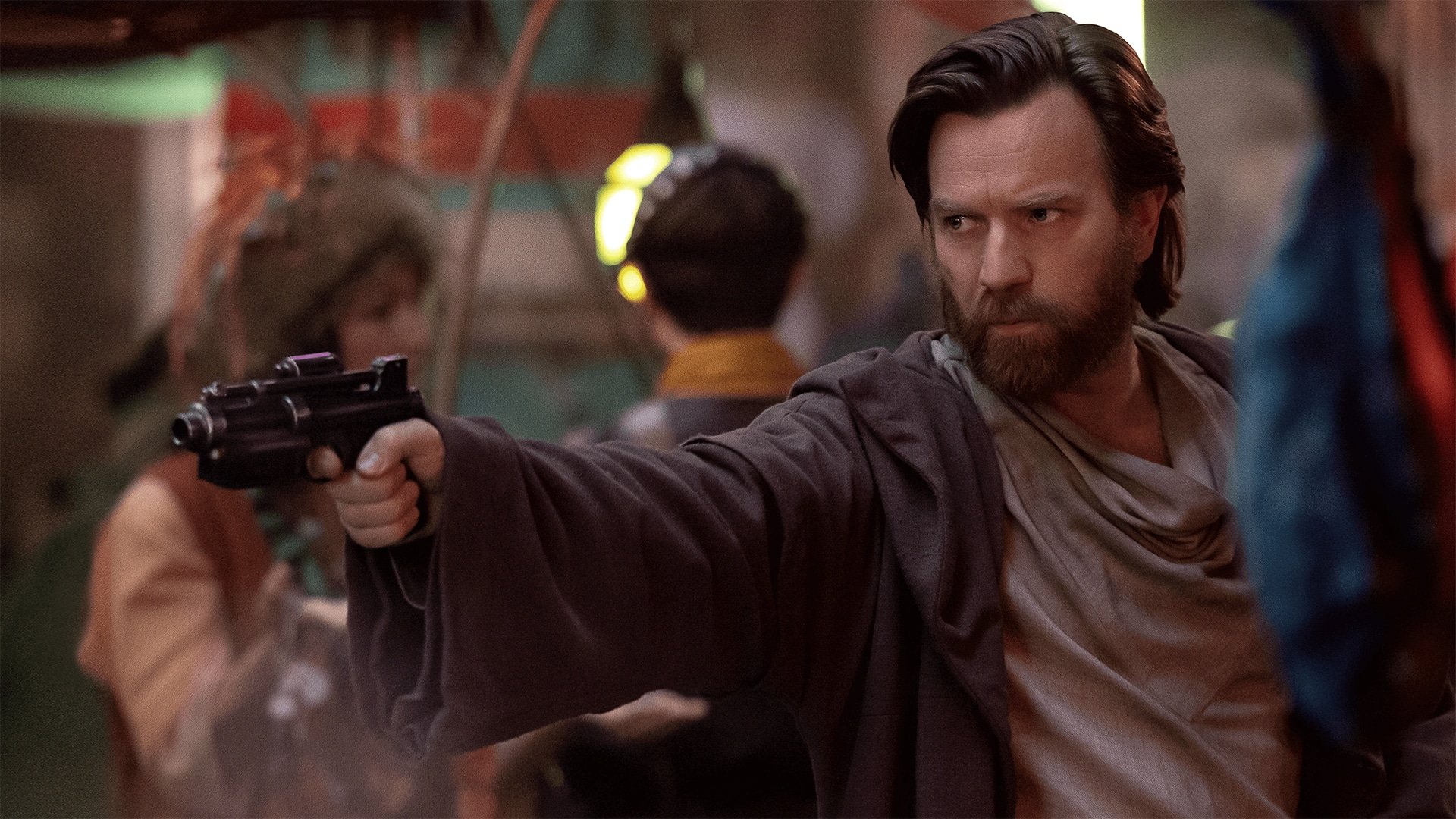
So uncivilized…but immensely useful in this lawless galaxy

First step to hiding as a Jedi: Dress exactly like a Jedi and hope no one notices you haven’t gotten your style out of 1999.

One of the biggest things Kenobi has done for me so far is to further discredit the idea that Jedi were superheroes.  It was absolutely thrilling, after years of hearing so much about the Jedi but only having some relatively tame lightsaber duels from the original trilogy to base their badassdom on, to see the Jedi at the height of their power.  Far from the lone, tragic whispers in the original trilogy, Jedi were everywhere.  Feared and respected, it was a sight to see.  But here, Obi-Wan has to come to grips with the fact that he’s just a man.  He may have some extraordinary powers, but he’s still only a person.  It hurts when you punch something harder than your hand.  It hurts when someone punches you, too.  Despite this idea of the superhero Jedi growing like weeds in a garden, even the prequel trilogy tries to warn you off.  While The Phantom Menace opens with a great deal of fear over just two Jedi, Attack of the Clones ends with dozens of Jedi gunned down by the most cannon-fodder-y of all cannon-fodder enemies, battle droids.  The battlefield is littered with so many dead Jedi it looks like ten all-Jedi Shakespeare in the Park productions of Hamlet went horribly wrong simultaneously.  And, as the curtain drops on Revenge of the Sith, the vast majority of the Jedi are brought down with their backs turned, in seconds; wiped out in a massive genocide orchestrated by the Jedi’s greatest enemy/then-current boss.  An ending that Kenobi puts right in your face with a new, school-shooter-inspired vibe to it (further adding to the controversy of including an Order 66 scene at all, Kenobi ran without a content warning, and as of the time of writing, continues to do so) as we are forced to relive the ending of ROTS through the lens of a teacher desperately trying to protect her students as clone troopers casually stroll the halls of the Jedi Temple, gunning down everyone in their way.

Kenobi’s struggles after the fall of the Republic bring to mind another hidden Jedi from the same era, Rebels’ Kanan Jarrus

And yet, it is this vulnerability that makes Kenobi, and by extension, other Jedi survivors, like Star Wars: Rebels’ Kanan Jarrus, such sympathetic, relatable, and heroic characters.  In a moment where Obi-Wan has to choose between what is right and self preservation, he does what his enemies call out as the weakness of the Jedi nature and chooses right.  It was an act of heroism that is unlike those seen in most superhero movies; after all, bravery isn’t acting without fear, it’s acting in the face of fear.  It’s knowing that to do the right thing, you may be sacrificing yourself.  That’s what makes a hero.  Heroes are flesh and blood people who have to make the choice to put the safety of others ahead of their own rather than stand back at a safe distance and simply lament the tragedy that they did nothing to stop.  It could backfire—in my experience, certain segments of the Star Wars audience don’t like to see their childhood heroes as anything but mythic figures.  But for me, it’s their humanity that makes them interesting.
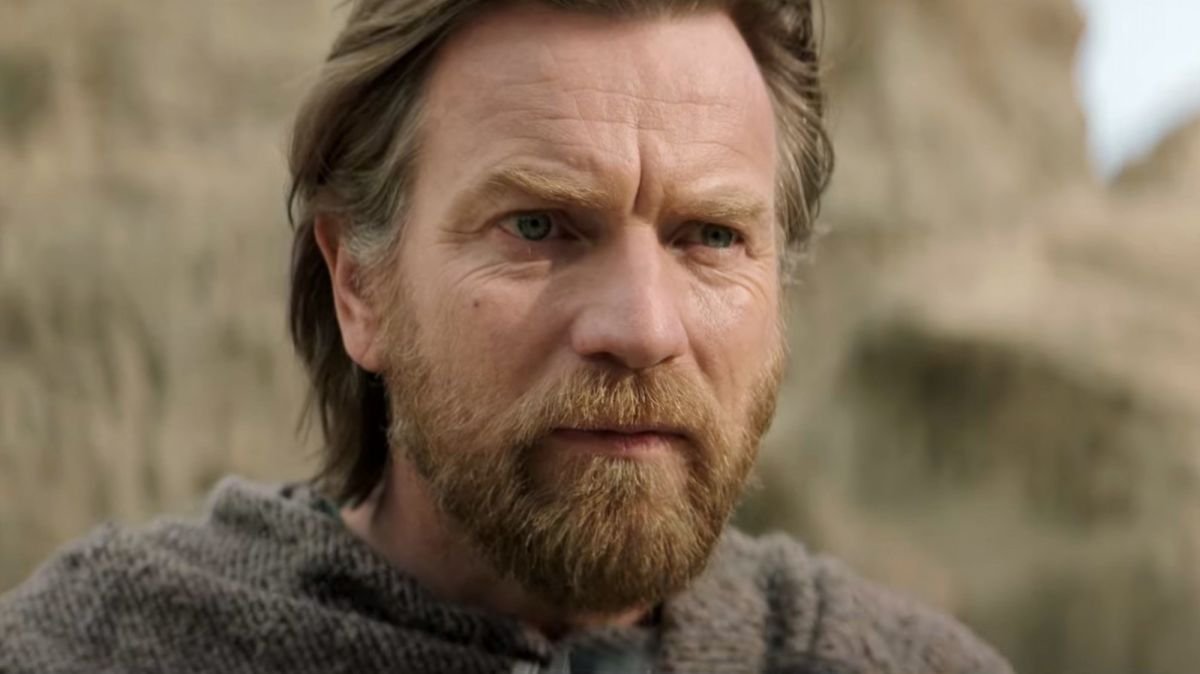
He may be older and sadder now, but he still has a special set of skills. However, is stance on sand is as-of-yet unknown.

It’s here where Kenobi can make real strides.  Far from the bounty hunter in his prime, like Din Djarin, or the cold blooded killer attempting to make peace in the world as recompense for his violence, like Boba Fett, Obi-Wan Kenobi is a man lost to a galaxy that rejected him, his religion, and his people.  A man grown weaker and feebler with the passage of time and the weight of his actions, including his own survival.  But deep down, he is still the Jedi who is willing to put his life up for the lives of others.  This version of Obi-Wan may become the most heroic yet.  And while the first two episodes may have been far from flawless, the chance to see Obi-Wan at his most heroic is one I’m absolutely here for.

Comment

Despite being one of the best blockbusters of all time and anchoring a multibillion dollar franchise, Jurassic Park has never had a sequel on its level

25 Years Later, Still Searching for a Worthy Sequel

Aslam R Choudhury May 26, 2022

Sequels are hard.  Sometimes they come out better than the original, but that’s a rare feat only achieved by excellent films like Terminator 2, Aliens, Captain America: The Winter Soldier, and 2 Fast 2 Furious.  Most of the time, the best you can hope for from a sequel is a par continuation of the story.  And often, what you get is a pale facsimile of the original, like an artist performing their own forgery, or at worst, The Hangover 2 or Frozen 2.

It can’t be a PG13 movie without a needlessly included teenager

One of the things I’ve noticed about most of the great sequels is that they’re not simply continuations or retellings, they’re actually transformative.  Terminator was a gritty chase film, a horror movie where the devil is determined to take everything from the main character.  Alien is pure horror, a film which sets out to isolate and terrify you the way it isolates and terrifies its characters before their ultimate demise.  Then come along T2: Judgment Day and Aliens, not only different movies with different stories, they take on new genres.  While they don’t fully shed their horror roots, they both step more into the action/adventure blockbuster realm to transform how the movie interacts with the audience.  Captain America changes things up as well—from a war film to spy thriller, while also upping the emotional stakes.  The Winter Soldier is so different from The First Avenger, I sometimes have trouble remembering that one is a sequel to the other.  The massive time jump helps the feeling of change as well; gone are the glitzy USO dancers, jaunty montages, and classic struggle between good and evil.  We’re in the present now, where so much of the world is gray, including some of our protagonists.  And I definitely don’t need to tell you how 2 Fast 2 Furious improved over the Point Break clone of the first movie.

In the movie and in real life. Pretty sure I had one of those stuffies

It’s a high bar, I know, to compare anything to T2 and Aliens, as they’re not only two of the best sequels of all time, they’re also two of the greatest blockbusters of all time.  But as good as they are, as good as their predecessors are, they all pale in comparison to Jurassic Park.  Jurassic Park is one of the most brilliant films I’ve ever seen.  The way it sweeps you up into the narrative, the pure visual spectacle of the thing; Jurassic Park captured the imagination of the nation in a way that the other films couldn’t.  And the genius doesn’t end on screen, either; building the whole film as a purchasable real world phenomenon that felt like it could really happen and pushing the merch in the movie itself positioned Jurassic Park as a living entity.  The lunchboxes in the movie were available in stores.  I was seven years old at the time, arguably too young to go see the violent PG-13 movie in theaters, and yet I had Jurassic Park toys, Jurassic Park tie-in cups from various fast food restaurants (I can’t quite recall, but I imagine that they were from McDonald’s), and a Jurassic Park coloring book.  My classroom was practically a showroom for Jurassic Park merchandise, in a way I hadn’t seen before and never saw again.  As much as I can’t look past the Disney machine when I look at Disney animated films and even the MCU, it was Jurassic Park’s machine that was the first example I can remember.  Maybe it created the machine, I don’t know, but certainly in my lifetime, it was the first that I’m aware of.  And yet, when I see Disney’s machine, it takes away from the films and when I see Jurassic Park’s, it only serves to make the movie feel more plausible.

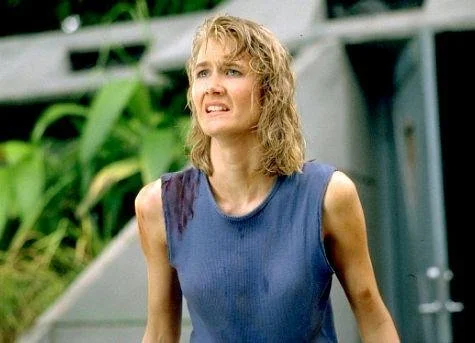
Ellie’s fear was palpable, real, and shared by the audience

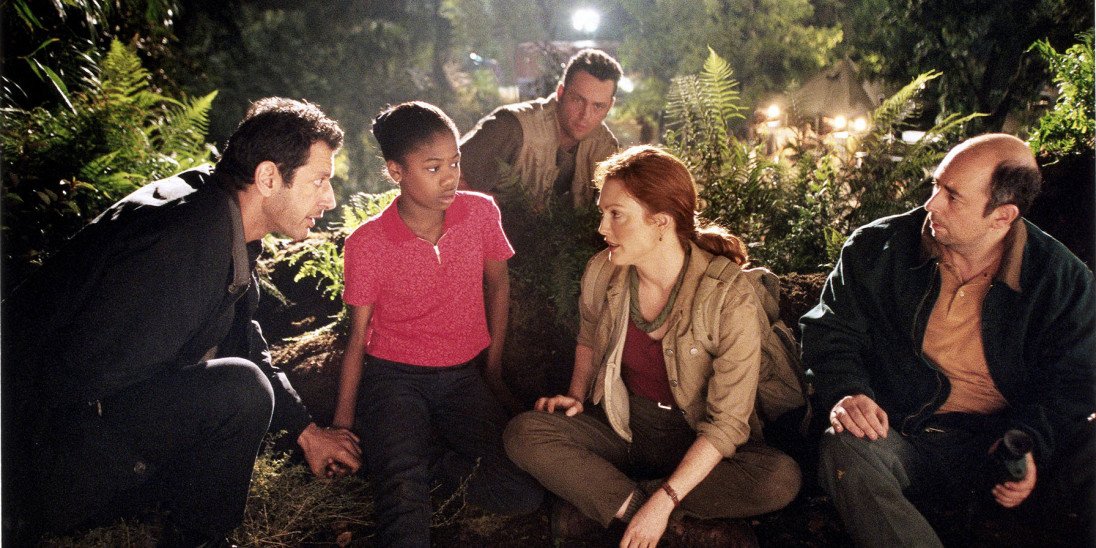
So then, how is it that nearly three decades after the movie’s release and 25 years after its first sequel, The Lost World, Jurassic Park is still in desperate need of a truly good sequel?  The Lost World was a huge letdown at the time; it did everything a sequel was supposed to do, absolutely by-the-numbers.  Bigger stakes, bigger set pieces, and a much higher body count.  But it was this by-the-numbers approach that was its ultimate downfall.  Mindless violence is fine every once in a while, but horror happens when you care about the characters in peril.  The Lost World serves up large swathes of InGen’s zero-to-one-dimensional PMC red shirts for the dinosaurs of Isla Sorna to feed on, tear apart, and swallow whole by a romantic waterfall.  I don’t care about any of them—they simply exist to show how dangerous the island is.  Not that there isn’t a place for that; but once the protagonists’ party experiences its first casualty, the emotional connection to imperiled characters starts to wane.  Luckily, there are enough characters that were new to the series that they could have bought it when in trouble that you’re still interested, for the most part.  Malcolm and his daughter had dino-proof plot armor, for sure, but Vince Vaughn and the incredibly talented Julianne Moore didn’t, not by default.  But the story of their survival is interspersed with the paramilitary subplot, which acts solely as a ticking clock to worry the protagonists and never threatens any type of emotional resonance.  Even our main protagonists can be hard to empathize with at times; they show concern over the loss of their friend, but while literally hanging on for dear life after a multiple Tyrannosaur attack, they quip about getting cheeseburgers.  Now, mind you, if Ian were to make a joke, or a comment, not only would that be fitting his character’s detached demeanor, for him, this is old hat.  He’s already been almost killed by a T-Rex; he’s one of the few people on the planet who can say that.  But for Moore’s Sarah Harding and Vaughn’s Nick Van Owen, this is the first time they’ve been in this kind of danger.  Awfully cool, calm, and collected of them, almost callous, in the face of novel and fantastic danger.  It’s unbelievable that photographers and paleontologists would be so together in that moment.  In Jurassic Park, the characters felt fear—they felt the danger they were in and imparted that fear to the audience.  That just didn’t happen here.   

He’s happy now, but wait until he sees the average housing costs

We can argue all day about whether the San Diego scenes at the end of the movie add anything or ruin the movie.  I think it’s somewhere in between, but it raises a lot of questions.  Look, I’ve pored over the T-Rex escape scene in Jurassic Park dozens of times.  I’ve all but build a model out of Legos to try and spatially make sense of it.  It doesn’t though; the Tyrannosaur paddock shouldn’t have such a huge drop right there.  But the movie is otherwise so masterful, you do your best to just move on from that.  It was a breathtaking scene, so even if the landscape doesn’t fit what you see in the movie, you forgive it.  However, when the ship runs aground in San Diego, with the crew either dead or missing, with a severed hand hanging on to the controls in the intact wheel house, the suspension of disbelief just stops.  I’ve tried to reconcile this nearly as many times.  As far as I can tell, the drugged Tyrannosaur wakes up, goes into Solid Snake mode, escapes the cargo hold, quietly eliminates the ship captain.  At this point, the T-Rex either kills the rest of the crew or they abandon ship, all but one, whose hand is holding the cargo bay door controls.  The Rex then kills this crew member while he’s still holding on to the controls and jumps back down into the cargo bay before the doors shut and eventually malfunction.  This is clearly quite a clever and dexterous foe, as he lies in wait for the ship to reach San Diego, where he can unleash his next attack.  Obviously, the dinosaur knows all about maritime navigation, as all dinosaurs do.  And before you say “It must have been the juvenile Rex who did it”, they do explain that the recovering T-Rex came on the plane with antagonist Ludlow before being reunited with its papa and chowing down on Ludlow (whose fate, much like Peter Stormare’s Dieter, felt far too convenient).

So, The Lost World had lots of problems.  And yet, years later, it is a half decent action-horror flick, if you approach it with no expectations.  The same can’t be said about Jurassic Park 3; and, frankly, the less said about the film, the better.  With a preposterous plot and velociraptors so intelligent they set traps and pontificate about the meaning of life while sipping on tea and smoking a pipe, it’s the kind of movie you work hard to forget.

Turns out The Critic was positively prescient when it comes to how ridiculous velociraptors would get in the JP series

At least this oft-memed scene gave zookeepers something for their Instagram pages

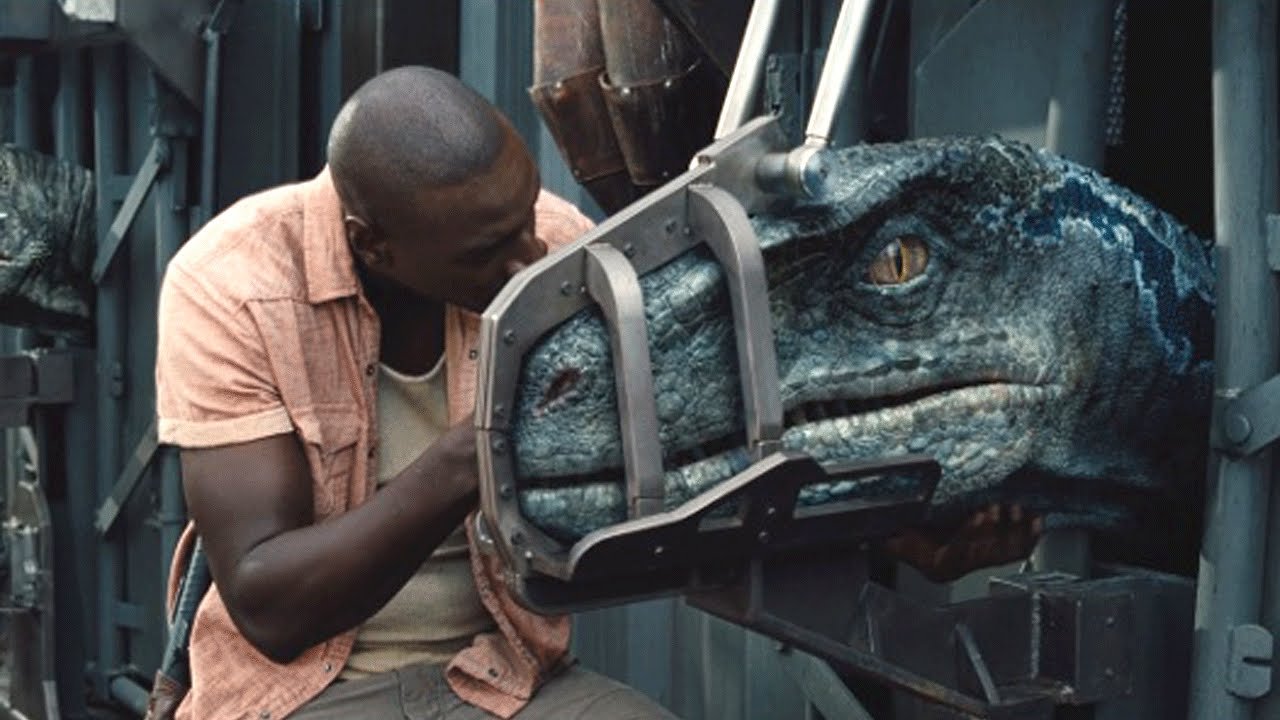
Then, it was radio silence for nearly 15 years until Jurassic World hit the theaters in the still-ongoing wave of remakes and reboots, somehow becoming one of the biggest films in box office history.  One thing was certain; the film’s success showed there was still a desire to see more of this wonderful world of dinosaurs.  Much like its contemporary, The Force Awakens, Jurassic World leans heavily on the structure of the original film, changing out a few plot points here and there while new characters grace the screen alongside some of the old.  However, where The Force Awakens was successful, Jurassic World doesn’t exactly hit the notes right.  It feels like a song played on the piano, but on the wrong register.  The movie is overly sanitized and corporatized now—the clever in-movie marketing was replaced by product placement so egregiously bad even the characters groan at it.  The real world touches that made the first film feel so plausible instead make you roll your eyes.  Instead of marketing its own merchandise, it became a vehicle for cynical product placement and attempted to pull the wool over your eyes by pointing it out, in a semi-tongue-in-cheek fashion.  Also, in a stunning turn of script that was clearly from a child’s fever dream, the military dreams of using guided velociraptors to hunt terrorists.  If you haven’t seen the movie or just don’t remember it, that’s not a joke.  That’s literally a subplot in the film and it serves up one of the dumbest things I’ve heard in any movie.  Also, remember when they designed a dinosaur for their dinosaur zoo that can turn invisible?  An invisible attraction.  An invisible thing people pay money to look at.  See any minor or possibly major problems with that?  Jurassic World 2: Jurassicker World, or whatever the subtitle was, managed to be even worse.

Trained. Raptors. As. Weapons.

We’re now on the eve of Jurassic Park 6: Jurassickest World 3: End of the World Somehow.  Now, it’s been a while since I’ve seen Jurassic World: Fallen Kingdom, and readers, though I appreciate each and every one of you, because it’s not streaming anywhere, I didn’t rewatch it before writing this.  I couldn’t bring myself to pay money to see it again.  As I recall, in another stunning turn of dumbness, a cloned little girl sees the dinosaurs as the same as herself, and releases them into upstate New York rather than allow them to die.  I guess I should applaud her act of empathy, but at the time I felt that she’d be responsible for dozens of injuries and deaths.  However, based on trailers, it appears that this handful of dinosaurs released in a forested area in the northeastern US (as I recall, it was upstate New York) have now taken over the world to the point that humanity’s very existence is in danger.  As thrilled as I am, at any time, to see Laura Dern on screen, whether it’s a guest spot on The West Wing or as a hyper Type-A mom in Big Little Lies, bringing her back isn’t enough for me to not wonder how a few dinosaurs were able to not only evade the police, National Guard, and any number of military branches to successfully traverse the entire world to create an extinction level event.  I somehow can’t envision a scenario in which a Tyrannosaur boards a plane to head to Europe.  Now, maybe I’m being too harsh on a movie I’ve yet to see and hasn’t even been viewed by critics yet.  But Jurassic World 3 is not off to a promising start.  Let’s face it—dinosaurs aren’t kaiju.  In The Lost World, Roland Tembo came to the island with the express purpose of hunting a Tyrannosaur with a double barrel elephant gun chambered in .600 Nitro.  If you’re not familiar, it’s a big, big bullet meant to kill very large animals (elephants, if that part weren’t obvious).  A Tyrannosaur could reach heights of about 40 feet.  We’re not talking about Godzilla here; these are animals of killable size when you’ve got a military on your side.  Tanks, .50 caliber machine guns, missiles, etc.; I can’t imagine dinosaurs would spread the way they seem to have based on the movie trailers.  I hope I’m wrong about this film the way I hoped I was wrong about the Halo season finale.  But I wasn’t wrong about Halo…

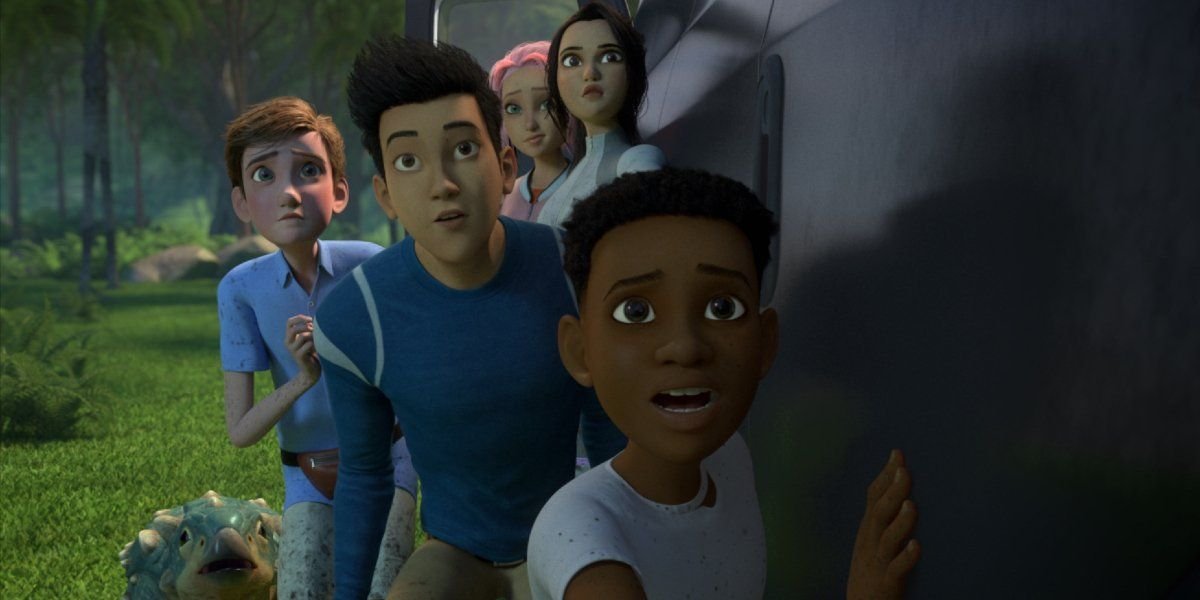
The diverse Scooby Gang of Camp Cretaceous prepares for their next threat

However, one good thing did come of these big, dumb sequels: Jurassic World: Camp Cretaceous.  A children’s cartoon with a diverse cast and shockingly more realistic characters than the Jurassic World films, it manages to capture the spirit of Jurassic Park and do it in a way that’s accessible for kids and adults.  It’s kind of the perfect way to keep the brand alive, the way The Clone Wars reinvigorated interest in Star Wars after the disappointment of the prequel trilogy squelched it.  Now, the newest film is being touted as the conclusion, but sleeping dogs don’t lie and billion dollar franchises don’t just die.  Camp Cretaceous plays in the background of the newer films and thus should reach its own conclusion soon, and as the series continues, it becomes less and less believable as part of the Jurassic Park universe (malevolent robot dogs, mind-controlled dinosaur gladiator fights, etc; we’re one brain box away from this becoming Dino-Riders), but it still manages to be more buyable than Jurassic World 3’s supposed storyline.  The kids stranded on the island include a dinosaur enthusiast (hard to call him an expert since he’s, like, 12, and there are actual paleontologists in this series), but more importantly, they had ready made shelter and access to food and water infrastructure, and a group of them to share labor and watch each other’s back (unlike the kid from Jurassic Park 3).  It’s still implausible, that a small group of kids could survive a dinosaur island in chaos, but Camp Cretaceous manages to lean just towards believability.

Camp Cretaceous manages to bring back some of the magic, now if they could only translate this to adult, live action characters

A quarter of a century later and the best thing we’ve seen so far is this cartoon, which, yes, stretches believability quite a bit at times, but overall has been a positive for the series.  I truly believe that.  Maybe it’ll go the way of Star Wars.  I know the sequel trilogy is still rather controversial (and, in my opinion, had two great movies and a stunning act of cowardice for a finale), but it might draw a road map for where Jurassic Park could go.  Hopefully, when the next set of sequels comes around, the filmmakers pare down, really look at what made the first Jurassic Park so special, and do their best to recapture that magic, rather than simply going for bigger and bigger.

Comment

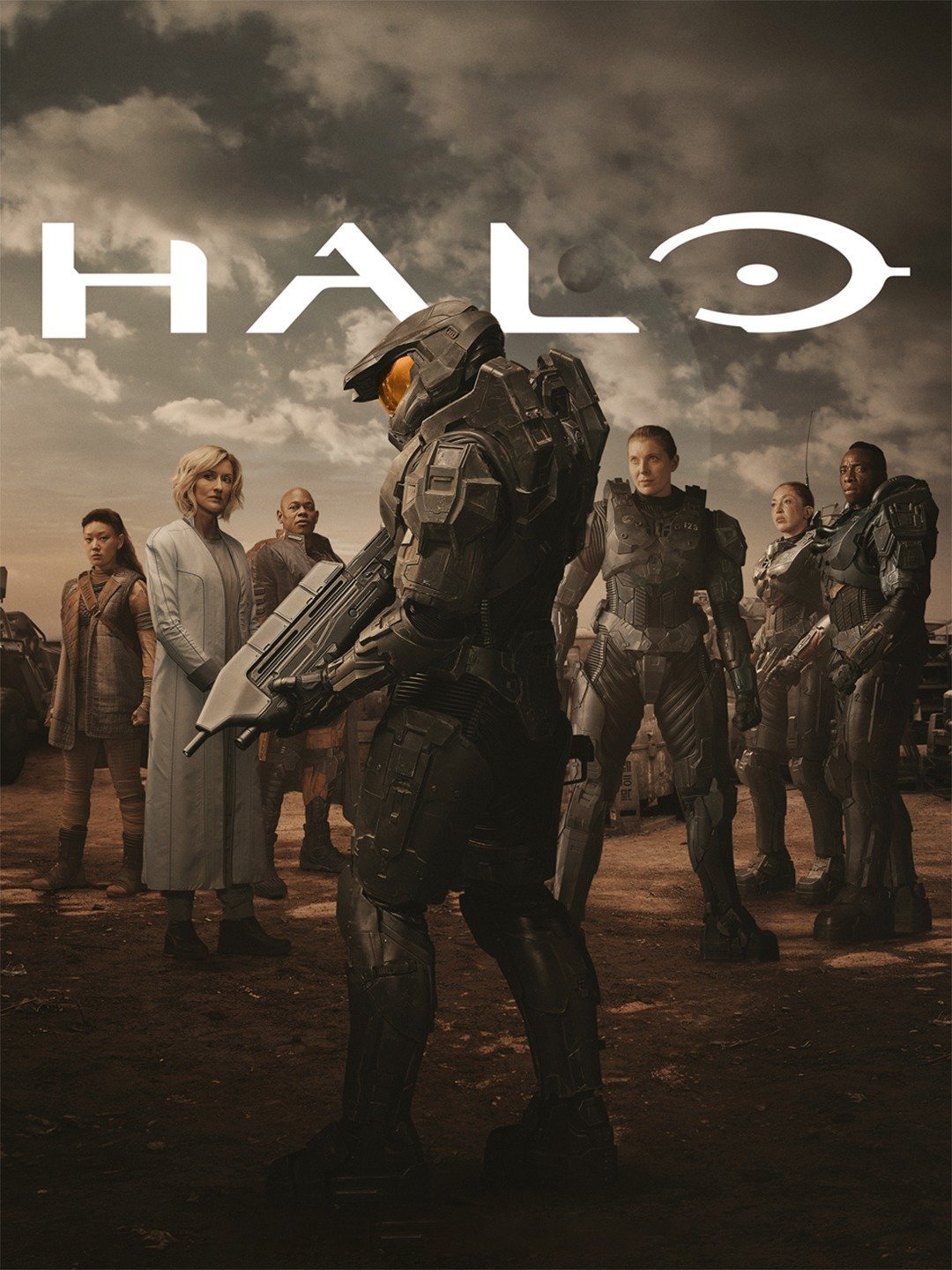
Halo’s got some major problems

Why is Halo so Bad?

Aslam R Choudhury May 14, 2022

I normally don’t like to issue a hit piece, at all really, or at least not until the media has had enough to time to convince me one way or another; usually that means a full season with shows, but with movies, unfortunately, that means I’ve got to sit through the whole thing.  Because endings can really tie things together or tear them apart.  Take Sharp Objects, for example.  Thought it was a great show, but then the ending, a hurried “here’s what happened” montage, killed the show for me.  On the other hand, take the film The Power of the Dog.  I was bored out of my mind for two hours, but then the last 6 minutes made every minute of the movie worth it.

Though the action sequences are few and far between, they do look good when not relying too heavily on CGI

But we’re eight episodes into what appears to be a nine episode Halo season now and I’m feeling pretty comfortable that whatever they can come up with in the final episode isn’t going to make up for the slog that came before it.

The pilot had some promise.  Opening with a flashy set piece on a desert planet, we see the de facto princess of the planet Madrigal (🎶where all the people are fantastical and magical, welcome to the planet Madrigal🎶) out searching for drugs with her friends and whining about getting off the planet as soon as she can figure a way out.  The storytellers among us will know that this means she’ll eventually yearn to return, and as her friends are dismembered by an invisible alien force, the steps of her story become apparent.  Now, I’m not a Halo player—I’ve actually never once even picked up the game, the closest I’ve come is the Forza Horizon 4 Showcase event where you drive the Warthog vehicle the Marines use—so I don’t know if Kwan Ha is important to the story of the games or not.  But it certainly doesn’t seem like she’s important to the story of the show.  So, long story short, aliens attack, Master Chief Johnny falls in from the sky, dispatches with the aliens with relative ease with the help from his team, and for some unexpected reason, some ghost in the machine, he spares Kwan Ha, the only survivor, even after the UNSC ordered her murdered for threatening to blame the attack on them.  This sets up a false flag Baby Yoda situation, but quite quickly, MC Johnny dumps her with Bokeem Woodbine and those two have their C plots and their universally poorly received back door pilot together while Johnny looks sadder than The Deep in a trailer for The Boys season two.

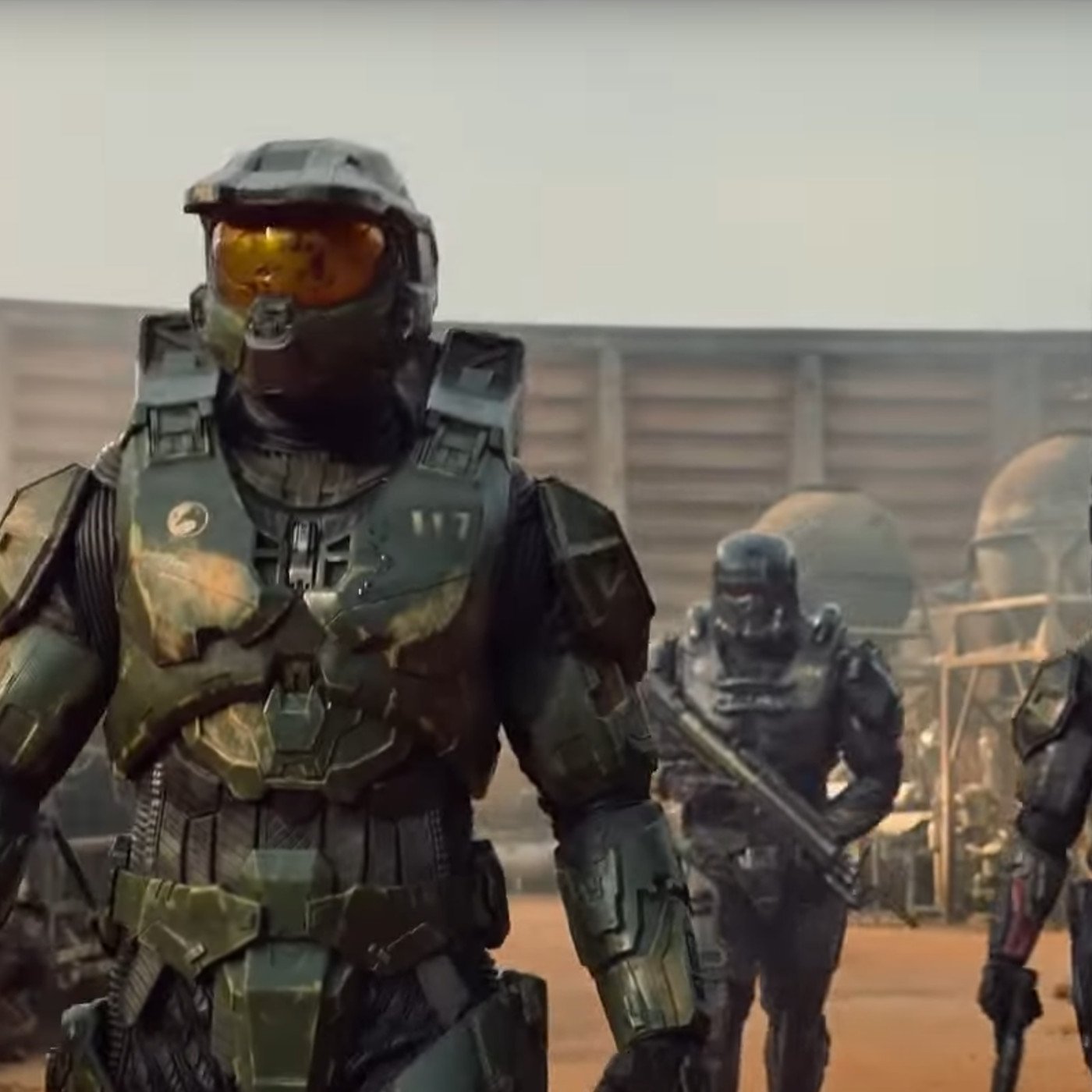
The Spartans certainly look the part. I wouldn’t want to owe them money, that’s for sure.

And thus ends the action for an excruciatingly long period of time.  I wasn’t expecting Halo to be sci-fi John Wick, but I was expecting it to be Halo.  Like I said, I never played the games (PlayStation all the way), but I do know a little about them.  Elite soldiers called Spartans fight aliens with guns and stuff and it’s a war.  It’s a first person shooter, the crux of the game is kind of in the genre title, not necessarily the story.  But after the pilot’s action sequence, MC Johnny tends to walk around looking very sad, a lot.  Pretty much all the time.  He looks at stuff and is sad.  He looks at himself in the mirror and gets sad.  He looks at his old house, remembers sad stuff, and then gets sad about it.  Other characters are cryptic.  There’s some half ass political intrigue as well, as the UNSC has its own internal power struggle between Natascha McElhone’s Dr. Halsey and the UNSC brass, including her own ex-husband and daughter (which is a strained relationship they seem to bring up a lot, which is, I imagine, an attempt to create a mystery about their relationship, but nothing any of those characters do make me care anything about their personal lives).  A lot of compartmentalization, a lot of “But we can’t do this to Master Chief, he’s too important!”  Now, if you are a Halo player or you’re just familiar with the lore for some reason, maybe that’s not a silly thing for people to do in the Halo world.  But for someone with no familiarity other than listening to the dull three round burst of the ranked playlist rifle on a Twitch stream over and over again, it’s very odd.  Why is he so important?  They don’t do a sufficient job of explaining why he specifically is so much more important to the public than other Spartans or officers or anyone else.  But that’s a small complaint compared to the rest.

It’s so bloody boring.

On today’s segment of Good Idea, Bad Idea, it’s a bad idea to back door a pilot for characters people don’t like at the expense of sidelining your flagship character.

There are many movies that should have been miniseries.  The need to pack too much information into two hours of film can overstuff a movie, whereas a miniseries can go into more depth and have a more deliberate pace with more meaningful character interactions.  Halo feels like a two hour film stretched into a nine hour season.  The first episode throws a lot at you, makes you think it’s going to stay that fast-paced, or at least something close to it.  They let you know the “good guys” aren’t good guys, since they go from 0 to child murder immediately.  Kwan Ha’s threat to claim that the UNSC Spartans (sounds like a college football team when you put it that way) were to blame for the attack on Madrigal are met with the vaguely named and then immediately explained “Article 72”, which is a kill order.  They had asked her to record a video message thanking the Spartans for saving her when she made the threat; apparently just not recording anything and putting her in a cell, or trying to convince her further after bringing her to their home base never occurred to anyone.  There’s some light protestation, some equivocating, and then the attempt to make you care for MC Johnny by saying “Hey, his bosses are bad, but he’s not going to murder this teenager”.  A flurry of activity follows, then a chase, and a slight meandering before Master Chief returns and they all chalk it up to a whoopsie.

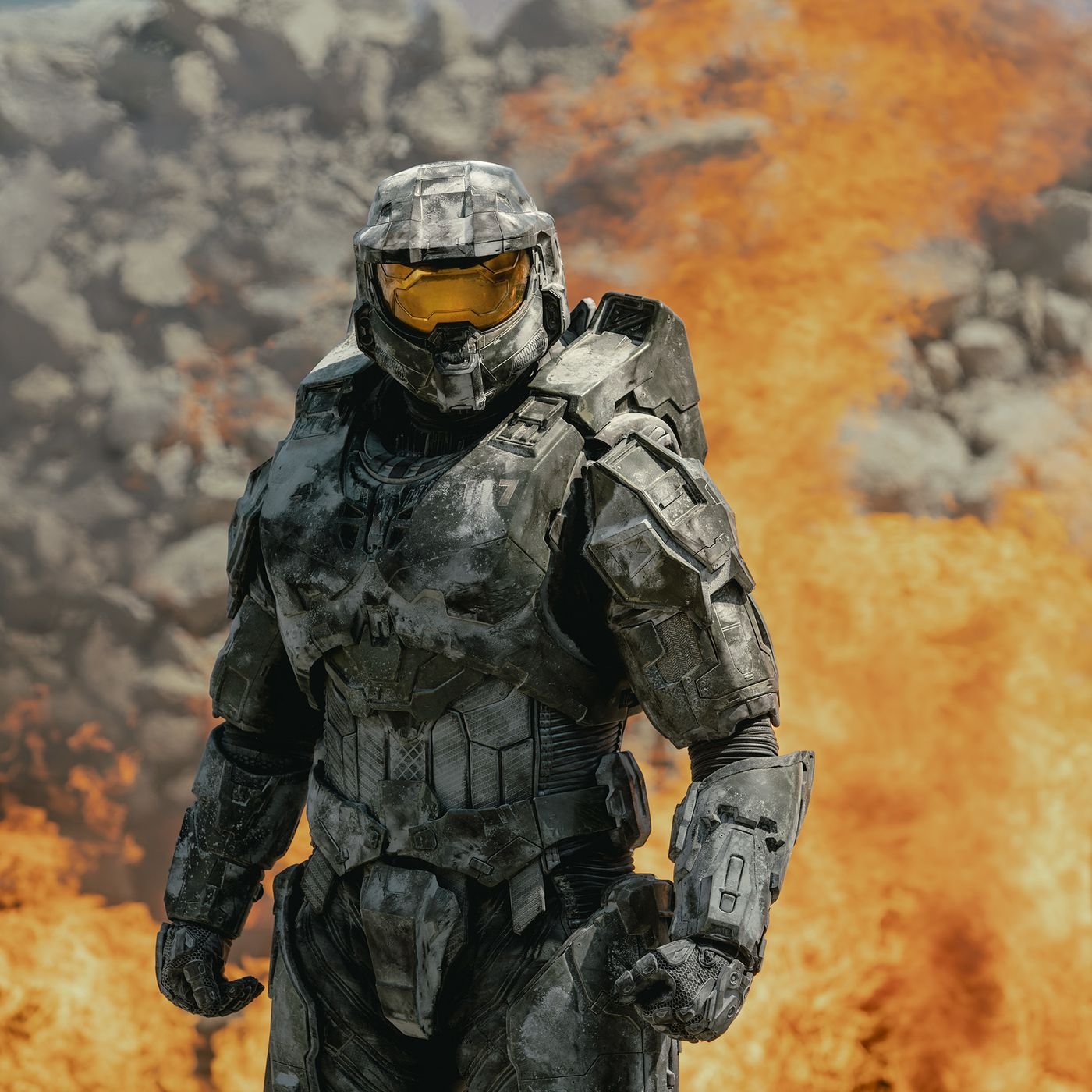
Master Chief with his trademark brooding look

Johnny gets tested, then it’s business as usual—especially if his business is brooding.  And so goes the series, minus an entire episode devoted to Kwan Ha’s return to Madrigal and Bokeem Woodbine’s poor decision making.  Makee shows up, a woman with the same special abilities as Master Chief when interacting with the MacGuffin.  She’s working for the enemy alien Covenant, because she was apparently kidnapped by them as a child from a planet where she was living in squalor, under what looks like militaristic fascism, and then presumably indoctrinated because of her abilities.  There might be something interesting here, but ever since she starting hanging out with Johnny, she also seems to spend all her time looking at stuff and thinking.  Then, as her horrific childhood is recollected in a flashback, a predictably similar act of cruelty seems to sway her murky allegiance.  Yes, the story here feels old—it’s not necessarily that more characters wear gray hats than we’re accustomed to seeing over the past 10 years or so, but rather that so many characters are just black hats on the “right side” or wear no hats at all.  Not only that, the story beats feel all too familiar.  But I’m willing to excuse a fair bit of that—after all, Halo is drawing its story from a video game series that’s over 20 years old and it’s tied into existing lore.  The writers can’t make wholesale changes to the game’s story and I understand those limitations.  But they can do something with it, yet the show seems determined to do as little as possible.  Sparse storytelling in an FPS game is expected—I don’t buy Call of Duty for the story (and increasingly, I don’t buy Call of Duty at all, but that’s a different story for another time), but it’s nice to know that there is one to justify the unending hailstorm of bullets.

Bokeem Woodbine deserves better

The pilot episode drops some very on-the-nose dialogue about losing humanity, but it quickly becomes clear that the line is strictly for the audience; everyone in the show, at least on the UNSC side, has already lost their humanity.  Whether it be the politicking administrators, cold, unfeeling scientists, or their emotion-suppressed experiments, there’s precious little humanity on display in Halo.  Kwan is one of the few characters that act like a human, but she acts like a human teenager, which is generally unbearable by itself.  As a side note, I don’t understand why so many shows and movies insist of shoehorning teenage drama into their storylines, as if people won’t be able to identify with the characters unless at least one person is making stupid decisions with their as-of-yet not fully formed minds.  The other human character comes in the form of Bokeem Woodbine’s Soren, MC Johnny’s friend and Spartan program fugitive.  And this is perhaps one of the biggest sins of Halo—they all but completely waste Bokeem Woodbine.  He walks around looking tough and cool and has very little inner conflict over doing the right thing and protecting Kwan, which is a nice change of pace compared to industry standard reluctant protector, but that Woodbine magic is just not there.  He’s a bigger presence on screen than most characters in Halo, but he’s still a far cry from the peak of his powers, as seen in Fargo season two.

MC Johnny wonders “if there’s something over there that I can look at and be sad.”

Master Chief’s journey through the series thus far mirrors my own.  I look at this stuff and wait for something to happen, just as he does.  He is confused. I am confused.  In a show with so much time to fill and so much story to tell, they seem to pass the time by neither telling the story nor filling it with glossy action set pieces.  It can’t be for want of budget; the show looks slick and fresh and shiny.  The CGI is excellent for the most part and the locations look and feel real, even if they’re largely generic.  They’re putting in the time and effort to make this show look like a Triple-A series; but it seems to end there.

You’re inundated with minor details that seem to be important and then are dismissed.  Here are a few:   

Dr. Halsey’s Cortana program relies on an illegal cloning process that she was ordered to stop doing, yet she did it anyway by cloning herself.  It’s brought up, the repercussions are small.

As her clone is about to have her brain sucked out via syringe and injected into Master Chief to create the Cortana AI in his brain (as is what I imagine Apple has to do to put Siri on each iPhone), Halsey’s already creepy lab assistant starts to kiss the doomed, restrained, and paralyzed  woman (or, in simpler terms, he attempts sexual assault) before the procedure is completed, though he is interrupted and then his apparent attraction to Halsey is never brought up again and seemingly has nothing to do with the story.  It’s just weird and creepy for the sake of being weird and creepy.  Let’s face it, mad scientist lab assistants are already predisposed to being creeps in fiction, but this is taking it another step.  Get this guy a sci-fi Tinder account, he needs a night off.  And then probably years of therapy and possibly a light prison sentence.

A real meet-cute; Halo puts the romance in “first person shooter”

There’s a chip inside the Spartans that controls their emotional response, but it’s apparently incredibly easy to remove, and when it’s removed, despite the fact the brass is alerted to the abnormality, they do nothing about it other than scratch their heads.  These Spartans are the unstoppable warriors, the only line of defense against the Covenant, worth 100 Marines a piece, trained and modified from a very young age—and yet when they start doing DIY surgery on themselves, it’s a whole lot of “let’s keep an eye on this, I’m sure it’ll be fine”.  They don’t have a failsafe for this?  There’s no lysine contingency for Spartans?  If the Spartans turn, they’re just berserk war machines fighting against the humans?

There’s a massive war on that’s been waged for years over no apparent reason that some people believe is just propaganda.  Our own current reality aside, how can humanity be at an extinction level war for years and have whole planets believe their very enemy is a myth, as the people of Madrigal do, before the myth dismembers a group of teenagers and then everyone else?

Cuddlier than a Krogan….right?

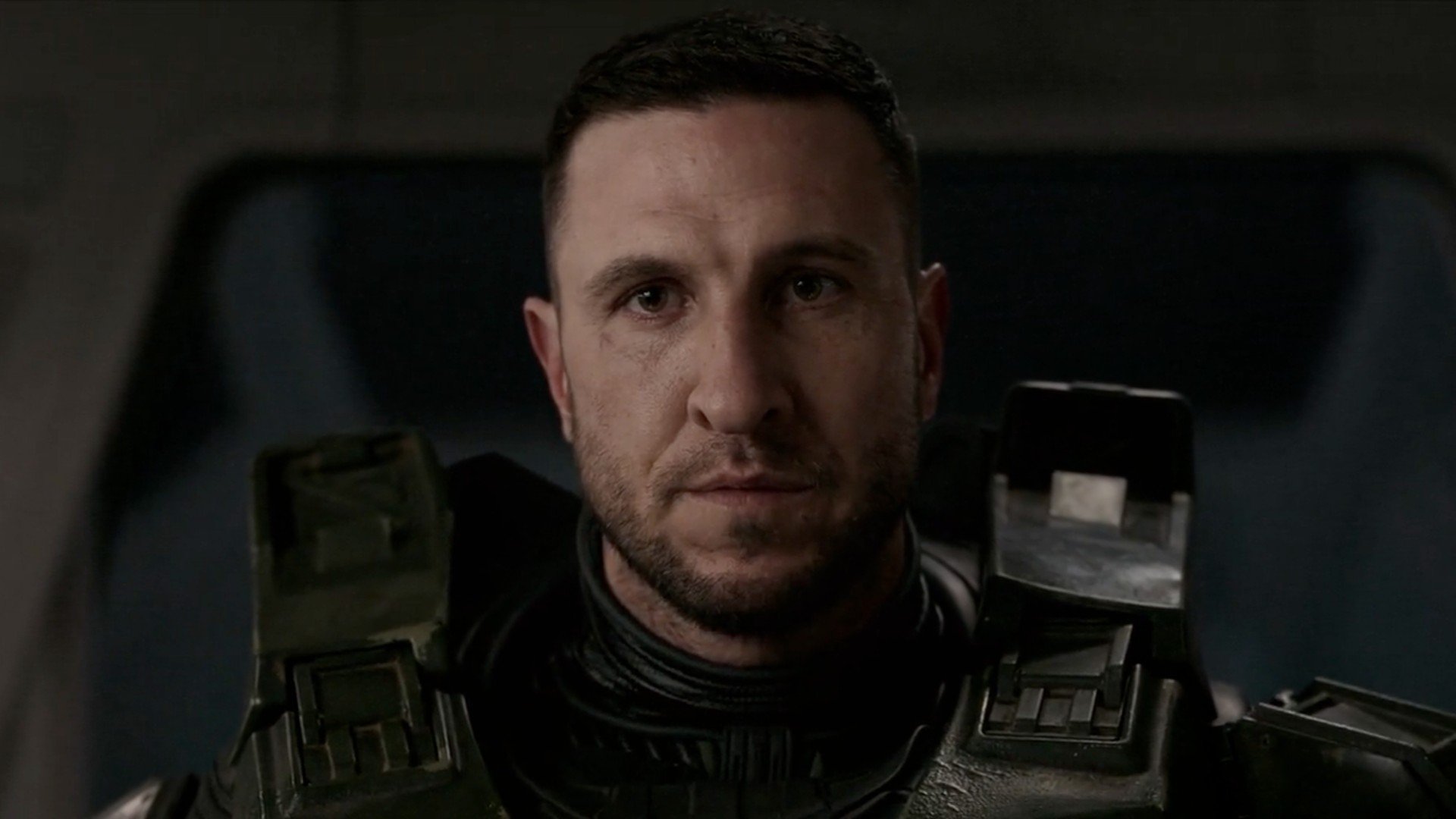
In the light of the great, short season shows we’ve been getting lately (some of which I mentioned here), including some other sci-fi/fantasy series, most notably The Mandalorian and The Book of Boba Fett, and despite the big budget looks, Halo falls woefully short.  It wants to ask the big questions, but doesn’t know how, leaving us with the prospect of empathizing with Master Chief because he didn’t murder a child when he was told to; this is kind of the bare minimum of what it takes to be even considered half decent.  Not killing children is a pretty damn low bar.  Am I supposed to jump from my sofa and proclaim “I too would not murder a child, Master Chief!  You are not the emotionless meat-robot I believed you were, but rather a saintly deliverer of protective death only!  We are the same, I empathize with you!  You took off your helmet and you have a face!  I have a face as well!  We could not be more similar!”

Often times it feels too much like they were targeting shows that aren’t on the level of the prestige TV Halo is pretending to be.  Halo is a show that desperately wants to mean something, but it just rings hollow.  It either needs to be much better or much worse; either one will do.  If it starts dipping into depths of badness, it could become one of those shows that’s so bad, you can’t help but watch for the cheese factor, wondering if it’ll ever get better, like Westworld or Falling Skies.  If it steps up and actually does improve, that would be fine too.  I’d love to be genuinely entertained by Halo, the way I was by Moon Knight or Severance.  In other words, it needs to either become a whole lot more True Detective or a whole lot more NCIS.  But right now, the show doesn’t hit enough beats to be either.

Comment

Streaming Round-Up 5/9/22

Aslam R Choudhury May 9, 2022

Look, I know, finding what to watch can be a bear of an issue.  I’ve spent many an hour sitting in front of streaming service after streaming service looking for something to while away the time. There’s a lot of content out there and my hope is that I can help, even if just a little, point you in the right direction for some quality entertainment. 


Severance (Apple TV+)

This series took me by absolute surprise.  I don’t know why; I’ve always been a big fan of Adam Scott and a huge admirer of Britt Lower, ever since the first episode that centered on her character in Man Seeking Woman.  Talk about an underrated talent, she’s such a powerhouse in this show.  Before I get ahead of myself, here’s the basic premise.  In a sort of half-Eternal Sunshine process, workers at one company, Lumon, founded by the Eagan family, have a special brain surgery that cuts off your working hours from your memory.  You show up to work, blink, and then you’re immediately leaving work, the dullness and soul-crushing corporate day behind you like it never happened.  Of course, it did happen, and you were there, but it was a different version of you.  One that goes to leave the office at the end of the day, blinks, and is right back there, walking to his or her desk.  From one side of the story, it’s a magical paradise of never having to deal with corporate bullshit again.  From the other, it’s a nightmarish hellscape where work is your life, love, religion, birth, and death.  

Severance plays with this very well, using effective cinematography, playing with light and dark, and extremely strong performances from the aforementioned (Adam Scott, especially, plays a dual role; he’s the only character whom we see both in and out of work, two separate people inhabiting the same mind and body, each unaware of each other), as well as the always quality John Turturro and relative unknown Zach Cherry, whom you might have seen in Shang-Chi, but I mostly remember from his small role in Search Party, a show I’ve praised many times before.  More than just ask the moral questions, Severance plunges you deep into a mystery, filled with lore and cultish behavior that leaves you begging for more.  I had to stop myself from binging the entire first season all at once, rather leaving myself a day in between episodes to let them really sink in.  This is a really special show that reminds me of the old days of the water cooler talk of Lost, but without the sinking feeling that most of your questions will go unanswered because JJ Abrams isn’t very good at ending things.  At first, I wanted to compare Severance to Lodge 49, because of its strong mix of humor and depth, but there’s an aloofness that Lodge 49 had that Severance lacks.  Their approach to the lore is very different as well; where Lodge 49 invites you to buy in or not, but Severance draws you into the mystery and you can’t help but invest.  Both shows are excellent, and if you know just how highly I regard Lodge 49, you’d know just mentioning it in the same breath as Severance is high praise.  

Slow Horses (Apple TV+)

Another entrant into Apple TV’s growing portfolio, Slow Horses follows the exploits of the MI5 rejects of Slough House, the home for agents who have screwed up so badly they have to live in a sort of intelligence purgatory where they do things like go through trash looking for clues about people the MI5 deems too low priority to put someone competent on, but know too much to be cut loose and left twisting in the wind.  Gary Oldman leads the squad of misfits and fuck-ups, playing the charmingly flatulent, washed up old man very well.  The show mainly focuses on the character of River Cartwright, played by the instantly likable Jack Lowden, whom you may recognize as the downed fighter pilot rescued by Mark Rylance in Dunkirk, Tom Hardy’s wingman.  I’d also be remiss to neglect to mention Kristin Scott Thomas’s excellent performance as Regent’s Park’s pack leader Diana Taverner (her henchmen, for lack of a better word, are even called “the dogs”).  As the slow horses stumble through a kidnapping plot, Slow Horses weaves together a tale of intrigue, betrayal, and conspiracy that has just the right number of hoops to jump through.  So often in spy thrillers, the fine balance is hard to master—make it too realistic and it’s boring, make it too sensationalistic and it’s 24.  Slow Horses toes the line; it feels real, even though I’m sure it likely isn’t.  Most of the espionage media I can remember that’s praised as being realistic, films like Tinker Tailer Soldier Spy and The Good Shepherd, are ruinously boring, forcing you into a world of people sitting around speaking half sentences.  Of course, you wouldn’t want it to be a Jason Bourne movie either, because that would be so unrealistic, it would take you out of the moment.  

Slow Horses keeps you right there, keeping you twisted and turned, while making sure that every twist and turn is earned; that’s another hard deal.  Often, media that tries to surprise does so by the “unearned twist”, a surprise for the sake of surprise, for which little or no evidence existed in the story prior to the twist.  I see it a lot and it always feels cheap, especially when it comes to a mystery or thriller where I want to tacitly play along with the characters and see if I can figure it out myself.  Think about the first season of Veronica Mars compared to the first season of Luther.  At the end of Veronica Mars, you smack yourself in the forehead for not seeing it all along, since the clues were always there, whereas Luther leaves you scratching your heard and thinking “Well, I guess they mentioned something once, I think”.  From start to finish, Slow Horses earns its twists and doesn’t try to bamboozle you, and I really respect that.  It’s another page-turner of a show, another one that I wanted to go from episode to episode, but I forced myself to only watch one per day to let the anticipation grow.  While not the cerebral show that asks big moral questions that, say, Severance is, it does help to slow down sometimes and let the show last longer just from a personal level.  Gone are the days of 22 episode seasons; the best shows now are doing 13 episodes or fewer, with Slow Horses clocking in at six for the first season.  A second six episode season seems to be in the can already and I’m very excited about that. 

The Shield (Hulu)

This one is a rewatch for me—20 years old now, I thought it was time to revisit the show that redefined the cop show for me.  I was never a big fan of The Wire, which inevitably would be brought up every time I mentioned The Shield, so let’s just dispense with that now.  Whether you liked The Wire or not, The Shield takes a very cold and unforgiving look at policing and there’s plenty of room for both shows to exist and be enjoyed.  It’s amazing to revisit this show literally decades later, as an adult rather than a teenager, seeing it through the eyes I have now.  So much has changed in the world since The Shield first aired, my takes on the characters and their actions has made it like a new show to me.  

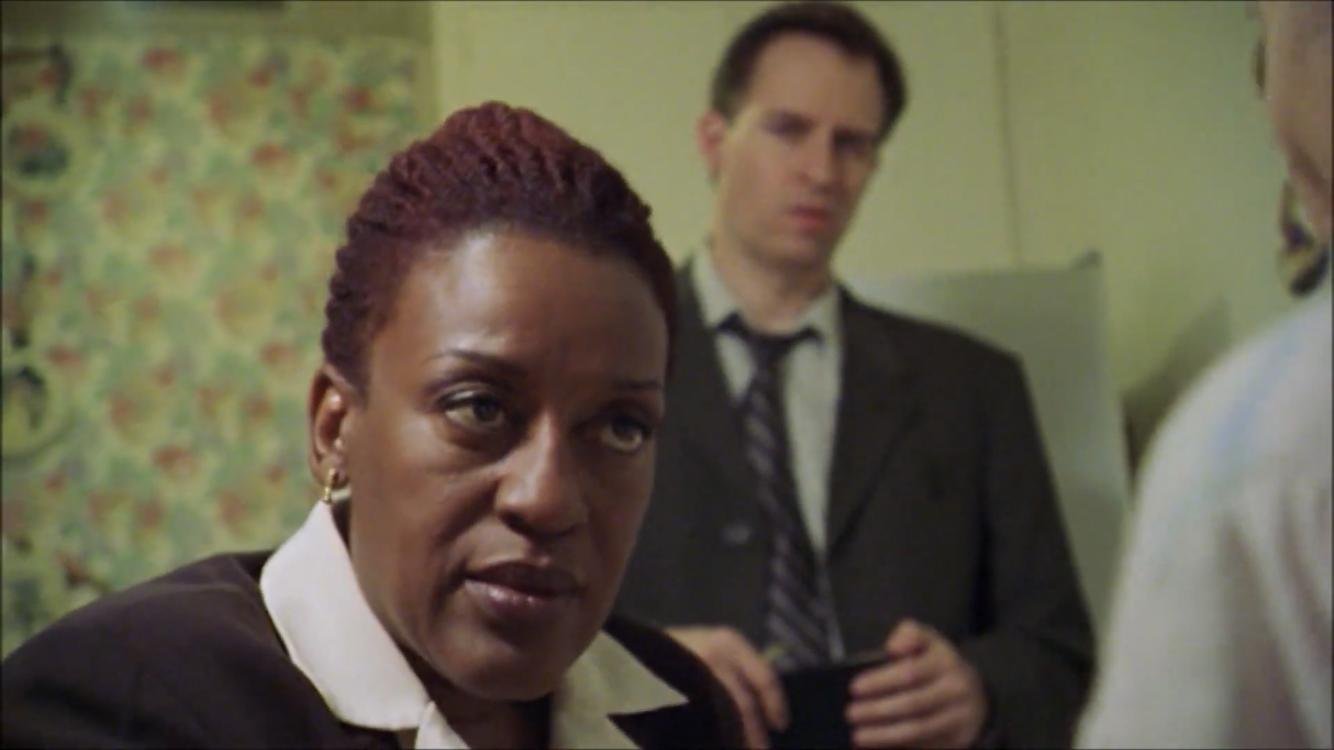
The Shield follows the Strike Team, a gang task force in the fictional Los Angeles district Farmington, loosely based on the horribly corrupt LAPD anti-gang unit CRASH.  Vic Mackey and his team use less than legal means to attempt to control gang violence and the drug trade in their streets, sometimes being more gang members than cops themselves.  It’s amazing how perspectives change—20 years ago, they were the good guys.  Now they’re the same bad guys, albeit more complicated in some ways, as the ones they’re attempting to put in prison, at least in my eyes.  Part of the same problem that perpetuates conditions that create the crime they’re attempting to control.  When I was younger, I loved the characters on the Strike Team (except Shane, who is played by one of my now-favorite actors, the extremely talented Walton Goggins; to his credit, I so wholly hate his depiction of the dirty and racist cop, it’s a testament to his strength as an actor), but now my favorite character is Claudette Wyms, played by the indomitable CCH Pounder.  You may know and love her from her stoic run on Warehouse 13, but this is where I saw her first—a totally badass Black woman in a largely white and male precinct who has more backbone and moral fiber than the rest of them combined, without getting annoying or preachy about it.  The show also tackled a lot of issues, like homophobia, racism, and toxic masculinity, but avoids getting all after school special-y about it.  If anything, The Shield loves to live in its gray areas; every character, even the victims of prejudice, often have blood on their hands, sometimes literal, sometimes figurative.  The character depictions are incredibly nuanced, and while some moments make you cringe, they’re supposed to.  The Shield doesn’t both sides you, but it doesn’t paint characters as outright good or outright bad.  Even Shane has his moments where you sympathize and even care about him.  If you haven’t seen The Shield before, I highly recommend it.  If you can make it to the end of the first episode without wanting to immediately watch the second, I’d be genuinely surprised.  

The Office (Peacock)

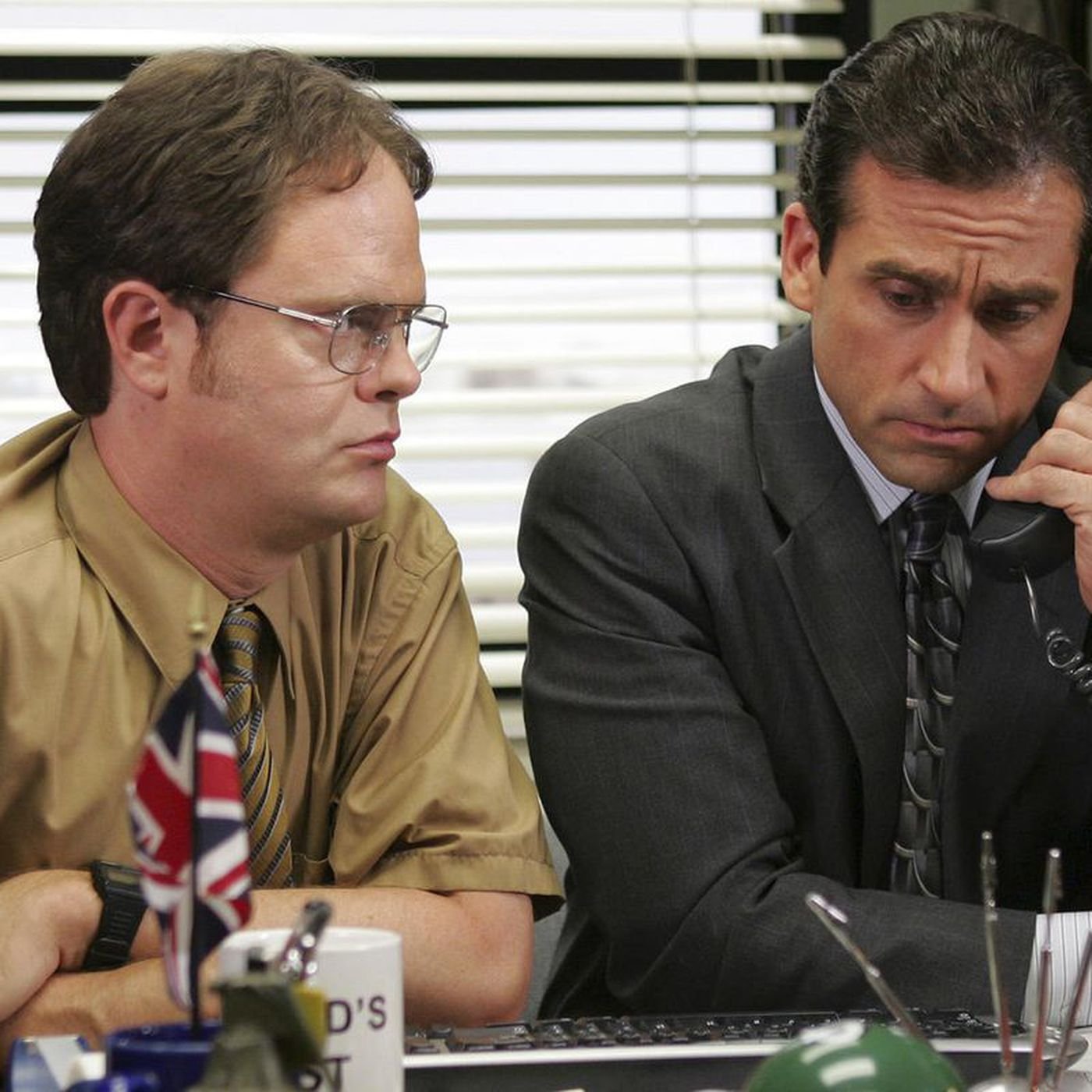
There are some comedies I watch over and over again, like Brooklyn Nine Nine, which I love so much that even if I can recite all the jokes as they come, I still want to be with the show and let myself be covered in it like a warm blanket of comforting punchlines.  Then, there are some I love so much that I set them aside for years so I can return to them with at least a little freshness.  It’s not a matter of degree, but type, before you get the wrong idea.  Shows that I love to watch repeatedly and ones I like to save aren’t different because I love one over the other, but rather it’s a different type of love.  Anyway, one such show is The Office.  You’ve probably never heard of it—it’s a small show of relatively unknown actors set in a paper company in Scranton, Pennsylvania.  Kidding, of course.  It was a huge hit when it was adapted for the US and a big hit all over again when streaming services became prevalent and picked it up.  I personally know at least a dozen people who cancelled their Netflix accounts when Netflix lost the rights to The Office.  While I wasn’t one of them, I was very happy to see the show pop up on Peacock with four seasons of extra length “Superfan” episodes.  Though sometimes scenes that should have ended up on the cutting room floor made it to the extra long episodes (including a bizarre scene in which Ryan and Kelly bone down in a dumpster), it was nice to see scenes that I’d never seen before interspersed with ones that I still remember word for word, despite not watching them since college.  

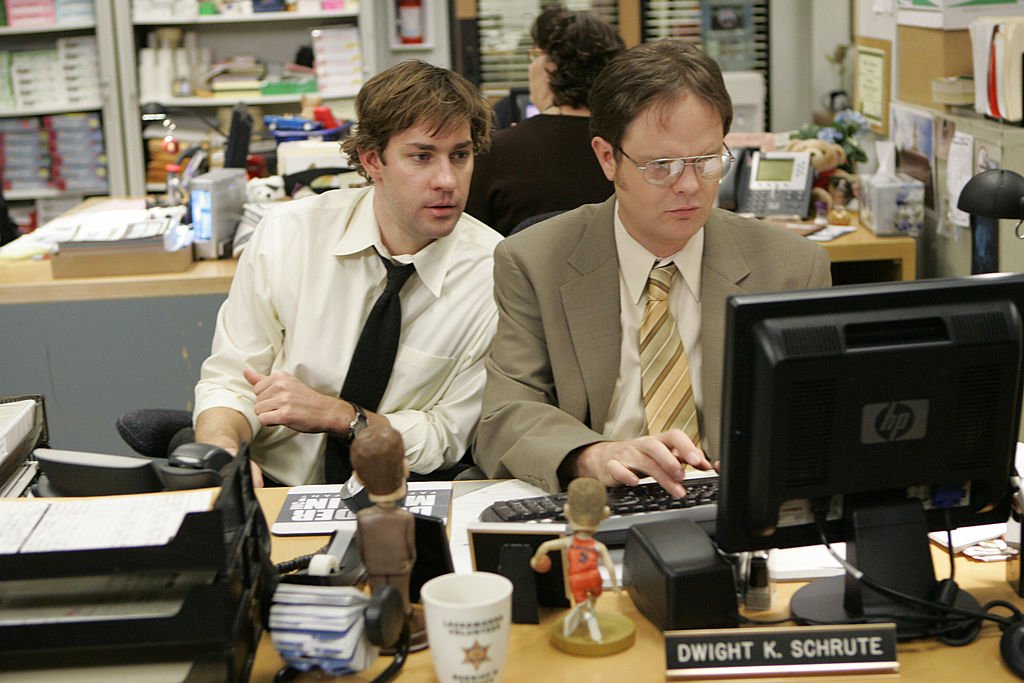
Having just completed the fourth season and started on the fifth, I’m reminded of how difficult it can be to witness Michael Scott’s cringe-worthy behavior over and over again.  And the cringe doesn’t end there; the endless sexual harassment of Pam and casual racism, as well as the not-so-casual kind, can be hard to watch at times.  But still, I think The Office might have ushered in the new era of comedy series where everyone likes each other and even the “villains” of the show are likable (eventually) and become friends with the protagonists.  There were seemingly endless numbers of shows about groups of friends who expressed their friendship by being horrible to one another, but The Office wasn’t like that.  Despite Jim’s endless pranks, he and Dwight end up more like occasionally bickering brothers rather than enemies.  Watching their friendship grow over the years felt so organic, even though it started with office supplies in a gelatin dessert.  It opened up the door for other such feel good comedies like Parks and Recreation, Superstore, and the previously mentioned Brooklyn Nine Nine.  Three comedies I absolutely adore, by the way.  Also, as a side note, I know there’s some chatter these days about Jim and Pam, but they’ve got to go down as one of my favorite on-screen couples.  I’m not interested in hot takes for the sake of hot takes, though.  No one is perfect and they’re not perfect either, which adds some realism to their fairy tale romance, but I don’t see that as a negative.  It’s a mockumentary, after all, not a fantasy show.  Happily ever after never meant there weren’t going to be bumps in the road.  Still, love PB&J or don’t, you’re entitled to feel how you do.  Personally, I love them.  

The Office rightfully deserves its place as sitcom royalty, so if you haven’t seen it yet, or just haven’t seen it in a while, now might be the time to fire it back up and bask in the warm glow of The Electric City.


I’ve also just finished Moon Knight (Disney+) and and in the middle of Tokyo Vice (HBO Max), but I think Moon Knight bears a second viewing and its own in-depth article and I’m not yet ready to make a call on Tokyo Vice.  I’m enjoying it quite a bit so far, but for those of you who know me and listen to me incessantly rave about Tokyo, it’s my home away from home and it might just be nostalgia clouding my judgment.  I’m going to reserve judgment on that until I finish the series.  Similarly, if you’re following me on Twitter, you’ve been seeing my one tweet reviews of the Halo (Paramount+) series, which has been less than stellar, but I won’t make the final call on that until the season has concluded.  Same with Peacock’s new comedy series Killing It, starring Office alum Craig Robinson.  Very promising start with a meandering middle, but I’m hoping it pulls it together by the end of the first season.  Also, off into the sunset with the promising Space Force (Netflix); it wasn’t great, but it had its moments and was stuffed to the gills with likable characters of questionable competence.  Sometimes it was just relatively pleasant background noise and sometimes that’s enough.

I hope these streaming recommendations help you sort through the endless sea of content across so many different streaming platforms.  Have you seen them already?  What did you think?  Is there anything you’re watching that I might have missed?  Let me know in the comments here or on Twitter.  

Comment
← NewerOlder →

Search Posts

Featured Posts

Featured
Image 6.jpeg
Apr 13, 2026
The Prank Job
Apr 13, 2026
Apr 13, 2026
Image 1.jpeg
Apr 6, 2026
Das Fruit
Apr 6, 2026
Apr 6, 2026
Image.jpeg
Apr 1, 2026
Fumble in the Jungle
Apr 1, 2026
Apr 1, 2026
Image 20.jpeg
Mar 27, 2026
Run for the Whole Family
Mar 27, 2026
Mar 27, 2026
Image 5.jpeg
Mar 21, 2026
Caught Fuzz
Mar 21, 2026
Mar 21, 2026
Image 1.jpeg
Mar 11, 2026
The Fast and the Spurious
Mar 11, 2026
Mar 11, 2026
Image 64.jpeg
Mar 4, 2026
She's Doll That
Mar 4, 2026
Mar 4, 2026
Image 28.jpeg
Feb 26, 2026
Let the Bite One In
Feb 26, 2026
Feb 26, 2026
Image 2.jpeg
Feb 17, 2026
The Great Gotham Break-Up
Feb 17, 2026
Feb 17, 2026
IMG_2035.webp
Feb 12, 2026
Can’t Hardly Date
Feb 12, 2026
Feb 12, 2026
IMG_1813.jpeg
Feb 6, 2026
Wed Reckoning
Feb 6, 2026
Feb 6, 2026
IMG_1655.jpeg
Jan 28, 2026
The Gin Blue Line
Jan 28, 2026
Jan 28, 2026
IMG_1354.webp
Jan 21, 2026
Empire of the Run
Jan 21, 2026
Jan 21, 2026
IMG_1230.jpeg
Jan 14, 2026
Deep Blue Tea
Jan 14, 2026
Jan 14, 2026
IMG_1144.jpeg
Jan 8, 2026
The Last Toy Scout
Jan 8, 2026
Jan 8, 2026
IMG_0920.jpeg
Dec 31, 2025
Tuesdays with Memento Mori
Dec 31, 2025
Dec 31, 2025
IMG_8504.jpg
Dec 24, 2025
Stretch and the Family Four
Dec 24, 2025
Dec 24, 2025
IMG_0066.jpeg
Dec 16, 2025
Beauty and the Feast
Dec 16, 2025
Dec 16, 2025
IMG_9898.jpeg
Dec 10, 2025
The Task of Amontillado
Dec 10, 2025
Dec 10, 2025
IMG_9736.jpeg
Dec 2, 2025
The Chaircase
Dec 2, 2025
Dec 2, 2025
IMG_9490.jpeg
Nov 25, 2025
The Beetle Has Landed
Nov 25, 2025
Nov 25, 2025
IMG_9385.jpeg
Nov 18, 2025
The Karate Midlife Crisis
Nov 18, 2025
Nov 18, 2025
IMG_9267.jpeg
Nov 11, 2025
The Contrast of Us
Nov 11, 2025
Nov 11, 2025
IMG_8716.jpeg
Nov 4, 2025
Chomp and Circumstance
Nov 4, 2025
Nov 4, 2025
IMG_8440.jpg
Oct 30, 2025
The Neon Dreaming
Oct 30, 2025
Oct 30, 2025
IMG_8216.jpg
Oct 27, 2025
3 Body Problem Child
Oct 27, 2025
Oct 27, 2025
IMG_8062.jpg
Oct 24, 2025
A Ghost Wanted Man
Oct 24, 2025
Oct 24, 2025
IMG_7855.jpg
Oct 21, 2025
Tower Rangers
Oct 21, 2025
Oct 21, 2025
IMG_7423.jpg
Oct 16, 2025
Splatter is the Best Medicine
Oct 16, 2025
Oct 16, 2025
IMG_7122.jpg
Oct 13, 2025
The Parapsychosocial Network
Oct 13, 2025
Oct 13, 2025
Featured
Image 6.jpeg
Apr 13, 2026
2 Comments
The Prank Job
Apr 13, 2026
2 Comments
Apr 13, 2026
2 Comments
Image 1.jpeg
Apr 6, 2026
Comment
Das Fruit
Apr 6, 2026
Comment
Apr 6, 2026
Comment
Image.jpeg
Apr 1, 2026
Comment
Fumble in the Jungle
Apr 1, 2026
Comment
Apr 1, 2026
Comment
Image 20.jpeg
Mar 27, 2026
Comment
Run for the Whole Family
Mar 27, 2026
Comment
Mar 27, 2026
Comment
Image 5.jpeg
Mar 21, 2026
Comment
Caught Fuzz
Mar 21, 2026
Comment
Mar 21, 2026
Comment
Image 1.jpeg
Mar 11, 2026
Comment
The Fast and the Spurious
Mar 11, 2026
Comment
Mar 11, 2026
Comment
Image 64.jpeg
Mar 4, 2026
Comment
She's Doll That
Mar 4, 2026
Comment
Mar 4, 2026
Comment
Image 28.jpeg
Feb 26, 2026
4 Comments
Let the Bite One In
Feb 26, 2026
4 Comments
Feb 26, 2026
4 Comments
Support my work

Powered by Squarespace